

 Aug 2025
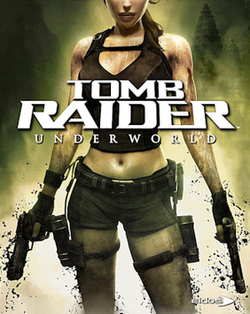

Tomb Raider: Underworld is the last hurrah of the Legend trilogy, and on PS3 it arrives like a well-worn climbing rope: familiar, serviceable, fraying in places, but still able to haul you up a cliff if you know which knots to trust. This game is less about hand-holding treasure hunts and more about handing you a toolkit and saying, 'Good luck, adventurer.' If you play it expecting a breezy corridor shooter, you're in for a reality check that smells faintly of damp ruins and puzzle dust. For players who love to be tested, Underworld on PS3 offers an old-school mix of platforming, environmental brain-teasing, and combat that demands more patience than a GPS with trust issues.
Underworld wears its challenge on its sleeve, and that sleeve is usually muddy. The core gameplay loop leans heavily on three pillars: platforming, puzzle logic, and combat. Platforming is where the game asks you to be precise. Lara can jump, shimmy, wall-jump between two adjacent surfaces, roll, swan-dive, and use a grappling hook on special rings. All of these moves look great in motion-captured animation, but they still need human timing. Wall-jumps require good spatial awareness and an internal metronome; a mistimed leap usually ends with a dramatic meet-cute with spikes. Ledge-shimmies and pole swings force you to think in three dimensions: which ledge will connect to what, will a swing arc line me up with that platform, and is that platform actually a trap? Expect to repeat tricky sequences until your thumbs and brain sync up. It is the kind of platforming that rewards small, incremental learning instead of reckless button mashing. Puzzle design in Underworld is not the cute tile-matching nonsense you can solve while half-watching a movie. Puzzles are environmental and often layered: find a key object, manipulate mechanisms, avoid traps, and then combine elements in sequence. The game encourages using Lara's toolkit creatively, especially the grappling line to bridge gaps and trigger mechanisms from afar. The PS3 version keeps the levels relatively open compared to earlier corridor-like Tomb Raider entries, which means puzzles can be more exploration-driven. That openness increases the cognitive challenge: you must scan ruins for clues, use the PDA's sonar map to understand level geometry, and decide where to backtrack. The PDA tips option acts like a reluctant tutor; it nudges you when you're genuinely stuck but won't hold your hand through every lever. This design puts a premium on observational skills, logic, and perseverance. Combat will make you itch in places you didn't know existed. The system auto-locks but allows switching between targets and, when dual-wielding, targeting two enemies at once. It sounds fancy, but many reviewers called the combat 'dodgy' and 'haywire', and they're not lying. The AI benefits from NavPower middleware, giving enemies variety in behavior, but the camera can turn a manageable firefight into a spectacle of misfires and missed cover. Combat therefore demands a set of soft skills: patience to wait for the right window, restraint to reposition rather than blind-firing, and situational improvisation when the camera decides to ignore reality. Sticky grenades and dual-target aiming are powerful but limited by resource scarcity, so ammo management is crucial. On higher settings you also have sliders to tune combat difficulty independently from platforming and puzzles, which is a godsend for players who want to be tested in one area but not humiliated in another. Swimming and diving sections add another layer of urgency: you have limited breath, and underwater navigation forces calm decision making. Mistakes underwater are more punishing because recovery options are often narrower. There are also vehicle sections, like the all-terrain bike, which act as short bursts of traversal skill and timing-based puzzle solving. These sequences ask you to translate platforming instincts into vehicle reflexes, and they reward quick thinking and control finesse. Checkpoint and health systems are merciful but not forgiving. Health is shown as a colored figure; medipacks and artifacts heal you, and relics found in hard-to-reach places increase your health cap. Dying resets you to checkpoints, so learning how to read the environment to avoid repeated deaths is part of the skillset. Adrenaline Moments replace the old quick-time events with slow-motion interactive cinematic sequences. They look and feel cinematic, but they also test split-second inputs and spatial awareness under pressure. The overall result: Underworld tests a player's reflexes, patience, puzzle literacy, environmental reading, and resource budgeting. Skill-wise, the game will reward you if you cultivate the following: excellent spatial reasoning for platforming and vertical puzzles; precise timing and muscle memory for jumps and swings; a methodical approach to exploration for unlocking multi-step puzzles; conservative and strategic resource usage during combat; flexibility in camera management and positioning; and above all, the humility to learn from multiple spectacular failures. You will die. Frequently. Use it as a data-gathering exercise. This is a game that respects players who learn by doing. Difficulty customization deserves a shoutout. The separate sliders for puzzle, platforming, and combat difficulty let you tune the experience to your strengths. If you want to enjoy brain-bending puzzles but hate twitchy combat, crank down the shooty stuff and keep the puzzles intact. That granular tailoring is a quietly brilliant concession to the varied skillsets of modern players. Finally, a word about the camera. The game's ambition to create widescreen environmental reveals and cinematic angles sometimes clashes with tight platforming and close-quarters combat. Mastering Underworld on PS3 includes developing the habit of repositioning Lara to coax the camera into a usable vantage point, or pausing to reorient when the view becomes unhelpful. It's another annoying-but-skillful layer: camera diplomacy.
On PS3 the game flexes next-gen ambition for its time. Lara's motion-captured animations are a treat: the way she moves, rolls, and transitions between stances feels natural and earned. Environments - from lush Thai jungles to icy Jan Mayen ruins - are presented with a painterly, larger-than-life quality. The Thailand level in particular was built from reference trips and heavy vegetation, which the team admitted caused frame-rate headaches when assets were converted into the game. You can feel the tradeoff: dense foliage and lighting make for awe-inspiring vistas but also push the engine. The CDC engine gave the team a lot of control and dynamic lighting through middleware like Turtle, but the push onto next-generation hardware was rocky in places, meaning the PS3 port has some rough edges. The visual storytelling is effective: camera reveals are used to sell scale, and lighting sets a somber, mythic tone that fits the Norse-influenced storyline. Enemy designs blend believable wildlife, cryptids, and supernatural Thralls. The occasional graphical hiccup and the aforementioned camera quirks keep the visuals from being perfect, but the overall presence and fidelity were impressive for 2008 PS3 hardware and hold up as atmospheric backdrops to the challenges the game throws at you.
Tomb Raider: Underworld on PS3 is a competent, occasionally brilliant action-adventure that tests a specific set of player skills. If you enjoy thoughtful platforming, exploration-first puzzles, and don't mind combat that sometimes requires more patience than polish, this entry will scratch that adventuring itch. The game is not pristine: camera tilts, a combat system that can feel temperamental, and the rough edges from a difficult development cycle are visible. Still, the motion-captured Lara, the satisfying puzzle design, and the tailored difficulty sliders make it a title for players who want to be challenged rather than spoon-fed. Think of Underworld as a tricky climb up a gorge: you will slip, you will laugh at your own mistakes, and when you finally reach the ledge, the view is worth the sweat. Score: 7.5/10 - a solid tomb-raiding workout with a few stubborn cobwebs you can't quite dust out.
 Tomb Raider on PS3
 Tomb Raider IV–VI Remastered on Xbox Series X/S
 Tintin: Destination Adventure on PlayStation
 One Piece Grand Adventure on PS2
 Taiko no Tatsujin: Dokodon! Mystery Adventure on Switch
 Onimusha: Dawn of Dreams on PS2










 Another SquareThought Site