

 Jan 2011


The Tomb Raider Trilogy for PS3 is the kind of product that politely reminds you that nostalgia is a market segment and HD is a lifestyle. It bundles three Crystal Dynamics entries-Tomb Raider: Legend (2006), Tomb Raider: Anniversary (2007) and Tomb Raider: Underworld (2008)-and presents them as a single purchase for folks who want their Lara Croft served in chronological modern-revival order. Released in 2011 under Sony's Classics HD banner, the collection is mostly an exercise in 'we fixed what needed fixing, and left most of the rest alone.' For the price of one full game (or a small car part, depending on your region), you get three games, PlayStation Network trophy support, avatar bits for PlayStation Home and the comforting feeling of owning an era when platforming still involved actual platforms. This review is written with the solemnity and restraint you deserve. You will learn what the Trilogy includes, what it doesn't, how it plays on PS3 hardware, and whether you should buy it if your house is not already full of Lara croft figurines and unopened action-figure boxes. You will also learn that two of the ports were handled by Buzz Monkey Software, which means someone other than Crystal Dynamics did the legwork to take PS2-era game code and polish it to PS3 sheen. It mostly worked. Mostly.
The Tomb Raider Trilogy collects the second-series Crystal Dynamics trio: Legend, Anniversary and Underworld. Taken together they form a progression from 'reboot-lite' to 'reboot-with-confidence' to 'comfortably competent action-adventure', and they behave on the PS3 like three relatives at a reunion-familiar, occasionally embarrassing, occasionally brilliant. Tomb Raider: Legend is the blunt instrument of the set and the one that restarted the franchise in 2006. Legend immediately jettisoned much of the clumsy geometry and dated animation of the PS1 era and taught Lara to move like a person who had read at least one book on parkour. It tightened platforming, amped up exploration and introduced a mission structure that balanced tomb puzzles with relatively brisk chase-and-shoot sections. On PS3 the game's control mapping is adequate and responsive; the aiming and movement feel modern enough that playing Legend today is like watching an old movie where the stunt work holds up. Tomb Raider: Anniversary is, in marketing terms, an occasion; in practice it is a remake of the original 1996 Tomb Raider built on Legend's engine. If you have a soft spot for angle-based jumping and camera decisions that occasionally feel like a practical joke, Anniversary is your nostalgia nap. The remake keeps the original level design philosophy-rooms designed as puzzles, not just corridors-and reinterprets them with mid-2000s physics and prettier textures. It also benefits from the improved traversal and combat of Legend while preserving the antique charm of skull-shaped levers and puzzles that take delight in your confusion. Tomb Raider: Underworld is the most polished of the three and the one that thinks in bigger, darker set pieces. Underworld expands environments and offers more cinematic encounters; it also experiments with puzzles that are larger in scope and sometimes more rewarding to solve. The tone grows more serious, the combat gets weightier, and the series' modern identity-adventurer, archaeologist, reluctant wrestling champion of ancient mechanisms-comes into full bloom. In the Trilogy package, the changes are consistent and expected: Anniversary feels like a bridged tunnel between old-school design and Legend's modern framework; Underworld ups the ante with bigger areas and slightly more involved combat. The collection includes PlayStation Network trophy support, which is a merciless and efficient way of encouraging obsessive replay. The package also bundles bonus avatars (Lara Croft and a Viking Thrall) for PlayStation Home, a theme pack for your XrossMediaBar, and some making-of videos that are the video-game equivalent of commentary tracks where everyone is trying not to say, too loudly, 'we had to fix that one bug for the disc version.' There are a couple of omissions worth noting. The two downloadable episodes that were part of the Xbox 360 version of Underworld-Beneath the Ashes and Lara's Shadow-are not included in the Trilogy. They are DLC in the sense that they are short excursions, and their absence doesn't break the core experience, but it is the sort of detail that will sting the completists who keep spreadsheets of their digital DLC purchases. Gameplay-wise the Trilogy holds together because it reflects a single studio's attempt to modernize a classic series. Combat can feel repetitive-shoot, dodge, shoot, solve puzzle, get mildly injured, repeat-yet the puzzle work and environmental storytelling often compensate. If you crave open-world sampling, the Trilogy isn't that. If you appreciate well-crafted adventure levels, occasional platforming gauntlets, and a heroine who can crawl through a cave and then, an hour later, look stunning while doing it, then these games will satisfy in much the same way a vintage espresso machine satisfies: a little noisy, slightly finicky, but ultimately capable of producing something warm and concentrated.
The PS3 classics HD branding implies more than it always delivers, and the Tomb Raider Trilogy is an honest example. Two of the games (Legend and Anniversary) were ported to PS3 by Buzz Monkey Software, and the process involved upscaling a generation of assets that were originally targeted at PS2 and earlier consoles. The result is pleasant: higher resolution textures, cleaner edges, and a camera that no longer feels actively hostile. That said, this is not a 'remaster' in the sense of 'we rebuilt the engine and sculpted each pixel while chanting ancient rites.' It's a careful polish. Models look better, but some character animations retain their era-specific stiffness. Lighting has been improved in places, which helps Underworld in particular, where atmospherics are part of the design vocabulary. Anniversary benefits from the remake treatment-it turns the brutally angular 1996 architecture into something more legible and, in many moments, genuinely beautiful. If you play the Trilogy back-to-back you'll notice stylistic differences: Legend's palettes feel slightly brighter, Anniversary balances fidelity with reverence for the old game, and Underworld aims for dramatic scale and mood. Texture pop-in and some rough collision boxes are occasionally visible if you stare at them with the kind of attention that only speedrunners or internet reviewers have, but for most players the graphical package reads as competent and occasionally lovely. The omission of Underworld's DLC doesn't alter the main game's visuals, but it is worth repeating because the Trilogy is marketed as a comprehensive boxed set and then quietly says 'except for these two places you could have gone.' Ultimately, the Trilogy's visuals are vintage-modern: old-school design smoothed for new screens. It holds up better than most mid-2000s ports because Crystal Dynamics' later work had design bones that were always ready for a higher-resolution life.
The Tomb Raider Trilogy for PS3 is a tidy, reasonably priced time-machine for people who liked Lara's post-reboot era and want to play all three entries with PS3-era conveniences. It is not a definitive remaster that reimagines the games; it is a Classics HD take that respects the originals while smoothing a few rough edges. If you own none of the three games, this is an economical way to experience a slice of Tomb Raider history that ranged from 'reborn and eager' to 'world-weary and competent.' There are reasons to buy it: trophy support for those who enjoy collecting virtual achievements, improved visuals over the original PS2-era releases, and the convenience of three games on one disc. There are also reasons to be mildly annoyed: the PS3 ports were handled by a third party, which is a neutral fact but sometimes shows when polishing is only skin-deep, and the Underworld downloadable episodes are missing, which matters if you like your completism served with a side of DLC. Score: 7.5/10. The Trilogy is not revolutionary, nor elitist; it's a respectful and functional repackaging with a few caveats. Buy it if you want a digestible Lara Croft library on PS3. Skip it if you already own the games on other systems or you are waiting for a full modern remaster that will do nothing less than remake the past in glorious, unforgiving detail. In either case, enjoy the tombs, the puzzles, and the occasional melodramatic vaulting. Lara, as ever, will survive.
 Tomb Raider IV–VI Remastered on Xbox Series X/S
 Tomb Raider: Underworld on PS3
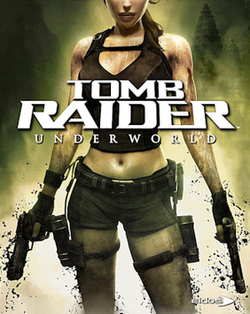 Tintin: Destination Adventure on PlayStation
 One Piece Grand Adventure on PS2
 Taiko no Tatsujin: Dokodon! Mystery Adventure on Switch
 Onimusha: Dawn of Dreams on PS2










 Another SquareThought Site