

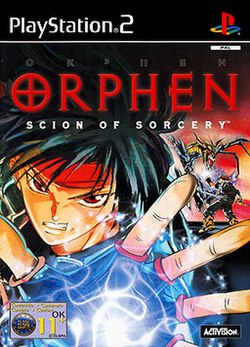

Orphen: Scion of Sorcery arrives at the intersection of 'early PS2 ambition' and 'anime tie-in practicality.' Built by Shade and shipped as a PlayStation 2 launch title overseas, it attempts to graft platforming puzzles onto an action-RPG skeleton while wearing the trappings of the Sorcerous Stabber Orphen franchise. From a technical-reviewer perspective this is a fascinating case study: a hybrid battle system that blurs the line between turn-based and real-time, a single-character combat paradigm shoehorned into party-driven narrative beats, and all of it delivered under the constraints of a brand-new console architecture. The game is unapologetically of its era - occasionally awkward, sometimes impressive, but always interesting to pick apart on a systems level.
Orphen's core structure splits into two distinct modes: exploration (platforming and puzzle solving) and combat (scripted and arena encounters). Exploration zones present typical early-3D platform problems - jumps, environmental puzzles, and scattered chests containing items or equipment. The chest->item economy is straightforward: consumables and equippable gear are distributed to incentivize exploration, but the progression model is closer to action-adventure than deep RPG loot loops. Combat is where the technical design choices become most visible. Battles are presented as discrete encounters - often scripted set pieces - rather than a seamless, enemy-populated overworld. The battle system is described as 'set up like turn-based' but executed in real time: the interface and flow signal turn-based structure (you manage equipment and choices), yet characters, allies, and enemies can all attack asynchronously. Functionally this produces a hybrid design that tries to combine tactical planning with reflex-driven execution. Mechanically the player controls a single character during every battle. That character's capability is defined by three equipment slots/categories: melee weapons, spells, and elemental shields. Each category has a mechanical role: weapons provide physical options, spells offer ranged or elemental effects, and shields augment defense or elemental interaction. This triad encourages loadout optimization rather than sequential character switching, which is a smart bandwidth-saving decision for a launch-era title constrained by memory and processing headroom. The game's approach to difficulty and failure is blunt. If the controlled character dies during a battle, the player is returned to the title screen. That is an unusually punitive penalty in a single-player action-RPG - more severe than a standard reload from a checkpoint. The game does provide an in-battle pause that allows the player to change equipment; doing so restarts the battle but avoids the title-screen reset. Design-wise, this is an awkward compromise: it protects players from permanently losing progress while signaling a lack of a more granular save/resume mechanism. From an engineering perspective, restarting the battle when equipment changes is a cheap implementation trick that avoids maintaining complex mid-combat state transitions or party AI reinitialization. Scripted battles recur throughout the experience. Scripted encounters are a double-edged sword: they let the designers craft cinematic moments and tightly controlled difficulty spikes without investing in more advanced AI, but they reduce the possibility space for emergent combat scenarios. When the action feels choreographed, it can be satisfying in short bursts; when the scripting is obvious, it undermines replay value and makes tactical depth feel shallow. Because the player controls only one character in battle while the story follows a party, there is a consistent tension between narrative scope and mechanical agency. The game narratively gives you a cast, but mechanically forces you to think like a solo actor. That simplifies CPU demands (fewer active decision-makers to animate and simulate) and reduces UI complexity, but it also removes party-level strategy. Reviewers noted that the 'epic' battles can still be fun, but that enjoyment is often undercut by pacing: long stretches of exposition and dialogue separate combat set pieces, which compresses the game's mechanical highs into isolated peaks. Balance-wise the design leans toward accessibility rather than nuanced optimization. The hybrid battle rules and equipment categories make it easy to experiment with different combinations, but the presence of scripted sequences and the single-character control reduces deep synergy play. The pause-and-change mechanic doubles as both convenience and a band-aid: useful for players who want to brute-force a solution, but a sign that the game lacks a modern 'retry from last checkpoint' flow. From a modern technical-design lens, Orphen's battle restart approach reads as an intentional simplification to get a stable experience on early PS2 hardware without implementing more sophisticated checkpointing systems. In terms of systems integration, Orphen stitches platforming, puzzle, inventory, and combat systems together with a conservative approach: minimal systems overlap, clear switches between modes, and limited real-time simulation outside of battle. That makes the codebase easier to reason about (one can imagine distinct subsystems for traversal and combat), but it does create jarring transitions for the player. The result is a game that wears its engineering constraints on its sleeve: pragmatic, occasionally clumsy, but coherent enough to signal what the team prioritized.
As a PS2 launch title, Orphen is best judged against other early-2000 experiments on Sony's new hardware. The art direction is unabashedly anime-derived, translating character designs and set pieces in a way that will be immediately familiar to fans of the source material. Review reactions to the visual presentation were mixed: GamePro reviewers leaned positive on visuals (giving high marks in at least one review), while aggregate sentiment and other outlets were more reserved. From a technical standpoint the game demonstrates the typical trade-offs of a launch-era 3D title. Character models and environment geometry show ambition - the studio pushed for recognizable silhouettes, readable animations, and a clear color palette to maintain visual clarity during battles and platforming. Those are smart shader-less choices for the PS2's Early SDK where developers were still calibrating polygon budgets, texture memory usage, and streaming strategies. Texture work is serviceable but conservative. Early PS2 titles often had to choose between high-res textures (costly in VRAM) and broader geometric detail; Orphen favors geometry and solid colors with mid-range texture fidelity. That keeps the visual presentation stable across different scenes but can result in flatter-looking surfaces compared to later, more mature PS2 productions that exploited better streaming and compression. Lighting and special effects are used sparingly, but where present they read well in the context of combat - spell effects, elemental flares, and shield interactions are clear and communicative, which is vital for a hybrid combat system that depends on readable state cues. The game's UI and HUD design are functional: equipment and spell info are accessible without overloading the screen, which is a respectable technical decision given the limited screen real estate and the need to balance exploration and battle interfaces. Performance-wise the title does what it needs to: it favors consistency over spectacle. A launch studio's most crucial job is to avoid catastrophic frame drops or wildly inconsistent load times, and Orphen mostly succeeds. Any performance conservatism is a deliberate engineering choice: fewer dynamic systems, less background simulation, and restrained visual effects reduce the chance of frame-rate instability on early PS2 kits. Critics and players noticed the result - the game doesn't dazzle the hardware but also rarely breaks it. Audio deserves a quick technical nod. Minoru Yamada's compositions and the sound design earned praise in some contemporary reviews; sound and music were highlighted positively by GamePro. Well-mixed audio cues help compensate for some of the visual and pacing shortcomings by adding punch to spells and weight to hits, which is a low-cost, high-return area for a constrained development team.
Orphen: Scion of Sorcery is a textbook example of early next-gen pragmatism: the team clearly prioritized a reliable hybrid combat loop, readable visuals, and faithful franchise presentation over cutting-edge technical showmanship. Its most interesting contributions are systems-level decisions rather than flashy features - namely the turn-based/real-time hybrid combat, the single-character control during party encounters, and the restart-on-equipment-change safety net. Those choices reflect a conscious engineering posture: keep the runtime simple, make fights readable, and avoid complex mid-battle state management. Critically, that posture yields both strengths and weaknesses. The battles can be engaging in short bursts, the control and audio are competent, and the visual direction is clean for a launch title. On the flip side, the game's pacing (long conversations and scripted beats), punitive death penalty, and constrained party mechanics prevent Orphen from reaching the deeper mechanical satisfaction of more ambitious RPGs. The aggregate reception (Metacritic ~54/100) mirrors that split: there are clear reasons to praise the title and clear reasons to be frustrated by it. If you're an Orphen fan or a PS2 archaeology enthusiast, the game is worth studying for how it navigates the limits of a new platform and how it designs hybrid combat under those constraints. If you want a modern, seamless action-RPG with deep party tactics and forgiving checkpointing, this probably isn't the place to start. At its technical heart Orphen is honest about what it attempts and candid about where it cut corners - which, as a reviewer who likes to take games apart and look at the screws, is oddly satisfying in its own right.
 Atelier Lulua: The Scion of Arland on Switch
 Atelier Lulua: The Scion of Arland on PS4
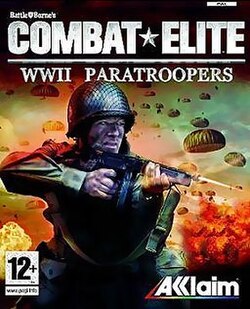
 Combat Elite: WWII Paratroopers on PS2
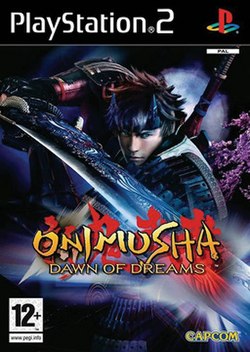
 Onimusha: Dawn of Dreams on PS2
 Action Man: Operation Extreme on PlayStation
 Project Sakura Wars on PS4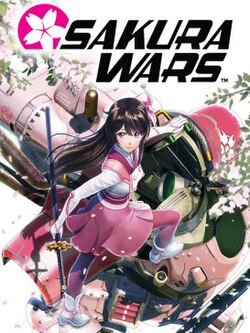












 Another SquareThought Site