



Pinball Hall of Fame: The Gottlieb Collection arrives like a museum docent who smells faintly of oil and insists you keep your hands off the exhibits. It's a compilation of faithfully recreated Gottlieb tables, squeezed into a PlayStation 2 case and blessed with the solemn duty of teaching players that the golden age of bumpers and flashing lights can, in fact, be approximated by 700 megabytes and an analog stick. FarSight Studios reused the engine from Mojo! after a considerate tip from Tim Arnold that a Gottlieb license would be cheap and cheerful. The result is a set of classic tables - Ace High, Big Shot, Central Park, Genie, Black Hole, Victory and Tee'd Off - served with a side of extras like Play-Boy, a love tester and a fortune-telling machine named Xolten, which will tell you your future looks suspiciously like a high score you will never beat.
Gameplay is where this collection mostly earns its keep. The ball physics are solid in the way your morning coffee is solid: dependable, slightly bitter, and unlikely to cause genuine joy on their own. The tables are modeled from real machines, so the job here isn't inventing thrills, it's translating decades of metal, rubber and human frustration into polygons and collision math. That translation is competent. Flippers have that satisfying snap, nudging the cabinet does something useful, and ramps behave like ramps ought to behave. Each table carries its era with pride. Ace High is a 1950s relic that rewards the sort of patient, conservative play that sounds like an old man telling you to get off his lawn. Big Shot is all about timing and target shooting, a '70s lesson in focus that doubles as an accidental stress test. Central Park and Genie bring mid-century charm and rulesets that encourage you to chase sequences, while Black Hole, an '81 machine, introduces layers of complexity with multiball and balsamic levels of chaos. Victory and Tee'd Off skew later, and Tee'd Off even flirts with the mid-90s redemption-era vibe when it isn't busy making you miss a shot. The extras are mostly theatrical flourishes. Play-Boy is a novelty, historically interesting and as playable as you'd expect a 1932 machine to be. Xolten and the Love Meter provide amuse-bouche diversions between serious pinball sessions: the kind of gimmicks that used to live on the floor of arcades and at county fairs, offering false hope and sugar-rush highs. Modes are straightforward. There's single-player, and there's multiplayer if you want to share your slow descent into obsession with friends. The UI is plain but effective: you select a table, pick a mode and the camera obligingly shows you the table from a convincing viewpoint. Tutorials are thin because pinball is a low-latency teacher - miss a shot three times and the lesson becomes obvious. Where the game stumbles is in variety and presentation. If you're expecting modern arcade gloss, deep unlock systems, long-form campaign structures or meta-progression that feeds your dopamine receptors for months, this isn't it. This is curated nostalgia. The replay loop is purely score chasing, which is either pinball in its purest form or a punishment, depending on your personality and whether you like staring at increasingly tiny digits. The PS2 revised edition, released in Europe as Gottlieb Pinball Classics, adds three tables - Goin' Nuts, El Dorado City of Gold and Strikes n' Spares - which helps the buffet, but the base PS2 package is modest and earnest rather than opulent.
Graphically the collection wears its budget like a sensible coat. The tables look like tables. Textures, lighting and detail are all earnest approximations rather than photorealistic miracles. For the PS2 era that means polished cabinet art, readable score displays and enough shimmer on the ball to keep your eyes interested. Animations are functional; sounds are true to the machines without becoming intrusive. Presentation choices lean utilitarian: the camera gives you the classic top-down-ish arcade angle, with occasional close-ups for toys and multiball chaos. The literal shine on the plastic and chrome is convincing enough, although you won't mistake any of the menus for interactive art. If you're hoping for cinematic cutscenes or lavish commentary, the game will politely decline. The charm is in the fidelity of table layout and scoring rules, not in visual fireworks. On a technical level the game's performance is competent. No dramatic frame drops, just a steady, reliable visual that makes sure ball movement and collisions remain the focus. The visual simplicity serves a purpose: it keeps your attention on the ball, which is the only thing that truly matters on a pinball table. Everything else is decorative applause.
Pinball Hall of Fame: The Gottlieb Collection on PS2 is a modest shrine to pinball history. It won't convert someone who hates flippers, nor will it pretend to be a revolutionary arcade experience. What it will do is offer a faithful, unflashy way to play seven classic Gottlieb tables at home, with a trio of small extras and a couple of novelty machines to keep curiosity from dying out. Critics were lukewarm, which suits the collection: Metacritic tallied a mixed bag at 63/100, GameSpot hovered in the sevens, IGN grumbled with a middling score, and Nintendo Life found reasons to smile. Those numbers describe a competent product that's sometimes plain and occasionally delightful. If you have fond memories of coin-operated bell chimes, ramp shots and the particular sorrow of losing a ball because you leaned your elbow too hard on the cabinet, this will scratch that itch. If you expect modern meta-systems, glitzy unlock trees or hours of incremental rewards, you will be disappointed in the way a classic arcade operator would be disappointed to find someone left the machine on free play. Buy it if you want a respectful, playable collection that doubles as a history lesson and a therapy session for addicted score chasers. Skip it if you want fireworks, or if your idea of pinball involves a subscription service and loot boxes. Either way, the ball doesn't judge. It just keeps rolling.
 Tokimeki Memorial Private Collection on PlayStation
 Capcom Fighting Collection 2 on Switch
 The Pinball Arcade on PS3
 True Pinball on PlayStation
 Pinball Hall of Fame: The Williams Collection on PS3
 Pro Pinball: Fantastic Journey on PlayStation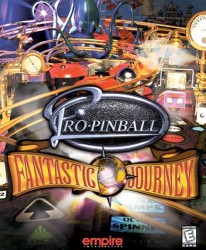













 Another SquareThought Site