



Planetarian is the tiny, melancholic short story that snuck into the PlayStation 2 era wearing the clothes of a visual novel and a halo of dust. Marketed by Key as a "kinetic novel," it refuses to hand you a branching skill tree or pop a 'YOU WIN' screen; instead it asks you to sit, read, listen and feel. The PS2 port (Prototype, 2006) dresses the original download release up a little - higher-res CGs, full voice-acting for the cast, and an expanded soundtrack - and in return asks for one thing: your attention. If you play expecting a shoot-'em-up or even a point-and-click, you will be disappointed. If you play expecting a short, beautifully told post-apocalyptic vignette about a junker and an endlessly talkative planetarium gynoid called Yumemi, you'll get roughly five hours of starry nostalgia and emotional whiplash. This review focuses less on puzzles you can brute-force and more on the real 'challenges' Planetarian throws at the player: pacing, emotional endurance, reading skills, and the odd requirement to treat a visual novel like a tiny, interactive film. If you want mechanical complexity, it's not here - what is here will test other player muscles, and if you exercise them you walk away changed (or at least a little damp-eyed).
Calling Planetarian a "game" is like calling a poem a marathon - technically true, but what really matters is how you approach it. On PS2 Planetarian is still a kinetic novel: there are no choices, no inventory, no combat, and exactly one ending. The entire experience is about consuming a linear story at whatever tempo suits you. That makes the main challenge paradoxical: there is no skill-based barrier to progression, but there is a skill-set required to extract value. Reading pace and attention are the boring-sounding but essential skills. The text is the engine; Key sets up a rhythm of short exchanges and quiet descriptive sentences that build atmosphere. The default auto-play time assumes an average spoken reading speed and clocks the whole thing at about 4 hours 40 minutes on auto. If you breeze through like a speed-reader you will miss subtle tone changes, the little pauses in Yumemi's dialogue that mean the world used to be different, and the staging beats in scenes with Miss Jena-the giant planetarium projector that sits on the stage like a cranky, luminous god. Conversely, if you slow to a crawl you will feel the melancholy stretching out and might lose momentum. Finding your sweet spot is part of the experience. Listening comprehension matters more on the PS2 version than on the original PC release because Prototype gave the PS2 port full voice acting for the whole cast. That means vocal inflection carries a chunk of the emotional load: Yumemi's relentless cheer, the junker's gravelly annoyance, the pauses that mean more than a line of text. If you're used to reading silently, try turning up voice volume and paying attention to the delivery; the acting often says what the text leaves unsaid. Emphasis on audio cues is a practical "skill" too: when Yumemi's tone changes subtly, it often foreshadows a reveal longer paragraphs hope to hide. Emotional stamina is not a conventional player skill, but Planetarian asks it of you. The novel steadily decompresses from bright planetarium nostalgia to ruined-city peril. The protagonist's decisions and the slow collapse of Yumemi's world (and eventual hardware failure) are written to make you care. Maintaining empathy when the narrative pulls a rug is something a lot of players aren't trained for; you can't alt-tab into combat or craft a better ending. The challenge is to accept the story's constraints and feel the intended beats. That feels manipulative on purpose, and if you're particularly cynical you can use your critical faculties to analyze craft - which is also a skill: critical reading. Practical interface literacy helps. The PS2 port improves resolution and audio, but it's still a visual novel at heart: you can auto-play, hide the text, and open a backlog to reread lines. Learning to use these features - saving frequently (there are five manual save slots), toggling auto-play when you want a hands-off watch, and using the CG gallery after your first run - lets you optimize your emotional and time investment. For completionists: after finishing once you unlock a CG gallery and a music player. These act as rewards and study tools; rewatching key scenes can clarify narrative folds you missed in the initial emotional fog. There is one meta-game challenge: accepting that the protagonist's attempt to fix Miss Jena and escort Yumemi into the wider world is a narrative device, not a puzzle for you to solve. You do not repair the projector; you experience the repair through prose and voice. If your brain demands interactivity, Planetarian will gift you research opportunities instead: reading about the Zeiss-projector inspiration, or digging into the soundtrack credits (Magome Togoshi and Shinji Orito) to discover how music scaffolds mood. Because it's short and linear, the 'difficulty curve' is not about spikes - it's about density. Expect a compact story that packs emotional crescendos into a small runtime. Your main job is to keep your focus and not treat it like background noise. Do that and Planetarian rewards you with one of the most concentrated, quietly devastating narratives you'll find on a PS2 disc.
On PS2 the visuals get a subtle polish: Key's original art by Eeji Komatsu is presented at a higher resolution and the CG images are crisper than the original PC download. The planetarium interior, the big black planetarium projector nicknamed Miss Jena (a design nod to the real Zeiss universal projectors), and Yumemi's robo-girl expressions are all drawn with a kind of gentle mechanical affection. The art direction favors stillness - empty seats, a dusted stage, a single cone of light - so the 'animation' is mostly in facial expressions, lighting, and background parallax. Because Planetarian is text-first, the graphics' role is to anchor mood rather than dazzle. That makes the PS2 upgrade feel appropriate: higher-res CGs and background details make the world more tangible without distracting from the prose. The CG gallery (unlocked after your first playthrough) is worth a post-game visit; the images are the kind that look like they'd make good posters for a lost planetarium. If you judge it by high-octane console standards it will look tame, but if you judge it by how well the visuals support the story, the PS2 presentation is spot-on.
Planetarian on PS2 is not a test of reflexes, route knowledge, or button combos. Its challenges are quieter and sneakier: can you sit still? Can you listen? Can you let a short narrative break your heart without trying to customize the outcome? If your gaming CV lists patience, empathy, and the ability to appreciate voice acting and soundtrack as skills, Planetarian will feel like a diploma in emotional reading. The PS2 port is the ideal console home for this tiny kinetic novel: full voice acting, cleaned-up visuals, and an extended soundtrack that adds weight to each scene. The one obvious drawback - the lack of interactivity - is the point, and whether that is a virtue or a vice depends on what you expect from a game. Score-wise, this is a solid 8/10: it nails its narrow mission, and it does so with craft and heart. Bring tissues, a decent speaker, and an open mind. You won't be bench-pressing any bosses, but you might come away better trained in the rarer, underrated skills games can teach: patience, reading, and feeling.
 Oshiete! Popotan on PS2
 Rewrite on PS4
 Pachislot To Heart 2 on PS3
 Yeah! You Want "Those Games," Right? So Here You Go! Now, Let's See You Clear Them! 2 on PS5
 Yeah! You Want "Those Games," Right? So Here You Go! Now, Let's See You Clear Them! on PS5
 Air on PS2
 Air on Switch
 Rewrite on PS3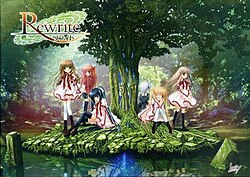












 Another SquareThought Site