


 Mar 2001


There is a particular thrill in watching a new football sim arrive on a new console generation and realise it is not merely 'a better version' of what came before, but rather a bold statement of intent. Pro Evolution Soccer, known in Japan as World Soccer: Winning Eleven 5, is that statement. Launched by Konami Computer Entertainment Tokyo as the first entry in what would become a long-running series, PES on PlayStation 2 lands with the calm confidence of a veteran midfielder who has suddenly discovered he can still score belters from 25 yards. This is not the flash-orientated, licencing-heavy spectacle of some rivals; PES arrives as a discipline-first simulation in which play and pace are measured with care. The Japanese edition carries the more familiar Winning Eleven tag and even sported Shunsuke Nakamura on its cover, while European boxes bore a plainer, more utilitarian design. That difference in packaging is a small hint of the game's character: understated, precise and proudly focused on what happens on the pitch rather than in the marketing suite.
Pro Evolution Soccer's gameplay philosophy is simple to describe and devilishly difficult to master: make football feel like football again. The game offers both single-player and multiplayer modes, and while the documentation supplied with early 2000s titles was often scant, the experience itself teaches you the rules. Passing, positioning and timing are emphasised over the frantic button-bashing that infected many lesser football titles of the era. The ball moves with believable weight, tackling feels consequential and space - not just possession - is the resource that wins matches. Match presentation is complemented by commentary, which varies by region. English-language releases feature the voices of Chris James and Terry Butcher, lending the proceedings the familiar baritone and ex-pro analysis that British players had come to expect. Japanese releases boast Jon Kabira and Katsuyoshi Shinto. The commentary is not flawless - repetition in lines betrays the technical limits of the time - but it adds necessary colour and helps sell the illusion that you are piloting more than polygons and polygons of sweat. Konami included several regional offshoots after the main release, most notably Winning Eleven 5: Final Evolution and J.League variants for Japan. These permutations bolstered the game's longevity, particularly among domestic audiences, and served as incremental refinements rather than wholesale revisions. Across versions, the core promise remains intact: realistic ball physics, tactical nuance and the satisfaction of constructing an attack that culminates in a measured finish rather than a fluke screamers. The game toes the line between arcade accessibility and simulation depth. Newcomers can enjoy a simple match, while more dedicated players are rewarded for learning the rhythm of passing triangles, when to hold shape and when to send a forward runner. Multiplay feels particularly satisfying; PES on PS2 makes a persuasive case that two friends with controllers can get more out of ninety simulated minutes than thumbs alone would suggest. It is also worth noting the game's place in Konami's catalogue. With music composed by Michiru Yamane and Norikazu Miura, and an aesthetic that leans into subtle realism rather than spectacle, PES sets the stage for its successors. The next instalment would refine and expand, but here in the first outing we see the DNA of a franchise that would go on to become a staple of console football.
On the technical front, PES on PlayStation 2 is an interesting artifact of the transitional era. Graphics in 2001 were under two pressures: to show off the new hardware and to remain legible in the heat of play. Konami's team chose the latter, producing player models and stadia that are recognisably next-gen for their time without indulging in distracting graphical gimmicks. Faces are reasonably faithful in close-ups, kits have a realistic drape and stadiums carry an acceptable crowd buzz. Frame rates are generally steady and the camera work, while sometimes conservative, is unobtrusive in competitive matches. Viewers who wanted high-fidelity cutscenes and cinematic flourishes might have been disappointed, but PES's visuals always favour functional clarity - a deliberate choice that keeps the ball, the passing lanes and player movement crystal clear even when the entire team shifts like a living net. There are moments where the engine shows its age: animation transitions can be abrupt, and the level of detail on some less prominent players falls away when the action moves elsewhere. Yet, taken in context, these are small complaints. For a 2001 release meant to prioritise the feel of the game over photorealism, PES delivers a credible and satisfying approximation of professional football on a machine still learning its strengths.
Pro Evolution Soccer is not a loud, ego-driven debut; it is a considered one. Critical reception, as contemporary aggregators would show, was overwhelmingly positive - Metacritic placed the PlayStation 2 version around the low 90s out of 100 and many publications rewarded the game with scores in the high eights and nines. Sales in Japan were strong across the Winning Eleven variants and Europe proved lucrative too, with the title grossing significant sums and earning a 'Gold' sales award in the United Kingdom for selling at least 200,000 copies. What makes the game enduringly interesting is its quiet conviction. Rather than cram itself with licenced bells and whistles, Konami concentrated on building a believable football experience. That choice paid off: PES's debut would set a template that the series iterated upon for years. For players in 2001 the choice was clear - and for anyone curious about the origins of a modern football dynasty, this early PS2 outing remains an essential play. If you approach Pro Evolution Soccer expecting the flash of contemporary live-service sports titles, you may be taken aback by its restraint. If, however, you want a football sim that rewards patience, tactical thinking and neat passing, this is where you start. The game is a promise kept: a disciplined, intelligent simulation that felt - and still feels in the memory - like a true kick-off for a long-running franchise.
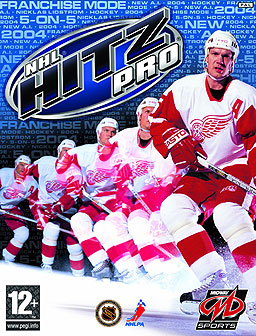
 NHL Hitz Pro on PS2
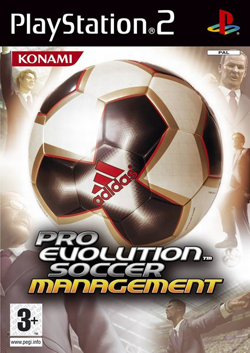
 Pro Evolution Soccer Management on PS2
 Pro Yakyū Spirits 2019 on PS4
 Pure Pool on PS4
 Accolade Sports Collection on Xbox Series X/S
 Deca Sports DS on DS
 Pro Evolution Soccer 2015 on PS4
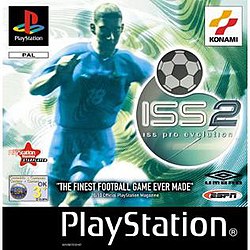 Pro Evolution Soccer 2 on PlayStation
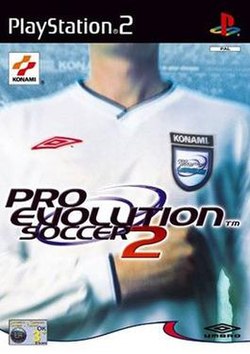 Pro Evolution Soccer on PlayStation
 Gradius Gaiden on PlayStation
 ISS Pro Evolution on PlayStation
 Dance Dance Revolution Extreme on PS2










 Another SquareThought Site