



Pro Evolution Soccer 2013 is the entry that many fans pointed to as the series' technical comeback on modern hardware, but it also shipped across legacy systems including the PlayStation 2. The Wikipedia-sourced information highlights PES 2013's broad platform availability, inclusion of the full Campeonato Brasileiro Série A, UEFA club competitions, and a generally positive critical reception on current-gen platforms. Looking specifically at the PS2 build invites a different kind of conversation: how do modern design goals and feature parity translate back to a thirteen-year-old console architecture? This review is a close, detail-oriented look at how PES 2013's systems-animation, input, AI, and presentation-survive (or don't) on the PS2's aging silicon, and whether the compromises are acceptable for players still booting up the little gray box.
PES 2013's gameplay philosophy across platforms emphasized precision dribbling, directional passing and a more intentional tempo compared to the arcade leanings of earlier entries. On the PS2, those goals are present in concept but filtered through hardware constraints. The control mapping remains familiar: analogue-driven movement, shoulder-assisted dribbling and context-sensitive tackles. Where the PS3/Xbox 360 versions benefited from refined animation blending and more granular collision detection, the PS2 build reduces the complexity of those subsystems. The result is gameplay that often feels like a simplified emulation of the modern PES experience rather than a fully realized sibling. From a mechanics standpoint, core systems are intact. Passing weight is meaningful; a well-timed through ball still slices open defenses if you commit to the channel. The ball physics on PS2, however, show their limitations under scrutiny. Trajectory calculations are less sophisticated: you notice fewer subtle floats, diminished micro-curve on shots, and an unforgiving treatment of spin. This flattens high-skill shots that rely on precise arc or swerve. The game compensates with more deterministic behavior-players will respond predictably to inputs, which is not inherently bad, but it curtails emergent moments where physics surprise you. AI and decision-making are the areas where differences become tactical realities. Konami's contemporary engines leaned hard on role-based positioning, dynamic pressing, and momentum-aware AI. The PS2 version implements simplified versions of these routines. Opposing AI still jockeys and closes passing lanes, but it lacks the nuanced read-and-react loops found on newer consoles. The reduced CPU budget forces fewer behavioral branches and shorter lookahead windows, so plays that would be snuffed out by anticipation on PS3 tend to develop further on PS2. For single-player league runs this can be a blessing-comebacks feel more plausible-but for head-to-head matches it results in predictable patterns once you learn the limited repertoire. Input latency and responsiveness are respectable given the platform. The PS2's controller polling and the game's handling keep on-pitch actions feeling tight. Where responsiveness slips is in action-to-animation translation: a crisp input might trigger an animation with a slightly longer wind-up or a momentary kinematic snap because the engine is switching between fewer animation clips. High-level tactics like formation changes and substitutions are implemented in the menu systems and work fine, but live tactical switches lack the visual affordances and real-time feedback players on newer systems get. Features like the inclusion of all 20 Brazilian Serie A teams and UEFA competitions are noted in the source material and remain a plus for roster diversity. Online infrastructure and advanced club modes are not a focal point for PS2 owners, and the platform's limitations mean some of the newer social and graphical bells are absent. Konami's post-launch support with data packs (for example, the 6.00 update that included January transfers) matters less on PS2 where patching distribution was already constrained. In short: PES 2013 on PS2 preserves the tactical spine and basic feel of the series but trims the soft tissue that makes modern football sims breath.
Graphically the PS2 port is, by necessity, an exercise in efficient downgrading. Textures are reduced in resolution, model polygon counts are lower, and shader complexity is minimal compared to the native PS3/Xbox 360 builds. Player faces are blockier and stadium lighting is flatter, but Konami's artists did an admirable job of preserving silhouettes and team colors so players remain recognisable during play. The tradeoff is legibility over fidelity: from match distance you can track movement and read play clearly, but close-ups-replays and cut-ins-look decidedly old-school. Animation is a mixed bag. The series' improved motion capture pipeline around 2013 produced smoother player transitions on modern hardware; on the PS2, many of those animations are either simplified or reused more aggressively. You can sense fewer blended transitions, which occasionally produces robotic foot placement or an awkward moment between dribble animations and shot wind-ups. Crowd and pitch presentation are intentionally de-prioritized: crowds are mostly static billboards with simple looping behavior, while pitch texture banding and tiling repeat at close camera positions. Draw distance and LOD (level of detail) systems are implemented conservatively, leading to pop-in on environmental assets when the camera shifts rapidly. UI and HUD elements are sharp and functional. Konami opted for clarity, which is the right call for a system that can't afford expensive post-processing. The match camera remains functional and gives the player a good tactical view, though camera transitions and replay cuts lack the cinematic polish of higher-end ports. Frame pacing on PS2 is the elephant in the room: it's generally playable, but you'll notice dips during intense moments or when multiple physics events collide. The experience trades visual lushness for steady, comprehensible gameplay visuals that prioritize decision-making over spectacle.
PES 2013 on PlayStation 2 is a pragmatic port: it carries the ideas and core gameplay that made the series competitive in 2012 but accepts the PS2's hardware limits without attempting miracles. If you judge the game by modern PES standards the PS2 version lands short-reduced animation fidelity, simplified physics, and less sophisticated AI are all visible-but if you evaluate it based on tightness of controls and faithful translation of core mechanics, it's a competent offering for legacy hardware. The broader reception of PES 2013 on contemporary platforms was very positive, with review aggregates and outlets generally scoring the PS3/Xbox 360 builds around the low 80s out of 100. That pedigree shows through: the gameplay philosophy that earned those scores persists on PS2, albeit in a distilled form. For someone still playing on a PlayStation 2 out of nostalgia or necessity, PES 2013 offers a playable, tactically interesting football experience and the roster inclusions (Brazilian Serie A, UEFA competitions) give it content value. Recommendation: treat this as a technical compromise rather than a full-featured modern football sim. If you expect the full PES 2013 spectacle you've read about from reviews of PS3 and Xbox 360, upgrade hardware. If you want solid, strategy-forward matches on heritage kit and a controller that still feels responsive, the PS2 version will keep you entertained. Score: 6.5/10-respectable for a port that prioritizes gameplay clarity over graphical ambition, but one that can't hide the generational ceiling it runs beneath.
 NHL Hitz Pro on PS2
 Pro Evolution Soccer Management on PS2
 Pro Yakyū Spirits 2019 on PS4
 Accolade Sports Collection on Xbox Series X/S
 Deca Sports DS on DS
 Alan Hansen's Sports Challenge on PS2
 EA Sports MMA on PS3
 ISS Pro Evolution 2 on PlayStation
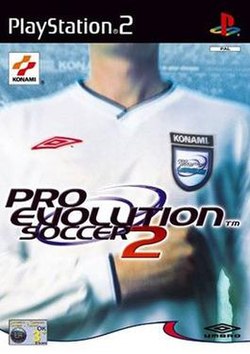
 Pro Evolution Soccer 2 on PlayStation
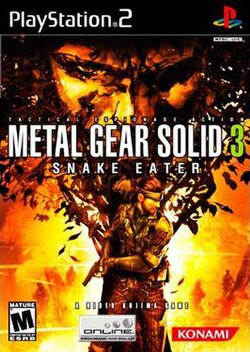
 Metal Gear Solid 3: Snake Eater on PS2
 Metal Gear Solid: Integral on PlayStation
 Pro Evolution Soccer on PS2












 Another SquareThought Site