

 Nov 2010
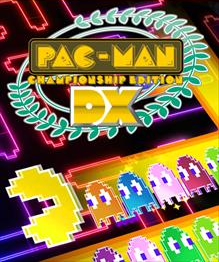

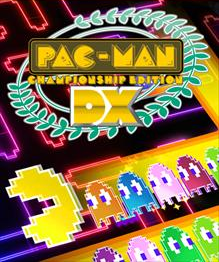
Pac-Man Championship Edition DX+ on PS3 is the kind of upgrade that treats the original arcade blueprints like a seance: it summons the spirit of 1980s dot-munching and then hooks it up to an amp, a nitrous tank and a rhythmic LED strip. The DX line takes the elegant simplicity of Pac-Man's core loop and rewrites the tempo and stakes without sacrificing the clarity that made the concept timeless. For players who care about frame-to-frame feedback, finely-tuned risk/reward systems and lean, readable UI, DX+ is a study in how to modernize a design while keeping it surgically precise.
At its mechanical heart, DX+ preserves the canonical Pac-Man loop: navigate a corridor network, clear pellets, use power pellets to flip ghost states and exploit fleeting windows of advantage. From a systems design perspective, however, what DX+ excels at is layering emergent scoring tech onto that loop in a way that scales both player skill and perceived intensity. The primary mechanical innovations are the sleeping ghosts, ghost trains, dynamic speed scaling, bombs, and a proximity-triggered slow-motion buffer. Sleeping ghosts are stationary until the player moves past them; passing multiple sleepers creates the ghost train, a rainbow-laced convoy that effectively acts as a compound target. The train is both a reward and a risk: it aggregates score potential (massive combo multipliers when consumed during a powered-up state) while also stretching the player's positional commitments across larger portions of the maze. The train mechanic is superb because it transforms simple path-planning into a short-term planning problem with temporal constraints - you must build the train, position relative to power pellets, and time the consumption precisely for maximum bang. Speed scaling is another pillar of the design. Game velocity increases as you rack up points and drops when you lose a life. This is an elegantly brutal form of dynamic difficulty: the game rewards success with higher speed (more points per unit time and more chaotic systems), creating a positive feedback loop that amplifies the adrenaline per input. Conversely, dying cuts speed and soft-resets momentum. This creates a loop where the player's skill is constantly recalibrated against the velocity of the simulation, keeping high-score runs precarious and exciting. Bombs are the explicit bailout mechanic. Each bomb instantly returns ghosts to their regeneration box, giving the player a breathing room at the cost of lowering the dot multiplier and reducing game speed. From a game-theoretic standpoint, bombs are a throttled escape valve: they mitigate single-fatal mistakes but at a scoring cost, so their use becomes a calculable trade-off during elite play. The bomb mechanic enforces decision-making under resource constraints rather than nullifying challenge. The slow-motion when a ghost nears acts as a human-friendly micro-corrector. It's a time-dilation window for perception and reaction that's automatically triggered; this keeps the game fair at high speeds and preserves player agency. Technically, it's a clever accessibility shim for reaction-time variance - it reduces the reliance on pure twitch ability and increases the importance of situational awareness. Power pellet interactions are nuanced. Some ghosts carry additional power pellets that extend the powered-up state if eaten in time, which layers another timing puzzle onto encounters: you can chain powered-ups to make longer, more lucrative ghost-eating sequences. Additionally, aggressively approaching regular ghosts turns them rainbow-colored and can add them to a trail, linking normal ghost behavior into the ghost-train economy. Modes and level design are designed around short-session optimization. Score Attack (five or ten minute runs), Time Attack (fruit-collection trials), and Ghost Combo (maximize ghost-eats while powered) each emphasize different facets of the system: sustained speed control, precise fruit routing, and powered-up positioning respectively. Courses are compact and tuned - nine in total, including the classic Championship Edition maze which omits sleeping ghosts for a purer, speed-focused contest. Every course tweaks geometry, prize placement and sleeping-ghost density to bias the meta-strategies: some favor extended trains and chaining, others encourage sprint-and-reset tactics. Leaderboards, NG News and video replays augment the competitive layer without affecting the core mechanical balance. The 2013 DX+ update improved leaderboard functionality and added medals and friend challenges, turning a brilliant single-player arcade loop into a socially-competitive time-sink. Paid DLC and skins extend the visual variety and course pool - which matters because in a system this tight, variety keeps the scoring meta fresh. On input fidelity: the game expects crisp directional inputs with minimal latency. The maze movement is discrete and deterministic, and the feedback loop - sound, visual cues, and the slow-motion nudge - combines to make the system feel responsive even when chaos ramps up. The result is gameplay that rewards precise commitment instead of relying on hand-waving forgiveness.
DX+'s visual system is a deliberate technical choice rather than a mere stylistic vanity. The neon, high-contrast art was inspired by fluorescent lighting on early LCD handhelds and functions as a readability-critical decision. At high speeds, the player needs immediate comprehension of maze topology, pellet density, ghost states and UI flares. The neon palette ensures that pellets and ghosts pop against the background, reducing perceptual load and improving frame-to-frame decision-making. Skins and visual styles, including Pac-Mania-esque variants and the classic arcade skin unlocked via medals, are not just cosmetics - they can alter depth cues and contrast which in turn affects how quickly you can parse the playfield during accelerated runs. The HUD remains minimal and unobtrusive; score, multipliers and bombs are presented with clear hierarchy so that the player never has to hunt for information while the simulation is accelerating. Audio design in DX+ supports tempo and player state. The electronic soundtrack punctuates speed changes and reads as an additional pulse to the feedback loop: increases in tempo reinforce the visual sense of acceleration, while audio hits for pellet chains and ghost eats provide micro-timing anchors. This cross-modal reinforcement (visual + audio) is an understated technical advantage; at three minutes into a ten-minute Score Attack, your ears and eyes are literally synchronizing for optimal performance. On the PS3 specifically, DX runs with the kind of performance profile you'd expect from a game that prizes input precision: stable frame pacing, consistent timing for the slow-motion triggers, and clean visual scaling. The game doesn't rely on brute-force polygons or physics - its rendering budget goes to crisp shaders and glow passes that make neon readable rather than gratuitous. That conservatism in the rendering pipeline is a feature, not a bug, because it prioritizes perceptual clarity over visual noise.
Pac-Man Championship Edition DX+ is a masterclass in surgical retrofitting. It takes the minimalist machine of Pac-Man and adds a set of interacting subsystems - ghost trains, dynamic speed scaling, bombs, slow-motion windows - that multiply depth without clutter. The neon aesthetic is more than stylistic bravado: it's a technical design decision aimed at preserving legibility under extreme pacing. Modes, leaderboards and the DX+ features expand the longevity and competitive hooks, while DLC and skins add modular variety for high-score chasers. If you care about systems that reward skillful planning, timing and risk assessment, DX+ is a textbook example of how to modernize a classic while keeping the mechanical soul intact. The few flaws are minor and mostly subjective: the very speed-scaling that makes the game thrilling can be punishing to newcomers who prefer a gentler learning curve, and the monetized DLC may feel superfluous to the completist. Those trade-offs, however, are baked into a design that deliberately privileges intensity and repeatability. For the PS3 owner who wants a compact, technically pristine arcade engine that's easy to learn and brutally deep to master, Pac-Man Championship Edition DX+ deserves space on your hard drive. It's approachable enough to be a quick fix and complex enough to be a long-term obsession, and it demonstrates how careful mechanical layering, readable visuals and tight input fidelity produce one of the most addictive arcade experiences of the modern era. Score: 9.4/10.
 Pac-Man Championship Edition DX on PS3
 Pac-Man World Re-Pac on PS5
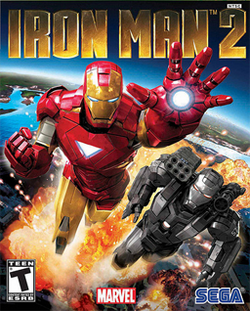
 Iron Man 2 on PS3
 Ms. Pac-Man Maze Madness on PlayStation
 Labyrinth on DS
 Pac-Man Mega Tunnel Battle: Chomp Champs on PS5
 Inspector Gadget: Gadget's Crazy Maze on PlayStation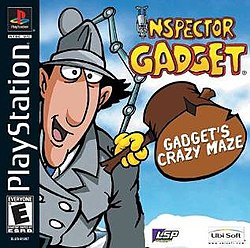










 Another SquareThought Site