

 Aug 2025
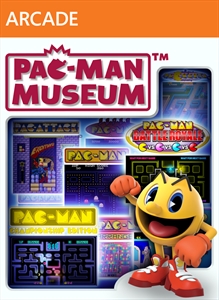

Pac-Man Museum arrives with little fanfare and a predictable amount of nostalgia, which is to say it smells faintly of quarter slots and the lunch-table bragging rights of a simpler era. The compilation packages nine Pac-titles spanning the series' eccentric, candy-coloured evolution: vintage maze classicry, oddball platformers, puzzlers, and one or two entries that exist primarily to remind you how experimental the late 80s and 90s were. It's a tidy, digital cabinet assembled by Mine Loader Software and released under the Namco umbrella in February 2014. If you're buying this because you want Ms. Pac-Man to be included in most people's drawers of fond memories, note that she was DLC-free until March 31, 2014, then $4.99 for anyone who missed the promotional window. The compilation was later delisted in 2020, which gives this review the bittersweet air of a museum curator describing a closed exhibit.
Pac-Man Museum is not a single game but a buffet of small, mostly unrelated appetites. The main course is, predictably, Pac-Man (1980) itself: simple, perfect, and as unforgiving as a vending machine that eats your dollar. Also included are Super Pac-Man (1982), Pac & Pal (1983), Pac-Land (1984, Japanese version), Pac-Mania (1987, Japanese version), Pac-Attack (1993, Genesis/Mega Drive version), Pac-Man Arrangement (the PSP/Namco Museum Battle Collection port, 2005), Pac-Man Championship Edition (2007), and Pac-Man Battle Royale (2011). Ms. Pac-Man exists in the package but behaves like an exclusive party guest: you have to pay for her unless you downloaded her while she was temporarily free. Each game is faithful to its arcade or original console incarnation, and that is the point. If you want modern reinterpretation, this isn't the place. If you want faithful ports to play with leaderboards and achievements (console versions only), then the compilation's incentives are functional. The games are served with some light dressing: a Stampbook award system that hands out virtual stamps (eight per game) for completing small, often forgettable tasks. Completing stamps unlocks characters and objects to display in the Pac-Room, a digital apartment inspired by the Pac-Man and the Ghostly Adventures TV show. The Pac-Room is pleasant wallpaper for completionists and a mildly impressive shrine to the franchise's merchandising choices. Unlocking a golden fruit stamp will add a figurine; completing a set will grant medals. It sounds more thrilling on paper than it is in practice, but it's the sort of micro-ecstasy completionists need: incremental reward, two-step validation, and a place to stare at your digital trophies while rationalizing why medals for retro high scores are a necessary emotional outlet. Gameplay-wise the compilation is a mixed bag in the way cereal brands are a mixed bag: some pieces are the original, crunchy classics; others are sugary experiments. Pac-Man and Ms. Pac-Man are competent classics, Championship Edition still hits with its frantic score-chasing loop, and Pac-Mania offers a weirdly satisfying 3D-ish twist on the maze formula. Pac-Attack and Pac-Man Battle Royale keep their original multiplayer modes intact; Battle Royale is the rare entry intended explicitly to make a living room into a small, chaotic gladiatorial arena where players mess with each other's ghosts. Most other multiplayer features, however, were cut-so don't buy this expecting couch chaos across the whole collection. The guide mode for Pac-Man is a helpful nod for newcomers pretending that mazes were once difficult, and online leaderboards provide a thin veneer of community competition for score chasers. The compilation's structure is mostly functional: pick a game, play it, unlock stamps, collect items, come back for more. The flow suffers only from missing context-explanations for the quirks of games like Pac & Pal or Super Pac-Man are thin, and players unfamiliar with the series' odd detours may find themselves confused rather than delighted. For veteran players, it's a pleasant trip down a pixelated memory lane, for new players it's a curious history lesson with a scoring system designed to keep you punching virtual coins into an increasingly polite slot machine.
Visual fidelity is not the selling point, nor does it pretend to be. These are faithful ports, mostly preserving the original sprites, palettes, and that unmistakable arcade oversaturation of neon. Pac-Man and Ms. Pac-Man look exactly like they did in 1980 and 1982, and if you find comfort in geometry clipped to a grid and a ghost with precisely four frames of personality, you will be satisfied. Championship Edition is the one that benefits most visually from being modern: it glows, it pulses, and it looks like score-chasing distilled into a light show. Pac-Man Arrangement and Pac-Land preserve their original art direction without attempting to upscale or modernize in a way that would dilute the nostalgia. The Pac-Room is competent but not showy. The objects and figurines you unlock are modelled and displayed for inspection, but there is a gulf between collecting them and feeling that collection mean anything. They act as tokens-visual receipts for achievements-rather than narrative or mechanical rewards. The menu UI is clean and utilitarian, a functional museum placard rather than an immersive lobby. For a compilation that trades on memory and brand recognition, visual presentation never tries to be revolutionary. It wants to be a well-lit archive shelf rather than an immersive diorama, and it succeeds admirably at that modest aim.
Pac-Man Museum is an earnest, reasonably curated anthology that knows exactly what it is: a nostalgic cabinet with a few modern trimmings. It doesn't try to reinvent the wheel; it polishes it enough so you can admire the original spokes. The inclusion of Battle Royale and Championship Edition gives the collection useful spice-Battle Royale for chaotic local play, Championship Edition for addictive solo score runs. The stamp and Pac-Room systems add a patina of modernization, giving younger players a reason to pick through older titles while providing completionists with an achievable checklist. The compilation's compromises are obvious. Multiplay was stripped out of several titles, Ms. Pac-Man was locked behind DLC after a short free window, and some of the side entries-Pac & Pal, Super Pac-Man-are historical curiosities rather than essential plays. Critical reception reflected this balance: aggregate scores around the mid-60s on Metacritic, a 6/10 on Steam, and a few 7/10s in the press suggest a collection that's solid but not indispensable. Hardcore Gamer's more enthusiastic 4/5 underlines that if you're invested in Pac's history, this is probably the best cheap museum you've got. If you're indifferent, wait for a sale and lower expectations accordingly. In short: buy this if you want a tidy, faithful collection of Pac games that respects the originals and tacks on modern conveniences. Don't buy it expecting deep remasters, new content, or a reinvention of a yellow circle's existential crisis. The Pac-Room will not solve your midlife nostalgia, but it will let you catalogue your memories and show them off like a responsible adult. If that sounds like a satisfying Friday night, then this museum's open for visitors-while it lasted.
 Iron Man 2 on PS3
 Mega Man Anniversary Collection on PS2
 Ms. Pac-Man Maze Madness on PlayStation
 Labyrinth on DS
 Pac-Man Mega Tunnel Battle: Chomp Champs on PS5
 Inspector Gadget: Gadget's Crazy Maze on PlayStation
 Pac-Man Championship Edition DX on PS3










 Another SquareThought Site