

 Aug 2025
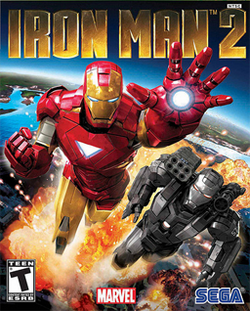

There is a particular joy in diagnosis. In the mid-1990s a reviewer could slice a cartridge open with language, call out a game's ailments, and send it back to the shelves with a stern face and a recommendation to the patient: play only with supervision. Entering 2010, armed with a PlayStation 3 controller and a greater tolerance for corporate tie-ins, I approached "Iron Man 2" as a sequel to an already uneven first game and as an artefact of licenced cinema merchandising. The game is an action-adventure riff on the Marvel blockbuster, developed for the PS3 by Sega Studios San Francisco. It arrives with the pedigree of Hollywood voices - Don Cheadle and Samuel L. Jackson reprise their film roles - and the dubious blessing of being penned in part by Matt Fraction, a comic-book writer whose pedigree suggested the plot might at least steer itself away from boilerplate. If you are expecting a silver-age triumph of flight and laser, strap in with tempered enthusiasm. The developers have attempted to refine flight controls, melee combat and AI, and they have stretched the licence into an original story that takes place after the film. The result, however, is a game that oscillates between competent engineering and design choices so unimaginative they feel like the sort of thing a hungry shark would reject: lots of chrome, some bite, and a concerning tendency to circle the same patch of water until someone grows bored and walks away.
The mechanical bones of "Iron Man 2" are simple and, at times, sensible. The player may inhabit either Tony Stark in the Iron Man suit or James Rhodes in the War Machine rig. The two playstyles are clearly defined: Iron Man is the sleeker, energy-weapons specialist, while War Machine trades finesse for ballistic ordinance and tougher plating. For a fan of the character sheet this is gratifying; Marks II through VI are present and you may tinker with upgrades, weapon load-outs and a few cosmetic choices. In a world where industrial design and RPG-lite upgrade screens meet in an awkward handshake, the armour menu is serviceable enough. Flight - the crucial element for a game about a man in a flying suit - was improved over the previous outing, and on paper this is the game's strongest promise. The craft controls allow closer-to-ground manoeuvres, better responsiveness when strafing, and a generous allowance for strafing while firing. Melee received attention too: a push toward faster lock-on strikes and a bit more animation variety than the flailing fists of the last game. AI tweaks were promised and implemented, mostly in the form of larger enemy variants and a handful of new behaviours. Yet the implementation seldom forces the player to learn new tactics; once you discover the comfortable rhythm of boost, barrel-roll, pepper with repulsors and bail to cover, the game rewards repetition instead of creativity. Mission design is functional but short. The campaign, which follows an original narrative penned by Fraction and Sega staff, is compact; critics at the time flagged the brevity and the paucity of meaningful encounters. The plot moves from the Dataspine archive heist through a Roxxon conspiracy and into an escalating conflict against A.I.M. and the ultimate monstrosity of the story, Ultimo. Set-pieces - destroying dropships, escorting S.H.I.E.L.D. transports, intercepting Armiger platforms - swagger with cinematic intent but rarely attain cinematic exhilaration. Objectives tend to be variations on "clear the area" and "destroy the big thing," with boss battles that swell in size rather than in mechanical interest. War Machine sequences intersperse with Iron Man missions, but the game never quite capitalises on the divergent identities of the suits beyond their weapon palettes. There is some satisfaction in swapping weapons mid-combat and watching an arc reactor go from quiet glow to nuclear tantrum, but the upgrade tree is rendered almost moot by the lack of difficulty. Enemies scale in armour and firepower, but not in tactical challenge; therefore the incentive to grind for upgrades is weak, and the game's systems feel decorative rather than essential. A note on the alternate versions: the Wii and PSP cuts of the game took a different route, simplifying combat and removing full-flight in favour of hovering and more grounded encounters. For the PS3 player these choices are curious reminders that the same title had to perform across disparate hardware, and that compromises were made at the design table. In short: "Iron Man 2" will let you be Tony Stark, will let you fly and punch and fire lasers, but it will not, with any great consistency, make you feel the full, stomach-floating joy of being a man in a weaponised tuxedo.
Graphically the PS3 version of "Iron Man 2" sits in an awkward middle ground. At a glance the models are glossy and recognisable: the suits have weight, the cityscapes provide verticality, and explosions bloom with a satisfactory amount of chroma and smoke. Yet the sheen is often skin-deep. Textures can be disappointingly thin at close quarters, pop-in intrudes at an inopportune frequency, and draw distances flicker in a way that evokes older generation hardware more than a system designed to deliver detail. Empire magazine went so far as to liken the experience to a PlayStation 1 game; that hyperbole stings, but it captures a kernel of truth - there are moments when the art direction wants to sell you grandeur while the engine is still counting change. Animation is serviceable. The suits land with a metallic thud, jostle convincingly under fire and execute repulsor strikes with the expected camera flourishes. The problem is repetition: enemy animation cycles are reused so often that battles, however explosive, begin to feel like a looping action reel. Lighting is inconsistent; some interiors are warmly lit and immersive, while others look like someone forgot to light the stage. The voice work is a relative highlight. Don Cheadle and Samuel L. Jackson return to their film roles and lend a thread of authenticity to the proceedings, even if Robert Downey Jr. does not return to voice Tony - the role is handled by Eric Loomis, who gives a competent, if less incandescent, Tony Stark. The soundtrack attempts to inject attitude with an exclusive Lamb of God track and assorted licensed tracks; it helps on occasion but cannot cover for the monotony of repeated mission templates.
In the 1990s a title like this would have been placed beneath a magnifying glass and measured against a handful of genre-defining contemporaries. Evaluated on its own merits, "Iron Man 2" is an inoffensive, occasionally pleasing action-adventure game that never quite transcends the obligations of being a licensed tie-in. It delivers the basics admirably: flight, a selection of armours, a recognisable cast, and set-pieces big enough to justify the purchase of an extra controller. It fails, however, to capitalise on the dramatic potential of its premise. Repetition, short campaign length, inconsistent graphics, and a lack of compelling mechanical escalation blunt the experience. Contemporary critics were unkind but not untruthful: aggregate scores for the PS3 version hovered in the low forties on Metacritic, and many outlets pointed to the game's short campaign and repetitive nature as its central defects. If you are a completist who wants every Marvel tie-in or a collector of superhero ephemera, this will likely be a pleasant diversion, especially if you crank up the difficulty and force yourself away from the comfort of the same few tactics. For a player in search of an inspired action-adventure - a game that understands and then subverts the expectations of its genre - "Iron Man 2" will disappoint. It is competent in the way a well-built toy is competent: it looks the part, performs the motions, but lacks the spark that turns play into obsession. The verdict, delivered without melodrama: this is a tie-in that does the job, and no more. It is neither a crime nor a masterwork. Consider renting before you buy, or wait for a sale if you must add it to your shelf. If nothing else, you will get to fly for a while and pretend that an expensive piece of hardware is merely a suit of armour. In gaming, as in heroism, appearances can only take you so far; ultimately you must live up to the suit, and on the PS3 "Iron Man 2" only occasionally does.
 Pac-Man World Re-Pac on PS5
 Mega Man Anniversary Collection on PS2
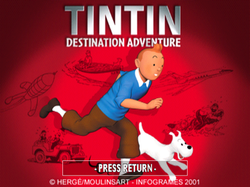
 Tintin: Destination Adventure on PlayStation
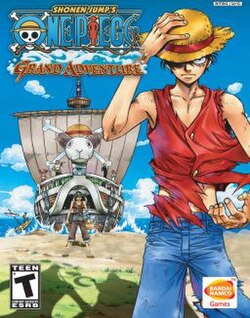
 One Piece Grand Adventure on PS2
 Taiko no Tatsujin: Dokodon! Mystery Adventure on Switch
 Onimusha: Dawn of Dreams on PS2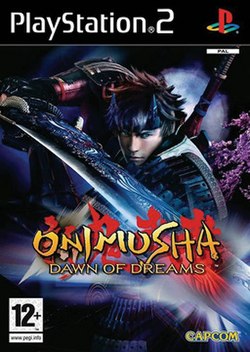










 Another SquareThought Site