

 Aug 2025
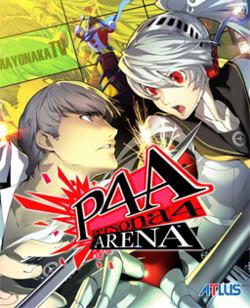

Persona 4: Arena is the weirdly brilliant lovechild of two different video game families: Atlus's moody, heart-on-sleeve JRPGs and Arc System Works' flashy, input-hungry fighters. On paper it sounds like inviting a polite dinner guest (the Investigation Team) and a pack of adrenaline-fueled wrestlers (the Shadow Operatives) to a tea party and then letting a sentient TV throw a martial arts tournament. In practice, Arena pulls it off by treating the fight engine seriously while giving fans of Persona something even more precious than combo strings: character development. This PS3 port (released in North America on August 7, 2012) is a canonical sequel to Persona 4, pushing the familiar cast into a smaller, faster arena where the story beats are tighter and the emotional punches hit in between rounds.
If you're coming for the moves, Persona 4: Arena does not disappoint. Arc System Works' pedigree shows: controls are crisp, attacks feel weighty, and the 2D/3D hybrid presentation makes every Persona summon and special move pop. But the gameplay is also Persona through-and-through: Personas assist in combat, status ailments and buffs matter, and a careful use of SP and Burst resources separates button-mashers from tacticians. Mechanically, Arena sets up interesting stakes for characters that usually spar with existential dread rather than light punches. The Personas function as both an offensive tool and a resource you must protect-your Persona can be targeted, and after taking four hits it becomes unavailable for a short time. That creates a dynamic where losing your Persona mid-fight mirrors the series' themes: losing a piece of yourself, coping, and coming back stronger-often literally via the Awakening State that restores SP and improves defenses when health runs low. Instant Kill moves and the SP/Burst systems add spectacle, but the core of Arena is a chess match with stylish one-button checkmates. Where Arena truly shines is in how those systems are tailored to individual characters. Yu Narukami, as the Wild Card, is the obvious all-rounder: adaptable, versatile, capable of roster-like flexibility that echoes his role in the RPGs as someone who can equip multiple Personas. Playing Yu feels like embodying that leadership: you can approach fights in many ways, and your options rarely feel constricted. Chie Satonaka's gameplay reads like her personality-up-close, physical, and energetic. Her moveset rewards aggression and punishing those who try to play keep-away. Chie's arc in the story, about loyalty and grappling with her own vulnerabilities, is mirrored in play: she wants to charge in, and the risk/reward design reflects that thrill. Yosuke Hanamura keeps his trademark chatter and awkward loyalty in his moveset. He's opportunistic in battle-the combos are quick, often meant to exploit openings the way Yosuke exploits social situations for comic effect. Yosuke's development in Arena is less about discovery and more about responsibility: he has to act like the group's glue, and his fighting style emphasizes adaptability and mid-fight judgement calls. Kanji Tatsumi's whole presentation-gruff, confused, and terrified of not being 'understood'-is present in both his combat and story. His powerful, sometimes slow attacks telegraph his attempts to compensate for inner turmoil with bluster. Arena leans into Kanji's comic bravado but also gives him moments of genuine heart as he navigates the TV World and his isolated perception of the tournament as a dream. Watching Kanji fight is like watching someone swing a baseball bat at their own insecurities; it hits hard and occasionally misfires, but the intention is honest. Rise Kujikawa transitions from idol chatterbox to support powerhouse, and her in-fight role reflects that. Her Persona-based assists and the way she manipulates space capture her background as an entertainer who thrives in the spotlight yet struggles with identity. Arena's story puts Rise through the wringer-being trapped in the TV World and used as a mock commentator-and the combat design helps underline how the pressure of performance is both her gift and her prison. Naoto Shirogane's moves are precise and reserved, very much like the detective persona (pun intended) she maintains. Her arc-already rich from Persona 4-continues here: Naoto is hired to spy on Mitsuru's group, and that duplicity bleeds into her playstyle. The layered nature of her story in Arena-duty versus belonging-is matched by a toolkit that rewards calculated, disciplined play. The inclusion of the older SEES members-Aigis, Mitsuru, and Akihiko-pushes the narrative into crossover territory without feeling gimmicky. Aigis, the stoic android, has a mechanical elegance in combat, while Mitsuru's aristocratic precision and Akihiko's raw boxing power reflect their matured selves from Persona 3. Their arcs in Arena are not mere cameos: they bring the Kirijo Group's responsibility to the forefront and help birth Labrys' story into the main line. Labrys is the new character the game builds its emotional center around. Introduced as an Anti-Shadow weapon and later revealed to be the trapped, brainwashed girl at the heart of the P-1 Grand Prix, Labrys undergoes the most dramatic arc. Her backstory-forced to fight her own sister-models in the Kirijo lab, recapture, brainwashing, and a TV World dungeon shaped by a false Yasogami High-reads like a tragic sci-fi parable about identity and trauma. In combat, Labrys is a study in contradiction: constructed for violence but craving acceptance. Her Shadow, General Teddie (a cruel impersonation of the series' beloved mascot), uses the tournament to force others to 'feel' her pain. The payoff-Labrys' acceptance of her Shadow and evolution into Ariadne-lands emotionally because the fights are literally and metaphorically about confronting what you fear inside yourself. Arena stages this transformation through both narrative visual novel segments and through a fighting style that shifts as she embraces her Persona. Teddie and General Teddie act as the game's jokester vs. uncanny mirror. The faux-host manipulation by General Teddie is an uncomfortable inversion of comfort: the familiar turned threatening. That duplicity is reflected in how characters are tricked into believing they're fighting Shadows. The game frequently toys with identity-what's a real self versus an imitation-and uses the roster's established backstories to do so. Elizabeth's presence ties Arena back to Persona's metaphysical elements. Her interest in testing Yu's Wild Card ability reads like a framing device, but it's also thematic: Arena wants to interrogate bonds as a source of power. The Wild Card, the story suggests, isn't just a gameplay convenience; it's a narrative engine. Yu wrestling with the implications of being able to 'change' bonds into strength is the undercurrent that lets Arena justify putting these characters in a literal gladiatorial situation. The ending-labeled 'Cliffhanger'-doesn't tie everything neatly, and that's deliberate. A mastermind puppeteering Labrys, an entity imitating Shadows to weaken the cast, and the final escape set up Ultimax. It's a rare fighting-game story that actually leaves threads; when the credits roll you're left feeling like the Investigation Team's reunion is the starting gun, not the finish line. Arena isn't about resolving every emotional knot; it's about stranding characters at the lip of another mystery and watching them sharpen into the people they must be to face it. This character-centric design is what makes Persona 4: Arena stand out in the fighting genre. Each moveset isn't a random bundle of flashy inputs; it's a mechanical expression of a personality or a continuing story beat. The result is one of the most satisfying 'crossover' experiences because, unlike other spin-offs that graft characters onto a fighting skeleton, Arena sculpts its mechanics around who these people are.
Arena is a love letter in pixels and ink. Arc System Works' sprite work combines the lush, exaggerated motion of classic 2D fighters with subtle three-dimensional stage elements. Animations are smooth, Persona summons look downright theatrical, and the anime cutscenes (handled by Madhouse) elevate key plot beats into genuinely cinematic moments. The visual novel sections are sometimes long-Eurogamer and others noted slow pacing-but they're rarely unattractive: character portraits, damaged clothing, and energetic poses (credit to Shigenori Soejima and Hanako Oribe) sell emotion with the same confidence as a special move. Soundtrack-wise, Atsushi Kitajoh's compositions, layered with Shoji Meguro's theme motifs, keep the atmosphere locked between melancholy and adrenaline; it's headphone candy for the emotionally conflicted brawler.
Persona 4: Arena is a rare fighting game that understands it has a duty to both its genre and its characters. It rewards players who want their combos to mean something while giving fans a canonical continuation of Persona 4 that explores identity, trauma, and friendship between jabs and Persona summons. The story mode can drag-visual novel blocks between fights are long and the 'Cliffhanger' ending leaves some threads hanging-but that impatience is a small price to pay for seeing Labrys' heartbreaking arc and watching older characters grow into new roles. If you own a PS3 and you're either a Persona fan or a fighting-game enthusiast (or, ideal scenario, both), Arena is the crossover that doesn't feel like a cheap cameo: it feels like characters finally getting the one-on-one conversations they deserved. Plus, the fights are fun. Win-win, unless you get combo-broken by your high school best friend.
 Persona 4 Arena Ultimax on PS3
 Rock 'Em Sock 'Em Robots Arena on PlayStation
 ACA Neo Geo: Art of Fighting 2 on Xbox One
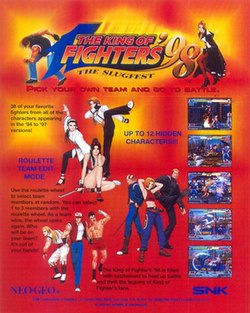
 ACA Neo Geo: The King of Fighters '98 on Xbox One
 Art of Fighting Anthology on PS2
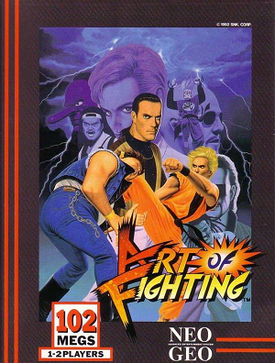
 ACA Neo Geo: Art of Fighting on Xbox One










 Another SquareThought Site