

 Aug 2025
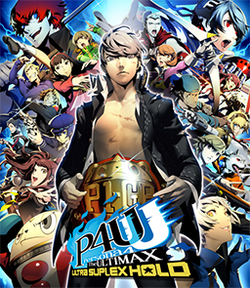

Persona 4 Arena Ultimax (or P4AU if you like throwing letters around like confetti) is the sequel that took a love letter to both Persona fans and fighting-game nerds, set it on fire with stylish anime punches, then politely asked you to come pay attention. Co-developed by Atlus' P-Studio and fighting-game wizards Arc System Works, Ultimax sits on the PS3 as a dazzling mash-up: story-heavy visual-novel beats mixed with properly deep 2D fighting mechanics. If you ever wanted your high-school-themed JRPG to elbow your BlazBlue tournament in the face, this is the crossover you didn't know you needed. It follows directly on from Persona 4 Arena, continuing the weird soap opera of Personas, Shadows, and midnight TV channels. Instead of one linear arcade brawler, Ultimax expands the roster, tightens the combat, and splits the story into parallel campaigns for the Persona 3 and Persona 4 casts. The result is both unapologetically fanservice-y and legitimately solid as a competitive fighter - a rare combo where both your heart and your combo execution get equal screen time.
Ultimax is very much a fighting game first, with Persona decorations. Matches are one-on-one affairs where every character has a unique moveset, Persona abilities, and enough flavor text to make you nostalgic for the weird little personality crises their canon lives on. Returning characters from Arena come back with balance adjustments and new moves, while eight newcomers - including the messy and memorable Sho Minazuki - add new matchups and mind games. The combat keeps the Arc System Works DNA: fast pacing, rewarding combos, and attention to spacing. New to Ultimax is the S-Hold system, which lets you charge attacks for a more deliberate payoff; it's a bit like telling your opponent "I'm gonna be meaner, in four beats." Shadow Types are a neat twist: many characters have a Shadow variant that's higher risk and reward (reduced normal attack damage, altered moveset, fewer defensive options), but with powerful trade-offs. Shadow players get to hold onto SP between rounds and can trigger a Shadow Rampage, which grants infinite SP for a short, chaotic time. It's essentially handing a motivated villain a red cape and saying, "Go nuts." Golden Arena mode is Ultimax's cheeky RPG-lite survival mode. You run through dungeons, build stats, and grow your fighter through an experience loop that feels oddly addictive - like grinding a Persona social link, but with fewer homework scenes and more tasteful beatdowns. The game blends this with Social Links meshed into navigator skills, lending a faint Persona 4 whiff even when all you want to do is mash light punch. The story mode is presented in long visual-novel-style chapters and is split into two campaigns: one focusing on the Persona 4 Investigation Team, the other on the Shadow Operatives (Persona 3 cast). That splitting was one of the game's best decisions: it lets you follow two different perspectives and keeps the pacing brisk without forcing you through dozens of character-specific campaigns like the previous title. There's also the original Arena story included as DLC content, plus a Tohru Adachi campaign that adds more narrative meat for fans. If you like plot-heavy unlockables, Ultimax is a dessert buffet. Online, Ultimax modernized with an arcade-style lobby where players can interact in chibi avatar form (those were borrowed from Persona Q's designs). On the PS3 era, online play was solid for casual matches, though later ports on newer platforms would tinker with netcode. For PS3 owners back in 2014, the online lobby helped the game feel like an actual arcade experience: you can hang out, trash-talk (politely), and jump into matches without losing the game's weirdly wholesome soul.
If Persona games had a runway, Ultimax would strut down it wearing a neon jacket and a smirk. The visuals are vibrant 2D sprites with an anime sheen so faithful you could hang them on a wall and call it modern art. Arc System Works' experience shows: the character animations are crisp, moves have satisfying visual weight, and the expressive portraits during story scenes hit that sweet spot between charming and melodramatic. Capsule produced the anime cutscenes, adding CG polish where it matters - the cinematics feel like a mini Persona anime episode between your rounds of crushing an opponent with a Persona summon. Stages are colorful, full of Persona-verse references, and occasionally surreal - the TV World gets reimagined into battlegrounds that are both nostalgic and just plain trippy. Character redesigns (especially for the Persona 3 cast) reflect the passage of time from their mainline games, and Shigenori Soejima's art direction keeps the whole thing cohesive. On PS3 the game ran well and looked great for the era; shadows, special effects, and the flashy Persona summons pop during combat rather than blend into a confusing mess. Even the online lobby avatars are cute enough to make you forgive most players for spamming the same taunt forever.
Persona 4 Arena Ultimax is the rare sequel that improves what came before without losing the original's charm. It tightens the fighting mechanics, adds meaningful options like Shadow Types and S-Hold, and respects the Persona source material while letting the combat take center stage. The story is entertainingly over-the-top - think midnight-TV-level soap opera with fists - and the split campaigns give you more to chew on without bloating things. Throw in Golden Arena and DLC campaigns for extra value, and you've got a full package that's great both for casual Persona fans and the fighting-game crowd. Are there flaws? If you're a purist looking only for rollback netcode on PS3 in 2014, you'll feel left out - online experience was good, not revolutionary. The story mode can be long-winded if you treat it like a textbook rather than an amusement park. But honestly, those are nitpicks when the core package delivers polished combat, a lovingly realized aesthetic, and a roster stuffed with characters you care about (or love to watch get thrown). If you own a PS3 and have even a passing affection for stylish 2D fighters or the Persona universe, Ultimax is an easy recommendation - it's fun, surprisingly deep, and weirdly wholesome for a game that spends so much time in a TV world where giant Personas shout dramatic one-liners. Score-wise, Ultimax earns a solid 9/10: a knockout sequel, a colorful party, and the kind of crossover that actually makes sense. Now go pick a character, learn one combo, and then spend the next three hours convincing yourself you'll stop at just one match. We both know that's a lie, and it's a beautiful one.
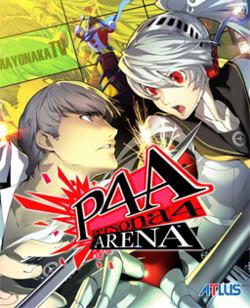 Kurt Warner's Arena Football Unleashed on PlayStation
 Rock 'Em Sock 'Em Robots Arena on PlayStation
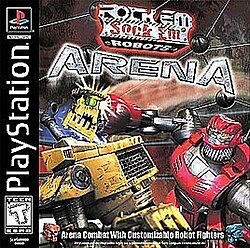 ACA Neo Geo: Art of Fighting 2 on Xbox One
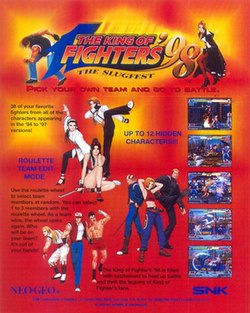
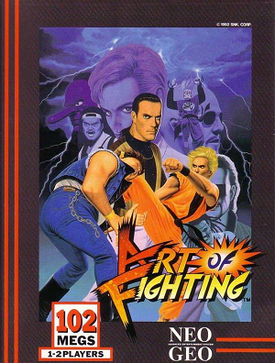 ACA Neo Geo: The King of Fighters '98 on Xbox One
 Art of Fighting Anthology on PS2
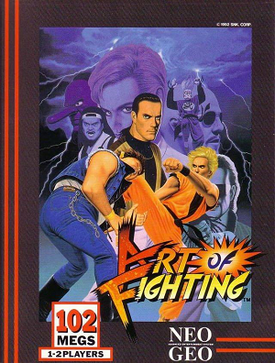 ACA Neo Geo: Art of Fighting on Xbox One










 Another SquareThought Site