

 Aug 2025
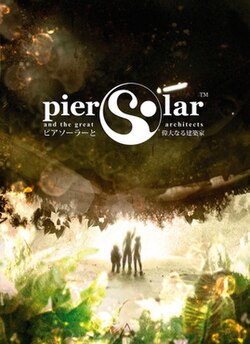

Pier Solar started life as a love project for obsolete hardware and somehow graduated into a multi-platform HD release. What arrives on the PS3 is Pier Solar HD: an HD remaster and port of a game that was originally built to push the limits of the Sega Mega Drive cartridge format. If you like your RPGs baroque and your development histories bizarre, this one checks both boxes. The story itself - three friends chasing a magic herb and tripping into cosmic mystery - is classic JRPG scaffolding. What's more interesting is how WaterMelon went about preserving and enhancing a technically constrained original for modern systems: moving from a 64-megabit cartridge (the original's bragging right) and optional Mega-CD audio, through a Kickstarter-funded HD remake, to a PS3/PS4 cross-buy release with newly redrawn cutscenes and options intended to address some of the design choices that felt archaic in 2010. This review focuses less on plot spoilers and more on how Pier Solar HD translates legacy technical design into a current-gen package - and whether that translation actually improves the player experience.
Pier Solar's mechanical DNA is unapologetically 16-bit. Combat is turn-based, with visible party positioning and skill animations that are generous in both flair and duration. In the original Mega Drive release some of those lengthy animations and the relatively high encounter frequency combined to make progression feel like slow, deliberate choreography. WaterMelon recognized this when creating Pier Solar HD and exposed two particularly pragmatic settings: battle speed and battle frequency. These are the kind of QoL toggles that matter when you move a game designed for cartridge-era pacing into an era where time feels more precious. Battle speed directly shortens animation timing and the interstitial waits between commands; frequency changes the rate at which random encounters occur. Together they allow players to tune the game from 'authentic retro slog' to 'modern-friendly grind sink' without altering the underlying balance tables. Looking under the hood, the original game's engine was built over a long period (development started in 2004 with engine maturity by 2006) and optimized for the constraints of cartridge memory. The decision to target a 64-megabit cartridge on the Mega Drive was a deliberate technical gamble: it allowed for a richer tile set, more unique sprites, and larger maps, but it also pushed the limits of what a single cartridge could reasonably hold. Porting that content to the PS3 freed the development team from the rom-size juggling act, but it also raised questions about asset handling. Instead of simply upscaling everything, WaterMelon took the opportunity to re-draw cutscene artwork and add a new three-minute opening animation, created by the project's character designer and cinematics director. Those are raster assets that breathe differently at higher resolutions than tiled sprite maps, and the HD release treats them as first-class citizens. Combat pacing and encounter design are still the areas that reveal the game's lineage. Some reviewers found the level layouts 'labyrinthine' and boss fights heavy on retry loops; Pier Solar HD doesn't rewrite those systems. Instead, the choices made are pragmatic: let the player speed things up where animations are slow and reduce encounter density where backtracking becomes tedious. The result is a system that respects the original encounter curves and progression gates while admitting modern impatience. On the input and interface side, the PS3 mapping is straightforward: traditional face-button confirmations and analog for optional navigation. The game retains the party and inventory complexities of classic RPGs - equipment, consumables, and class-like distinctions between characters - but lacks modern conveniences like layered quest markers or autopath. That keeps exploration deliberate, but it also places a higher cognitive load on the player to map and remember the 'labyrinthine' geography mentioned by multiple critics. For completionists and retro purists that's a feature; for speedrunners and impatient PS3 owners it can be a bug. From a systems perspective the HD build is also notable for its cross-platform ambitions. Pier Solar's roadmap through Kickstarter targeted Xbox 360, PC, Mac, Linux, Dreamcast and more; the PS3 release represents one stop on a careful porting pipeline. Some platforms, notably Dreamcast, required additional QA because physical media can't be patched after shipping. That constraint influenced the HD release's approach to bug fixes and feature parity: adding toggleable options rather than changing core systems reduced regression risk across platforms.
Pier Solar HD sells itself visually by leaning into 'authentic 16-bit' aesthetics while giving the textures and artwork a higher resolution canvas. The original Mega Drive incarnation pushed the system by packing extensive tile sets into a 64-megabit ROM; that meant efficient reuse of tiles, palette tricks, and tight sprite packing. The HD release had two technical tasks: preserve the original pixel art charm, and adapt it to widescreen displays and higher pixel densities without making everything look mushy. Rather than relying purely on nearest-neighbor scaling, WaterMelon commissioned newly drawn cutscene art and higher-resolution interface elements to match modern expectations. The in-game tiles and sprites largely retain their low-level construction - you'd still recognize the pixel-perfect character portraits and tilesets - but the supporting assets (UI frames, dialogue backdrops, cutscene illustrations) were redone. This hybrid approach keeps the game rooted in its origins while preventing a jarring clash between low-res sprites and a high-res HUD. Color science is one area where the HD port shines. Critics and players frequently called out the 'vibrant color palette' and strong art direction, and that holds true on the PS3. Converting a palette that was designed for the Mega Drive's color output to modern RGB displays requires careful remapping; naive conversions can wash out hues or over-saturate. Whoever handled the asset pipeline here preserved the punchy midtones and contrasted well between foreground sprites and parallax backgrounds. The effect is what Game Informer described as an 'authentic 16-bit look' - not a photorealistic up-res, but a faithful translation that feels both nostalgic and intentional. Animation-wise, the HD release offers no dramatic reengineering of the combat or movement frames; rather, it introduces timing options so the perception of 'slow' animation can be changed without rebuilding frame data. That is a smart engineering compromise. The new opening animation (three minutes, original production) is a full-resolution linear cinematic asset that signals the project's evolution beyond retro constraints. On PS3 the game also benefits from more memory headroom for loading larger maps and more simultaneous graphical elements, which reduces the need for some of the original's tile-swapping tricks. The net result is a visual experience that reads as a remastered classic rather than a remade modern title.
Pier Solar HD on PS3 is a fascinating exercise in technical translation. WaterMelon had to decide which parts of a lovingly handcrafted 64-megabit Mega Drive RPG were sacrosanct and which could be improved for modern consumers. They chose to preserve core systems - the turn-based combat, the exploratory map design, the 16-bit sprite aesthetic - while adding pragmatic HD-era niceties: faster battle speeds, adjustable encounter rates, redrawn cutscenes, and a polished presentation layer. The soundtrack, which earned near-universal praise for helping sell the 16-bit vibe, remains a standout and benefits from modern audio fidelity on PS3. If you want a stream-lined, heavily QA'd RPG that follows contemporary design norms, this isn't trying to be that. If you want a technical curiosity that bridges cartridge-era engineering and modern porting practice - one that offers tunable options to reconcile old design with new patience levels - Pier Solar HD is a competent, sometimes charming package. The game's rough edges (labyrinthine design, occasional repetitive fights) are by design or legacy, and the HD port's toolset goes a long way toward mitigating them without rewriting history. For the technically curious and nostalgia-inclined, it's worth the trip; for everyone else it's a respectable, occasionally indulgent reminder of how much developers used to squeeze out of restricted hardware. Either way, the PS3 version proves that retrospective engineering can be both reverent and practical - and yes, it still has the patience to make you fight a lot of battles.
 Solar Ash on PS5
 Test Drive Unlimited Solar Crown on PS5
 Combat Elite: WWII Paratroopers on PS2
 The Banner Saga 2 on PS4
 Arcania: The Complete Tale on PS3
 Predecessor on PS4










 Another SquareThought Site