

 Nov 2012
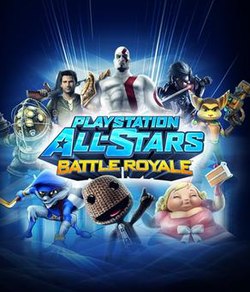

PlayStation All-Stars Battle Royale is the video game equivalent of a family reunion where everyone brought their own weird weapon. Released in late 2012 for the PlayStation 3 (with a cross-buy Vita edition), it assembles mascots, macho men and the occasional moustache from Sony's stable and beyond - Kratos, Sackboy, Big Daddy, Nathan Drake and a cast that reads like a hero roll call at a multi-franchise cosplay convention. If you've ever wondered what happens when you let PaRappa the Rapper throw down next to a hulking Big Daddy while Zeus photobombs, this is the answer. The game was developed by SuperBot Entertainment, a studio formed specifically to make this crossover, and it plays like a love letter to PlayStation's history - with some typos in the stationery. Critics generally agreed it's a competent and occasionally excellent multiplayer brawler that struggles with single-player fluff, presentation, and the odd design choice that turns a hard-fought comeback into a meter management problem. If Super Smash Bros. is the archeological dig of platform fighters, All-Stars is an enthusiastic field trip with a well-stocked lunchbox and slightly damp socks.
On paper, PlayStation All-Stars is familiar and sensible: a platform fighter that lets up to four players scuffle on a 2D plane while stages do their level-best to mess with you. Where it tries to be interesting - and largely succeeds - is in how it handles victory. Instead of chipping away at health bars or building up damage percentages until an enemy flies into orbit, All-Stars asks you to collect AP orbs. Every hit, item pickup and lucky minion death tosses a few orbs your way and fills your power meter. When the meter is full you can spend it on a 'Super Move' - a flashy, stage-ruining finisher that, if it connects, wins the match. The Super Move system is the game's personality trait. There are three tiers: Level 1 is cheap and small; Level 3 is expensive and cinematic. It's clever in that it adds a strategic tension to a match: do you burn a Level 1 to clip one overconfident opponent, or hoard AP and hope the big cinematic nuke lands? The downside is psychological: if you spend five minutes building a meter and miss the super, those minutes feel eroded. Some critics disliked that miss feeling; others found the payoff exhilarating. Both reactions are correct and reveal the game's forked identity - part party brawler, part deliberate, meter-driven duel. Characters play distinct roles. Kratos is the meat grinder who tosses gods like trash, Raiden is a lightning-quick assassin, Ratchet & Clank bring gadget range, and PaRappa brings the surrealism (and occasional suspicion that rhythm-game lyricism could be used as a weapon). There are roughly twenty launch characters and a couple of DLC additions (Kat and Emmett, later Zeus and Isaac Clarke), and the roster mixes first-party icons with third-party guests like Big Daddy. Each fighter gets a single-player arcade ladder with a rival and a final boss: Polygon Man, PlayStation's old, oddly bitter mascot, who serves as the big, polygonal final exam. Stages are where All-Stars has fun with fandom. Each arena blends two games - Sandover Village borrows Jak & Daxter energy, Dreamscape is LittleBigPlanet fused with Buzz!, and Hades alternates God of War theatrics with Patapon whimsy. Stage hazards and the second-world takeover system mean the ground beneath your feet occasionally becomes a copy of someone else's map and tries to kill you. Items drop in the form of recognizable franchise bits (Hedgehog Grenade, Gravity Shield, Razor Claws) and can be toggled off if you prefer pure fighting. There are fifteen arenas at launch, each with evolving hazards that keep a match from becoming a predictable button mash. The game modes cover the basics: timed matches, stock fights, kill-limit bouts and single-player challenges that give the impression of structure without lavish presentation. The campaign is functional but stingy - many cutscenes are static images and the story exists largely to justify moving from one franchise backdrop to another. Progression unlocks costumes and little vanity bits for each character, and each fighter levels up through experience gained in matches, a small carrot for grinding. Online used to be a stronger draw, offering cross-play between PS3 and Vita. By 2019 Sony shut down the game's multiplayer servers, which turned some of All-Stars' social sparkle into an inevitably lonely single-player fiesta. When the online did work, matchmaking and multiplayer chaos were widely praised: the core combat is tight enough to support high-level play, and the variety of characters and items keeps local multiplayer lively and often hilarious. The problem is scarcity. There's a confident core here - especially in multiplayer - but the supporting features and post-launch support were limited, and a sequel never materialized despite roughly one million copies sold.
Graphically All-Stars is a mixed bag that mostly knows what it wants to be. Character models are faithful to their source material; Kratos is appropriately grumpy, Sackboy is texture-rich and squishy, and Big Daddy looks like he could politely sink a boat. The art direction leans into recognisability over uniformity: each fighter retains their franchise's visual DNA, which is exactly what you'd expect and what you want when you're playing as mascot diplomacy. Stages are colorful, loud and occasionally over-enthusiastic. The two-games-per-stage gimmick is a smart piece of design and a neat visual treat - one minute you're leaping across a Jak ruin, the next you're dodging a Buzz! quiz wheel for reasons no one can possibly explain. The transitions are dramatic and often damaging in the best Traditions-of-Platform-Fighters way. Camera framing is competent, and the 2D plane is clear enough that you don't have to perform an archaeological dig to find where your character is. Presentation takes a hit in single-player storytelling. Campaign sequences are largely still images and text, which feels cheap compared to the effort invested in character fidelity and in-stage spectacle. Audio does a better job: the soundtrack uses licensed tracks in trailers and promotional material (Madeon's 'Finale' appears in the opening), and in-match cues are punchy. However, the whole package occasionally reads like a high-budget party trick wrapped in the sort of economy that says, politely, 'We ran out of animation budget for the story bits.' That's a cynical way to describe a game that otherwise looks good enough when it's doing the thing it was made to do - knock people off of floating platforms.
PlayStation All-Stars Battle Royale is the sort of game that works best when it accepts its own silliness and leans into competitive merriment. The core fighting feels deliberate: the AP-orb system and the tiered super moves create meaningful decisions and memorable moments. It's especially fun locally with friends, because the spectacle and franchise fan-service land best in shared bewilderment. Its flaws are not catastrophic: the single-player campaign is thin, the campaign presentation is stingy with animation, and the Super Move mechanic can render an otherwise even match into an all-or-nothing meter toss. Post-launch support was patchy; DLC arrived but plans for more content were curtailed, Sony cut formal ties with SuperBot, and the online servers were eventually shut down. Those are important caveats if you like your fighting game to be a living ecosystem. If you want a PS3-era party brawler that looks the part, carries a handful of genuine mechanical ideas, and will make you shout at a friend who 'accidentally' stole your AP orbs, All-Stars is worth a run. If you expect a sprawling single-player epic or an endlessly supported roster program, you'll leave with reasonable complaints and a shelf of half-fulfilled promises. It's not a masterpiece, but it is a competent, occasionally brilliant melee of mascots - which is what it intended to be, and, in its best moments, what it becomes.
 PlayStation's 30th Anniversary Events
 All-Star Baseball 2004 on PS2
 The Wacky History of Platform Games
 PlayStation Home on PS3
 Obscure: The Aftermath on PS2










 Another SquareThought Site