

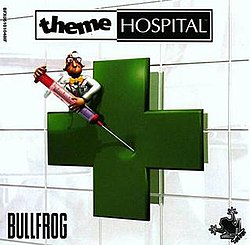

Theme Hospital is one of those management simulations that smells faintly of glue, sarcasm and sanitary disinfectant-made charming by Bullfrog's cartoon sensibilities and weird medical whimsy. The PlayStation port, handled by Krisalis Software, tries to cram that mouse-driven, sprite-heavy, decidedly PC original into a controller-first console of limited resolution and no native cursor. This review is written through the lens of someone who likes to pull a game's skeleton out of its skin and check how the bones are connected: how the UI translates, how the input mapping holds up, what got sacrificed to the console gods, and whether the game's systemic mechanics-queues, pathfinding, staff stats-still hum like a well-oiled nebuliser on nighttime duty. Spoiler: the diagnosis is generally positive, but the patient needs physiotherapy for its controls.
From a design standpoint Theme Hospital is a textbook of systems interacting in predictable and entertaining ways. You build rooms, place machines and furniture, hire staff with varied stats, and watch emergent behaviour-patients routing through GPs, diagnosis rooms and treatment devices-create either efficient flow or clinic-wide chaos. The PlayStation version retains the original's core logic: GPs triage, specialists treat, handymen maintain machines and occasionally cause fiery catastrophes if you ignore maintenance timers. Behind this is the Complex Engine developed during production, designed to support thousands of hand-crafted animations and a high degree of object interactivity. That engine is the reason the game's simulation feels consistent; on PS the same rule sets govern patient arrivals, disease progression and staff scheduling. Technically, the most consequential change in moving to PlayStation was the input model. Theme Hospital was built for a precision pointing device; blueprinting rooms, dropping furniture onto grids and working queues were all conceived with a mouse in mind. The port maps the cursor to the directional pad (and later analog sticks on PS controllers that support them), which introduces discrete, jerky cursor motion and less granular placement. A cursor that moves in fixed jumps across a tiled grid means menu navigation and fine positioning feel sluggish, and the game's original UI elements-small icons, dense lists of staff stats-weren't redesigned for a TV-centric interface. That results in increased cognitive friction: more time spent hunting for the right menu or the right doctor, and a couple of misplaced mouse-click-equivalents when you're trying to frantically reroute a queue during an emergency. Under the hood, pathfinding and AI remain the system's beating heart. The PlayStation version practically mirrors the PC's behaviours: patients pick shortest paths, staff react to break schedules and machines go down if handymen are occupied. Critics historically flagged AI quirks in the PC release-staff idling, occasional queue-jumping or suboptimal room usage-and those survive on PlayStation. For purists that's not a bug but a gameplay lever; you can tweak policies, set diagnosis requirements to extortionist levels, and essentially coax the AI into the behaviour you want. Performance-wise the port largely preserves the simulation tick-rate and the event logic so that emergencies, epidemics and inspections play out with the same tension as on PC. However, the lack of PC-style hotkeys and the slower input loop make rapid micro-management during crises more frustrating. Several mechanical niceties made the transition intact: staff training, research trees (unlocking new rooms and machines), maintenance needs, and the macro-level scoring system (financial goals, reputation and hospital value) are all present. What the PlayStation port did not inherit in full was the PC patch-era multiplayer suite-serial, IPX and modem play with four-player competitive antics-because those rely on infrastructure and input paradigms alien to PS1. That omission isn't a technical failure so much as a consequence of porting a highly networked architecture to a single-console environment. In short, the gameplay's logic and the delicate balancing of economy-versus-care survived the transplant; the primary technical casualty was the mouse-to-pad translation, which softens the game's sharper management edges and slows the rate at which you can interact with the simulation's fine controls.
Visually, Theme Hospital is a study in deliberate cartoon clarity. Bullfrog's art direction favours bold silhouettes, exaggerated animations and easily readable sprites so that a patient undergoing 'Bloaty Head' or 'King Complex' is legible from the top-down view. The original team aimed for roughly two thousand character animations and used a custom animation pipeline (3D Studio renders down into the game palette, touched up in Deluxe Paint) to hit a consistent look. When Krisalis ported the assets to PlayStation the core sprites and animations were preserved, and that is the port's biggest saving grace: the charm survives. But the PS1 hardware constraints change the presentation. PlayStation outputs to TVs with lower effective pixel density compared to CRT computer monitors of the time, and the console version's resolution and palette fidelity are reduced. Reviewers noted a narrower colour palette and lower pixel resolution on the PlayStation; in practice that means some UI icons lose crispness, and small text becomes more effort to read from the couch. Sprites themselves retained their expressive frames, but the surrounding UI-tiny menu fonts built for a close-up monitor-become a bottleneck for readability. Edge and Absolute PlayStation both pointed out that the user interface feels like a late-era 16-bit PC interface transplanted onto a 32-bit console: functional but not optimized for the host display. Rendering performance on PlayStation is competent; animations run smoothly and the engine avoids dramatic slowdowns even at higher patient counts. The tradeoff is in texture detail and alpha finesse: certain machine effects and subtle UI transitions are flattened. Sound design takes up some slack-Russell Shaw and Adrian Moore's compositions and the catalogue of sound effects (the treatment machines that mix hydraulic whirrs and domestic appliance samples, yes, even fart samples) are present and help sell the comedic tone. Voice work for characters and the announcer was preserved well enough to keep the hospital feeling alive, though the audio fidelity reflects PlayStation's compression limitations compared to CD-quality PC audio. Taken together, the graphical and audio porting choices are pragmatic: Krisalis kept the game's soul at the cost of display fidelity and UI ergonomics. For players who value animation and comedic character design over HUD elegance, the PlayStation visuals still deliver a grin. For players who want the tightest control and the cleanest UI, the reduced resolution and controller mapping will grate after long sessions.
Theme Hospital on PlayStation is a technical compromise that makes sense rather than miracles. The port preserves the simulation rules, the sickly-sweet humour and the ridiculous afflictions that make the game memorable. Technically, the Complex Engine's behaviours and the asset pipeline's output remain recognisable: animations, machine behaviours and research progression are all intact. The main problem is interface fidelity-this game was born with a mouse and a monitor, and normalizing that to a directional pad is like asking a surgeon to work with mittens. If you're coming to Theme Hospital on PS1 as a nostalgia hit, as a humorous management toy, or because you like watching tiny pixel people sprint into exploding inflator machines, you'll have a great time. If you're evaluating it from a strictly technical perspective-the controller mapping, UI design for TV displays, and the absence of PC multiplayer-the port registers as a competent effort that falls short of a native console rework. For those reasons the 7.5/10 score reflects a title that is brilliant at its core but hamstrung by platform constraints and interface translation issues. In clinic terms: the patient is healthy, funny, and dangerously addictive, but needs a custom IV drip for its controls. If you can tolerate slower cursor movement and some UI squinting, Theme Hospital on PlayStation is still worth admitting into your game rotation.
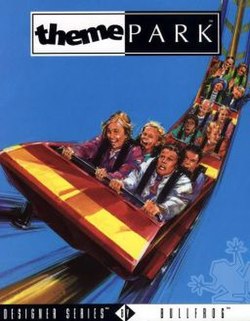
 Theme Park on PlayStation
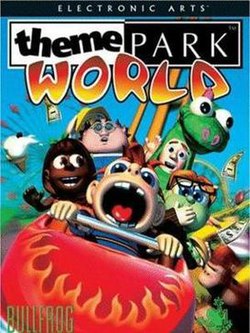
 Theme Park World on PlayStation
 Pro Evolution Soccer 2015 on PS4
 Power Pro Kun Pocket 13 on DS
 Power Pro Kun Pocket 14 on DS












 Another SquareThought Site