

 Aug 2025
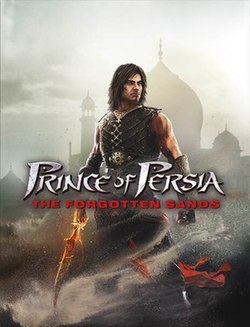

When the 1990s critic in me peers over the cheap neon visor of nostalgia, it sees Prince of Persia: The Forgotten Sands performing a curious act of déjà vu. This is not a buy-in to the glossy experiment that was the 2008 reboot; rather, it is Ubisoft's mid-era attempt to remind players what made the Sands of Time trilogy tick: nimble platforming, scripted set-pieces and a dash of mythic melodrama. Crafted primarily by the Montreal team with help from Singapore, Forgotten Sands lands on PS3 with the pedigree of the Anvil engine and the obvious intention of appealing to the same crowd who once admired sand-slicked swordplay. It is, in short, a deliberate return to form - occasionally sincere, occasionally clumsy, and often entertaining enough to merit the coin of your attention.
If you remember the old trilogy - and if you grew up with a healthy respect for ledges, wall-runs and dramatic camera cuts - you will find a familiar toolkit here. The Prince behaves like a 3D-era acrobat who read too many manuals: he climbs, wall-runs, bounces between poles, balances on beams and executes the sort of athletic improvisations that made the series famous. Ubisoft Montreal and Singapore designed the PS3/360/PC build as a modern Sands of Time game, and the influence is visible in the choreography of platform sections and the compartmentalised level design that funnels the player into both exploration and confrontation. Where Forgotten Sands attempts to distinguish itself is through the djinn-powered elemental abilities. The powers are not mere flash; they are mechanical building blocks. Water magic freezes flows into temporary walls and poles, creating traversal shortcuts or solutions to traversal puzzles. Earth magic restores broken platforms and conjures new footholds, a tidy way of reopening paths without relying solely on levers and obvious switches. Wind and Fire are framed more aggressively: Wind can manipulate enemies and projectiles while Fire supplies offensive crowd-control. These powers supplement, rather than replace, the Prince's nimbleness; the game balances acrobatic traversal with puzzle set-ups that demand you combine basic movement with elemental tricks. A limited "rewind" feature returns, but in this iteration it plays like a safety net that the designers both trust and mistrust. It exists to avoid the frustration of repeating long platforming runs, and it does so with modest restraint: it is useful, not omnipotent. This ties into the broader design philosophy of Forgotten Sands, which tries to be challenging without being punitive. Combat is calibrated for crowds rather than duels: you will often face groups of sand warriors in arenas that encourage movement, rolls and acrobatic escapes more than static blocking. The melee system emphasises momentum, with melee pushes and ragdolling courtesy of Havok physics; enemy types have distinct attack patterns and weaknesses, and the player is rewarded for learning them. Experience points gathered from combat permit ability upgrades - more health, improved elemental potency, or new manoeuvres - which add a light RPG veneer to progression. For all the mechanics that work, the game is not without practical grumbles. The absence of an AI companion - a conscious omission due to team size and production constraints - makes some narrative scenes feel lonely and certain sequences a touch repetitive. The camera can be obedient one moment and petulant the next, most noticeably during tricky platforming transitions. And while the elemental powers are clever in concept, their implementation sometimes leans on the predictable: the solution to a room is often "use the obvious power here," which reduces the sense of emergent problem solving. UPlay integration offered cosmetic rewards and XP boosts at launch, but those extras have since been locked off on consoles, a reminder of the era when ancillary online services were treated like appendices to the retail package. Play on PS3 and you will notice that the engine supports surprisingly dense encounters: the team tuned Anvil to handle dozens of enemies and a bevy of breakable environment props, which can be satisfyingly destructive in melee. At its best, Forgotten Sands presents a choreography of movement and combat that feels cinematic without surrendering control to the camera. At its worst, it is a tidy, occasionally over-scripted affair - competent, sometimes brilliant, but rarely revolutionary.
Visually, Forgotten Sands dresses itself in Arabian Nights-inspired realism. The art direction attempts to marry the mythic with the mundane: ornate palace interiors, sun-streaked courtyards and the occasional ruin hang together with a consistent palette of sand, brass and shadow. Ubisoft made a conscious effort to preserve frame-rate stability while adding shader tricks and particle effects, which pays off: the game is rarely embarrassed by slow-down, even when multiple enemies and environmental effects populate the screen. The Anvil engine is competent here; texture detail is generally good, character models are solid, and the cloth and hair rigs on the Prince receive better-than-average care for a 2010 era title. There are sequences that feel cinematic by design - a Digic Pictures opening that reads like a short film, set-pieces where architecture collapses in pleasingly photogenic ways - but the game's fidelity is not on par with contemporaries that leaned into hyper-realism. Close inspection reveals reused textures and the odd pop-in, and some animations can feel blended rather than handcrafted. Ragdoll physics are enjoyable in combat and add a layer of chaotic fun to clashes, though they occasionally betray the scripted nature of certain encounters. Composer Steve Jablonsky, with contributions from Penka Kouneva, supplies an orchestral score sprinkled with Persian motifs; the music is dramatic when required and avoids gratuitous bombast, giving the action appropriate emotional undercurrent. Yuri Lowenthal's return as the Prince gives a consistent vocal anchor across versions, providing the character with personality without sliding into the campy territory that lesser voice work can invite. In short: the graphics serve the game's aims. They are not a showcase for next-generation jaw-dropping visuals, but they are elegant enough to support the experience. For those who remember the Playstation and Saturn era of sheen-over-substance, Forgotten Sands is a reminder that style paired with solid technical choices can still yield an appealing gamescape.
Calling Forgotten Sands a renaissance is too generous and calling it a mere nostalgia trip would be unfair; the game sits somewhere between both poles. It is an earnest, often skillful return to the mechanics and tone that made Sands of Time memorable. Combat is brisk, traversal is satisfying, and the djinn powers add a fresh, if occasionally telegraphed, layer to interactions. The script attempts a character study - bridging the Prince's more carefree Sands of Time self with the harder-edged protagonist who would later appear in Warrior Within - and while the drama sometimes tilts toward melodrama, it generally fits the mythic sweep of the series. Yet the title is not without compromises. A handful of camera and camera-adjacent frustrations, some predictable puzzle design and the absence of online content that was tied to now-defunct services dampen the sheen. For players who expect radical reinvention, Forgotten Sands will seem conservative; for those who want a return to the familiar virtues of acrobatics, swordplay and elemental trickery, it is a competent and enjoyable excursion. If the hyperbole of the modern launch window is intoxicating you with promises of systemic reinvention, keep your wallet holstered. If, however, you long for a well-made Prince of Persia that honours its lineage and offers a dozen hours of competent, occasionally brilliant platforming theatre, Ubisoft's Forgotten Sands on PS3 is a sensible purchase. It is the kind of game the 1990s critic would have nodded at with approval: not flawless, but made with craft and respect for its roots. Score: 7.5 out of 10.
 Prince of Persia on PS3
 Battles of Prince of Persia on DS
 PlayStation Home on PS3
 Ōkami on PS2
 Gaelic Football '25 on Xbox Series X/S
 Unearthed: Trail of Ibn Battuta on PS3










 Another SquareThought Site