

 Dec 2008
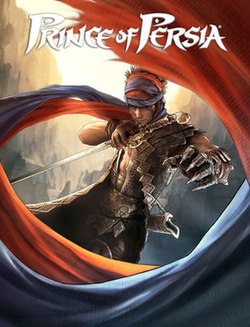

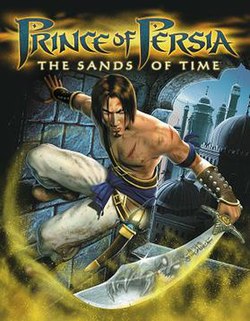
Prince of Persia for PS3 is the 2008 reboot from Ubisoft Montreal that decided the series needed three things: a watercolor aesthetic, a reliable AI sidekick, and an attitude that said 'let's stop killing the player so much and start saving them romantically.' Built on a heavily modified Scimitar engine - the same family used for Assassin's Creed - it swaps the more combat-heavy Sands of Time formula for an acrobatics-first, open-world design where traversal is the primary toy and combat becomes a careful dance. The technical pedigree shows: animation and art direction are heavily prioritized, the world streaming is ambitious for the PS3 era, and the AI plays a central role in both mechanics and user experience. This review digs into the nuts and bolts: how the engine choice, AI behavior, animation systems, and design decisions affect the actual play on the PS3 hardware, and whether those choices age like fine wine or like a memory card left in the sun.
Prince of Persia's gameplay is organized around three technical pillars: acrobatics, combat, and puzzle-solving. Ubisoft explicitly designed the game around cooperative interplay with an AI partner, Elika, and that choice ripples through nearly every system. Traversal is the headline feature. The modified Scimitar engine gives the level geometry large, connected spaces rather than narrow, scripted corridors. On PS3 this translates to relatively seamless area streaming; the game feels like one contiguous playground of ledges, walls, and ceiling paths. Mechanics such as wall-running, ceiling traversal, and momentum-based jumps are implemented with deterministic animation blending and contextual IK, which gives the Prince predictable arc trajectories. The presence of 'magic plates' expands the move set with choreography that requires timed input and Elika assistance. Technically, those plates act as triggers for complex animation sequences and temporary state machines that hand off control between player animation and scripted cut-move sequences. If you mistime the input, the system forces a failure state that can be visually harsh but mechanically fair: it is trial-and-error by design. Combat is intentionally pared down. Instead of slogging through crowds, fights are mostly one-on-one duels with the four major corrupted bosses, and occasional groups handled through careful vaults and counters. The combat system emphasizes timing over combo complexity: the engine registers hit states and predictive windows for counters rather than tracking long combo strings or deep stamina management. This is why some critics called the combat 'simple' or 'consumer-friendly' - by design the encounter system trades mechanical depth for cinematic clarity. On PS3 the animations during combat blend seamlessly due to an animation layering system that prioritizes upper-body actions during traversal, and combat sequences are framed to avoid camera occlusions that would break the single-enemy dramatic beats. Elika is both a narrative device and a gameplay subsystem. Her AI is event-driven with proximity and path-following priorities, enhanced by context-sensitive assist routines such as grabbing, casting light, and executing joint acrobatic moves. From a technical perspective, Elika is implemented as a persistent agent that never 'dies' and has high-frequency update loops for animation sync and collision avoidance. The game removes conventional failure states: when the Prince would take a lethal hit or miss a critical platforming timing, Elika steps in and performs a save. This technically eliminates the need for save/retry loops and reduces disk I/O spikes from frequent reloads on the PS3's Blu-ray architecture, but it also lowers the risk/reward tension. For players who enjoy punishment and clear failure signals, that removal of death feels like removing a crunchy texture from a cake. The open-world aspect is more a hub-based open world than a fully emergent sandbox. The game lets you travel to any healed Fertile Ground at any time, but the level design restricts traversal options through corruption mechanics that change traversal complexity on revisit. The corruption is implemented as a dynamic volume system that alters collision, spawns black-corrupted geometry, and toggles enemy AI spawn points. Technically this allows the designers to reuse zones with different traversal profiles without duplicating geometry - a smart memory and storage trade for the PS3 era. One important technical addition is the Epilogue DLC. It introduces a new magic plate mechanic to restore destroyed objects plus an extra combat maneuver. The DLC showcases modularity in the game's engine: new animations, enemy behaviors, and level scripts slot into existing systems without requiring core engine changes. PS3 players received the Epilogue release in early March 2009 after a one-week delay; the DLC demonstrates how cleanly the Scimitar-based tech could be extended post-launch. Where gameplay falters is in depth and repetition. The platforming, while mechanically tight, sometimes resorts to trial-and-error sequences that re-use the same failure states. Since Elika's saves are unlimited, the penalty for failure is minimal; the result is less tension in traversal and a design that encourages repeated attempts until correct input is discovered. For players looking for systemic and mechanical challenge, the game's design choices - trading death for guided rescue and cinematic one-on-one fights - reduce some of the gratification that comes from mastering unforgiving systems.
Visually, Prince of Persia is bold and technically accomplished on PS3. The art direction leans into a watercolor, almost cel-shaded palette with high-contrast lighting that separates the 'healed' Fertile Grounds from corrupt zones. Texture memory on the PS3 is used strategically: environments favor hand-painted diffuse maps combined with subtle normal maps rather than brute-force photoreal textures, which keeps streaming costs low and frame stability higher. The Scimitar engine variant prioritizes large draw distances and layered LOD streaming. On the PS3 this produces expansive vistas that mask the hardware's limited VRAM by using aggressive but well-tuned LOD transitions and carefully baked ambient occlusion. The result is a world that reads richly at a distance and holds up when you are in the tight platforming corridors. Particle systems and corruption effects are implemented with blended geometry and shader-based alpha layers; they look impressive and, crucially for PS3, are optimized to avoid overtaxing the pixel fill rate. Animation is a standout and it shows why the title won a D.I.C.E. Award for Outstanding Achievement in Animation. The character rigs use a mix of procedural IK and authored animation clips so that wall-runs, vaults, and partner-assisted moves flow without snapping. Elika's animations in particular are designed with high-priority state machines that allow her to interrupt lower-priority actions instantly to save the player. This always-on animation responsiveness makes the 'no death' mechanic feel natural rather than forced. On the technical downside, the PS3 build shows the era's typical occasional frame dips during heavy corruption geometry transitions or complex boss fights. These are not crippling, but they are noticeable if you watch frame pacing closely. Camera framing is usually cinematic and supportive of gameplay, but on rare occasions it can put environmental geometry between the camera and the player which slightly complicates precise platforming. Overall the visual and animation systems are more than the sum of their parts: they were prioritized over mechanical complexity, and that prioritization pays off in unique, memorable set pieces.
Prince of Persia on PS3 is a technically ambitious reboot that bets on aesthetic identity, animation quality, and AI partnership rather than length, difficulty, or complex combat systems. The modified Scimitar engine enables expansive, flowing worlds and clean animation blending, while Elika's AI and the no-death system reshape player expectations about failure and pacing. If you want cinematic, graceful traversal with excellent animation and an art direction that still looks distinct years later, the game delivers. If you want punishment, tightly-tuned mechanical combat complexity, or a death-driven satisfaction loop, the game's scope and design choices will feel like a soft pillow where you expected a spike trap. On PS3 the title runs well most of the time, with occasional frame pacing stutters during heavy corruption swaps and boss sequences - not uncommon for ambitious late-2000s console projects. The Epilogue DLC demonstrates clean extensibility of the tech stack and adds a few new mechanical toys for completionists. With aggregate reviews sitting around the mid-80s and a D.I.C.E. nod for animation, Prince of Persia earns an 8.5 out of 10 on PS3: a rewarding technical showcase that trades difficulty for spectacle and companionship, and does so with confidence and a lot of style. It's less a hardcore platforming gauntlet and more a carefully choreographed dance; bring a partner in your head and enjoy the choreography.
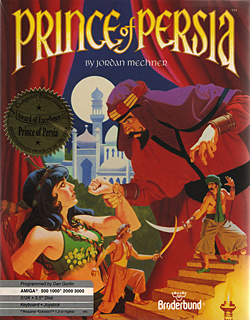 Battles of Prince of Persia on DS
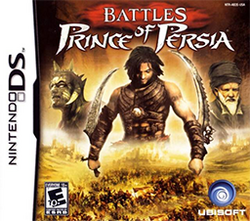 Prince of Persia: The Fallen King on DS
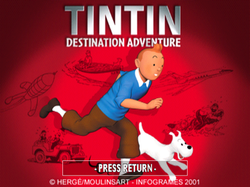
 Tintin: Destination Adventure on PlayStation
 One Piece Grand Adventure on PS2
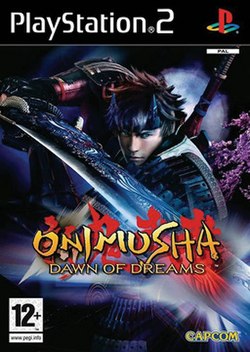
 Onimusha: Dawn of Dreams on PS2
 Taiko no Tatsujin: Dokodon! Mystery Adventure on Switch
 Assassin's Creed: Brotherhood on PS3
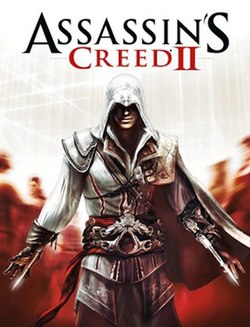
 Assassin's Creed II on PS3
 Far Cry 3 Classic on PS4
 Assassin's Creed: Origins on PS4
 Tom Clancy's Rainbow Six Siege on Xbox Series X/S










 Another SquareThought Site