

 Nov 2003
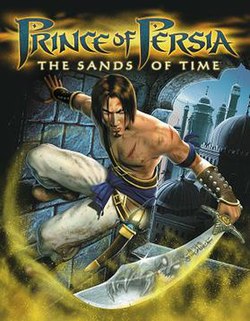

Prince of Persia: The Sands of Time arrives in this review under a small lie of convenience: the original game launched in 2003 across PS2, Xbox, GameCube and PC, not the PS3. Consider this an imaginative exercise - same swash, slightly different sash. What truly matters is the story: a nameless Prince, a Dagger that rewinds your mistakes (bless the game gods), a mysterious hourglass spilling the Sands of Time, and Farah, a princess who is equal parts archer, moral compass, and romantic foil. The game stitched together acrobatic platforming, cinematic presentation and a surprisingly tight script by Jordan Mechner into something that felt like watching a movie you could control, then rewinding when you tripped over a ledge. This review looks at the PS3-player experience through the lens of character and story arcs, because while the parkour and knifeplay are great, it is the human (and supernatural) relationships that make Sands of Time linger in memory.
If the Dagger of Time were a late-night infomercial product, its pitch would be: "Made for the clumsy, the overconfident, and anyone who hates repeating the bit where they miss a jump." Gameplay-wise the Prince is an acrobat with a subscription to 'near-death experiences.' He wall-runs, swings, bounces and occasionally commits to spectacular mistakes that the Dagger politely undoes. That rewind mechanic is more than a generous checkpoint - it folds directly into the game's core theme: second chances. The Prince's arc is constructed around the ability to undo mistakes, both mechanically and narratively. Mechanically, the Dagger gives you up to ten seconds of backtracking to correct a misstep or to try a different approach to a platform puzzle. Narratively, time is the scar the Prince will spend the entire game trying to heal. Combat pairs the Prince's fluid, contextual swordplay with the Dagger's finishing touch. Enemies are wounded by steel but can only be truly put down when the Dagger collects the Sands that animate them. This forces the player into a rhythm: dance, injure, finish. The Dagger also powers abilities that slow or freeze time in increasingly potent ways, tying resource management into the story: the Sands you collect from corrupted soldiers fuel the Prince's ability to manipulate time - a literal karmic economy. It is brilliant design when your mechanics echo your theme. You punish the Prince for impulsive violence in the opening sequence (his father's army sacks a city), and then you hand him the power to rewind and wrestle with the consequences of that violence. Farah functions as both emotional ballast and puzzle partner. Her bowfire helps clear rooms and her presence unlocks cooperative puzzles - very much Ico-adjacent in spirit: a companion who isn't merely baggage but an active participant in the Prince's journey. The AI is deliberately imperfect; sometimes her arrows hit you, which is a small-but-delightful reminder that allies are people, not perfect NPCs. Farah's arc moves from mistrust to reluctant cooperation to love to sacrificial tragedy. Throughout this, the gameplay scripts subtle shifts: when you're supposed to trust her, the level design gives you space to do so; when you shouldn't, the traps are moral tests as much as mechanical ones. The Vizier is less of a boss and more of a puppet-master: a classic manipulator whose arc doesn't so much evolve as reveal. He is the catalyst who turns greed, vanity and curiosity into catastrophe. He offers eternal life to the Prince and then attempts to seize the Dagger when the Prince falters; the Vizier's seduction of power makes him a useful foil to the Prince's eventual ethical maturity. The way fights and set pieces climax around him keeps the narrative and mechanical stakes aligned: you are not just fighting an antagonist for spectacle but to restore temporal balance. What makes the gameplay sing is how often narrative beats are tied to gameplay mechanics. Rewinding to prevent Farah's death, then realizing you've already lived through the other timeline - that's a genuine punch to the chest, and you feel that in the fingers when you re-perform parkour sequences with the knowledge of previous failures. If the PS3 experience has any advantage, it's the potential for smoother framerate and slightly crisper controls compared to the original ports; but the core magic is the interplay of acrobatics, combat and moral consequence.
The original game's art direction leaned heavily into a blue-lit, Arabian Nights palette that made the palace of Azad feel equal parts sumptuous and uncanny. Environments are vertical playgrounds: huge rooms stacked like a house of cards, corridors that hide secrets, and trap-laden vestibules that ask you to move like a contortionist and think like a chess player. The Jade engine gave the Prince a surprising number of fluid animations - over 780 scripted movements according to development notes - and it shows. Motion capture smoothed transitions; the Prince's leaps, vaults and wall-runs are satisfying to watch as well as to execute. Character models on the 2003 builds could be blocky by modern standards, but the expressive performances - especially Yuri Lowenthal's narration and voicework - deliver personality that outstrips polygon count. The game chose to tell much of its story in short cutscenes and in-dialogue during gameplay rather than freezing action for long cinematics. That decision sometimes meant you missed lines while mid-leap, but it also maintained momentum and made the palace feel alive. Farah's animations, while less varied than the Prince's, are purposeful: her archery stance, the way she moves near ledges, her small gestures during shared scenes convey trust-building in ways that the script then amplifies. If you're playing on an actual PS3 (through backward compatibility or a hypothetical remaster), the leap in texture fidelity and lighting would lift the game's already strong atmosphere. What matters more than glossy shaders is how the visual design communicates character relationships: the dim, sand-speckled vaults where the hourglass sits, the blood-smeared gold after the initial sack, the bathhouse scene in the tomb - each environment underscores the Prince's emotional transitions. Design-wise, the palace being a stratified vertical climb mirrors the Prince's arc: climbing toward redemption, layer by layer.
Prince of Persia: The Sands of Time is a rare breed: a game where mechanics, visuals and story arc conspire to make you care. The Prince starts as an unnamed, glib doer of questionable deeds and emerges - with the help of Farah's steady humanity and the Dagger's blunt reminder that undoing doesn't erase culpability - into someone willing to sacrifice what he values rather than let the world rot under his mistake. Farah's story is the heartbreak and the proof: she grows from a captive princess to an equal partner whose sacrifice haunts the Prince and then prompts a final, poignant rewind that tests the limits of narrative closure. The Vizier, meanwhile, is deliciously archetypal: a cautionary tale about how rhetoric and promises of immortality can entangle someone already tempted by power. The Sands themselves function as both antagonist and mirror: an external plague and an internal test. Mechner and the team crafted a story that keeps its spectacle and its intimacy in balance - action set pieces accelerate the heart rate while the Prince's narration and quiet scenes slow it, letting the emotional residue settle. On the PS3, if you can play it, the core experience remains timeless in the best sense: a game about time, mistakes and the chance to try again. It is one of those titles that influenced a generation of designers (cough Assassin's Creed cough) and still earns that influence honestly. For players who like their platforming with poetry and their combat with conscience, Sands of Time is mandatory. For anyone who has ever wished they could undo a moment and do it better, this game is a comforting - and occasionally brutal - answer. Score: 9/10.
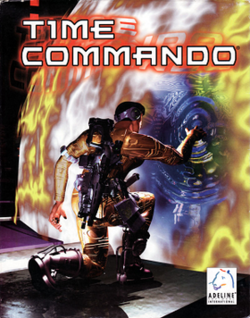 Prince of Persia: The Sands of Time Remake on PS4
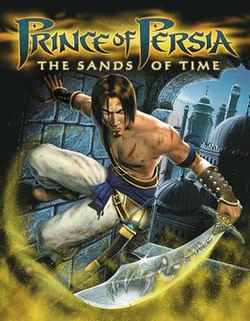 Time Crisis on PlayStation
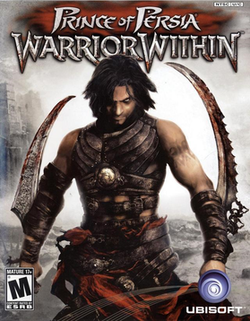
 Prince of Persia: Warrior Within on PS3
 Tintin: Destination Adventure on PlayStation
 One Piece Grand Adventure on PS2
 Onimusha: Dawn of Dreams on PS2
 Taiko no Tatsujin: Dokodon! Mystery Adventure on Switch
 Assassin's Creed II on PS3
 Tom Clancy's Rainbow Six Siege on PS5
 Far Cry 3 Classic on PS4
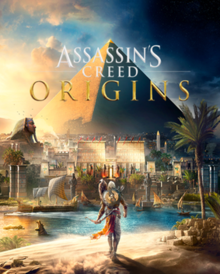
 Assassin's Creed: Origins on PS4
 Tom Clancy's Rainbow Six Siege on Xbox Series X/S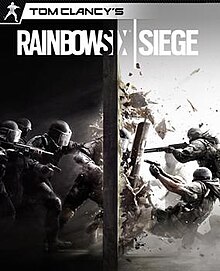










 Another SquareThought Site