

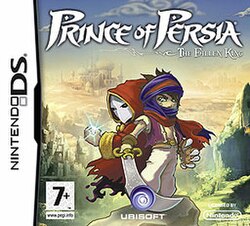

Prince of Persia: The Fallen King is the DS spin-off of Ubisoft's 2008 Prince reboot, made by Ubisoft Casablanca and released for the Nintendo DS in December 2008. It's a weird little hybrid: part touch-driven platformer, part action-adventure, and part experiment in handing the franchise over to a stylus. On paper that sounds like a smart use of DS hardware-lean into the touchscreen, make the Prince feel tactile, let Zal's magic be an input system-but the reality is a mixed bag. Critics landed in the mid-60s on aggregate scores, and most of their gripes center on the control scheme and pacing. This review focuses on the technical nuts-and-bolts: how the game maps platforming and combat to the DS touchscreen, where responsiveness and interaction design succeed or fail, and how those choices affect level design and player engagement.
The Fallen King lays its mechanical foundation on one concrete decision: the player uses the DS stylus on the touchscreen to move and command the Prince. Movement is not handled by a D-pad or virtual joystick; instead you tap destinations, edges, ropes, ledges and enemies. Platforming is essentially point-and-tap acrobatics-tap the screen where you want the Prince to run and he will path toward it, vault where appropriate, and latch onto geometry when the level design cues it. That design maps naturally to single-tap traversal scenarios (run to a rope, climb a wall, jump across a gap) and lets the game present chained acrobatics as discrete targets rather than continuous analog motion. From a systems-design perspective this is both the game's defining innovation and its Achilles' heel. On the positive side, the stylus-driven scheme reduces the cognitive load of complex platform combos into a sequence of touch targets; the Prince's animations handle translational continuity and parkour transitions, meaning the player delegates timing to the animation system and focuses on spatial sequencing. This lets the game showcase a tidy pipeline from input to animation to context-sensitive movement: tap → intent recognized → play contextual parkour animation → snap to next interaction point. For a handheld running on the DS hardware envelope, that's an elegant way to present fluidity without requiring analog sticks or multi-button choreography. Where the design cracks is in input reliability and responsiveness. Multiple outlets noted the same problem: the stylus control scheme is "ultimately passable" but "less responsive and reliable" than traditional controls. In practice that manifests as a timing and pathfinding ambiguity. If the touch recognizer registers an imprecise tap-halfway between a wall and a rope, or on the background geometry instead of a recognized ledge-the Prince will commit to a default motion that may not match player expectations. When the solution to every movement decision is another tap, the level of trust required from the player increases: you must believe the game will interpret your intent accurately and consistently. When that trust is broken-missed taps, delayed reactions, or the Prince taking a slightly different trajectory-the illusion of control frays. Combat follows the same stylus-first ethos. There are three combat actions: sword strike, block, and a Zal-triggered magic attack. The sword strike is a direct damage input, blocking is defensive, and Zal's magic doesn't deal direct damage but creates knockback or crowd-control to buy space. The combat system's simplicity suits the DS's limited button set, but tying these to the stylus again raises responsiveness questions. Quick, precision-based fights that might thrive with a d-pad and face buttons become more about timing your taps and trusting the engine to blend defensive animations into offensive ones. The result is serviceable but not superior to a traditional control scheme, which critics-particularly Anthony Gallegos at 1UP-argued would have been welcome as an option. The lack of controller alternatives (no D-pad mode) is a rare instance where hardware-constrained design choices reduce player agency rather than expand it. Mechanically there's an interesting progression loop with Zal. As the pair progress, Zal intermittently becomes Corrupted, prompting chases and boss encounters where the Prince must pursue and defeat him. After being defeated Zal sometimes gains new powers; those powers are instrumental, permitting new platforming maneuvers and opening previously inaccessible paths. This is a classic Metroid-lite gating approach-abilities unlock new traversal options-but the implementation impacts level pacing. Several reviewers felt the game overstayed its welcome: the levels can start to feel like permutations of the same parkour puzzles and encounters. 1UP explicitly criticized an "artificially long" feeling and suggested the levels resembled material thrown into a random level generator until the runtime fit a target length. That criticism hits a technical pain point: when traversal is primarily a sequence of discrete touch targets, variety must come from either choreography of those targets or from introducing precision/timing-based challenges (time trials, tighter windows, enemy placement patterns). The Fallen King leans on the former, and without consistent increases in precision demand, the sensation of diminishing returns emerges. From an engine and design standpoint, two related things stand out. First, the game offloads much of movement nuance to canned animations and deterministic transitions, which conserves CPU and memory on DS hardware and explains how it achieves relatively cinematic parkour without complex physics. Second, because so much depends on hit detection for taps, collision boxes and touch-hit regions have to be tight. Any imprecision there becomes visible as a misinterpreted tap rather than a subtle input lag. That systemic coupling of touch recognition, animation blending, and collision detection is the core technical axis the game lives and dies on-the middling critical response suggests it didn't fully nail the tuning required for perfect trust. Finally, the narrative and character systems are lightweight but serviceable. The Prince's dialogue landed differently across outlets-some found him likable, others saw a visually unimpressive DS incarnation. From an interaction standpoint the writing and character beats are unobtrusive; they exist as motivation for traversal rather than being deeply integrated into mechanics. The Ancestor hints, Zal's corruption, the fused final form-these are scaffolding for set-pieces rather than systemic gameplay shifts.
Graphically The Fallen King is conservative and pragmatic, built to extract the most out of the DS without overreaching. The Wikipedia-sourced reception notes are split: GameSpot found the Prince more likable here than in the console game, while IGN argued the DS Prince "doesn't exude much visual charm" and was "the worst looking iteration" since the franchise reboot. From a technical standpoint those reactions are understandable. On the DS, polygon budgets and texture memory are tight; handheld constraints likely pushed Ubisoft Casablanca to prioritize animation fidelity and readable silhouettes over high-resolution textures or complex shaders. The trade-off is a model-and-animation-first approach: character models are designed to read clearly at the DS screen size and animations are emphasized to sell motion, which makes sense for a game that channels parkour. That said, the fidelity ceiling is low compared to home consoles, and if you were expecting the same visual polish as the HD Prince of Persia reboot you will be disappointed. The Prince's facial detail and model expressiveness are limited by the hardware, so character charm must be communicated through movement and dialogue rather than subtle facial animation. Level art and set dressing conform to expectations for DS-era 3D platformers: clear geometry, high-contrast interactables (ropes, ledges, wall runs), and background pieces that frame the action without hogging fill-rate. This clarity is important given the tap-based traversal; visual affordances have to be unambiguous so the player can instantly identify tappable targets. Where art direction succeeds is in readable level language-players can generally tell where to go next. Where it falls short is in variety: the palette and architecture reuse can contribute to the sense that levels blur together over a long session, especially when the mechanical demands don't evolve significantly. Performance-wise the game is adequate. The DS is not forgiving of excessive draw calls or complex alpha blending, and Ubisoft's choice to keep the action focused and animation-driven likely helped maintain frame stability. The documentation doesn't detail frame-rate numbers, but the absence of prominent performance criticism in reviews implies the game met baseline expectations for smoothness-another reason reviewers focused more on input and pacing than technical rendering issues.
Prince of Persia: The Fallen King is an earnest attempt to translate a parkour-heavy franchise into a touchscreen-native DS experience. Its clean design philosophy-let the stylus be the primary controller, let animations shoulder the complexity of movement, and keep combat straightforward-makes sense on paper and occasionally yields genuinely fun portals of momentum and spectacle. The central problem is execution: the game asks a lot of the touch recognizer, animation blending and collision-hit systems to be precise and consistent, and critics found that it wasn't always. The result is a control scheme that is "ultimately passable" but "not superior to traditional controls," and a run-time that feels longer than it needs to be because mechanical variety doesn't scale with level length. If you own a DS and are curious about a Prince of Persia that leans into touchscreen interaction, The Fallen King has moments worth seeing-especially if you enjoy watching the Prince chain assaults and parkour moves together without wrestling a clumsy button layout. If, however, you care deeply about input precision, option-rich control schemes, or tightly tuned level pacing, the game will likely leave you wanting. Its mid-60s aggregate score is fair: technically competent in animation and readable level design, inventive in mapping traversal to the stylus, but hampered by input reliability and pacing decisions. Play it for the novelty and the occasional slick movement sequences; don't expect it to out-perform a classic button-driven Prince experience. For what it tries to do on the DS, it lands somewhere between clever and compromised-and that gap is what defines the Fallen King.
 Prince of Persia: The Lost Crown on PS4
 TV Show King on PS3
 Tintin: Destination Adventure on PlayStation
 One Piece Grand Adventure on PS2
 Onimusha: Dawn of Dreams on PS2
 Taiko no Tatsujin: Dokodon! Mystery Adventure on Switch
 Rayman Raving Rabbids 2 on DS
 Prince of Persia: The Forgotten Sands on DS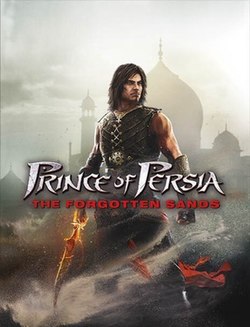












 Another SquareThought Site