

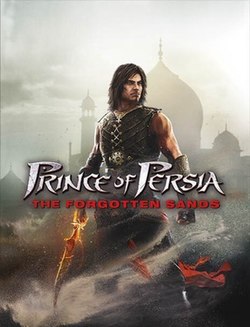

Prince of Persia: The Forgotten Sands on the Nintendo DS is the odd cousin at the family reunion: it wears the same turban and has the same swagger as its console siblings, but it communicates exclusively through a stylus and insists you solve platforming challenges while poking the bottom screen like it's a trapped genie. Developed by Ubisoft Casablanca in roughly a year, this DS take trims the series down into a side-scroller with 3D visuals and a touch-only control scheme. If you loved the Sands of Time trilogy for its precise acrobatics and tense timing, Forgotten Sands on DS tries to deliver that feeling in palm-sized bites - but it replaces the analogue joy of button-based inputs with an intimate relationship between your fingertip and the Prince. The result is sometimes clever, occasionally frustrating, and always focused on a particular kind of challenge: can you master the stylus and the limited-time rewind to beat an unforgiving series of navigation puzzles and tight encounters?
The DS version of Forgotten Sands is a side-scroller that keeps the franchise's acrobatic DNA while reshaping the player interaction around the stylus. The Prince still wall-runs, jumps, balances and swings, but you tell him what to do by tapping, dragging and gesturing on the touch screen rather than pressing physical buttons. This design choice defines the game's challenge profile: success depends more on micro-precision and interface fluency than on raw reaction speed or memorizing long combo strings. At the mechanical core is the rewind/time-slow ability - presented as an hourglass on-screen - which is your safety net and your budget. Uses of the rewind are limited by a consumable "sand" resource; when you run out, you no longer get the one-touch safety net and are kicked back to the last checkpoint if you die. That transforms every risky leap or ill-timed enemy rush into a resource-management problem. You have to ask yourself: is this gap worth burning a chunk of sand for, or should I play it safe and find a slower route? Level design on DS is compact and puzzle-forward. The rooms and stretches ask you to chain precise jumps, time wall-slides and manipulate environmental devices that sometimes require quick stylus input. The touch-only scheme can be brilliant when it matches a puzzle - for example, dragging a vine to swing the Prince or tapping in a rhythm to evade a trap feels tactile and satisfying. But the same tactile nature becomes a liability in high-stakes situations: your finger obscures the action, and there's a consistent tension between wanting to be fast with the stylus and needing absolute precision. This forces players to develop a kind of stylus diplomacy - refine your grip, smooth your strokes, control the panicked jabs - if you expect to thread the needle on more demanding platforming sections. Combat in the DS version is reduced compared to the console entries. Encounters exist, and the Prince can fight basic enemies and bosses, but many of the battles rely on the same mixture of timing and limited tools: a well-timed tap, a dodge gesture and occasional time-slow to turn overwhelming groups into manageable targets. The game leans on patterns, which means learning enemy tells and exploiting their weaknesses; it's less about flashy combos and more about reading and reacting. That design rewards players who pay attention - veterans of the Sands trilogy who can identify enemy attack signatures will feel at home. Newcomers will find that combat is not forgiving, but the punch here is rarely the primary focus; it's more of a gating mechanism between platforming segments. Checkpoint placement and the sand economy drive the difficulty curve. Because the rewind can resurrect you from death or undo a mistake, the designers use it as a safety valve; but because it's finite, they can also justify tougher sequences. If you play like a hoarder, conserving sand for the important moments, you'll be able to proceed with fewer restarts. If you burn rewinds frivolously, the game will punish you with repeated checkpoint returns - which can make some rooms feel grindy. This tension produces one of the DS build's defining skill requirements: smart risk assessment. The best runs are rarely the fastest; they're the runs where players judge which gambles are worth the currency. Skill-wise, Forgotten Sands on DS asks for a mix of traits that aren't always obvious from the series' console traditions. First, stylus technique is crucial: you need consistent, deliberate inputs. Jerky or exaggerated strokes translate into misinputs and flubbed jumps. Second, pattern recognition matters: enemies and traps have predictable rhythms you need to learn and exploit. Third, patience and repetition are part of the learning loop; the side-scrolling format means some sequences become trials where memorization and practice beat improvisation. Fourth, resource management - sand conservation - becomes a meta-skill; players must balance short-term survival with long-term availability of rewinds. And finally, spatial awareness in a flattened 3D plane tests your ability to translate three-dimensional movement into two-dimensional gestures. That sounds like a lot of homework for a handheld arcade game, but for players willing to adapt, it becomes a satisfying test of coordination. Where the DS version stumbles is mostly technical and ergonomic: the stylus-only control, while innovative, is not universally precise for every platforming trick the designers want you to pull off. There are moments where the Prince's animation or the camera's perspective hides precise landing spots, and your finger covering the critical area makes things worse. Those design friction points can make well-intentioned challenges feel unfair rather than demanding. Additionally, the limited development time (roughly a year) and the hardware constraints mean the levels are relatively short and the difficulty curve sometimes spikes without gradual onboarding. For players who relish learning by repetition and don't mind the occasional control awkwardness, Forgotten Sands provides a compact, brainy challenge. For those who want fluid analog parkour, the DS version is a compromise that emphasizes clever puzzle timing over elegant movement flow.
Visually the DS take is pragmatic: it's a side-scroller built with 3D assets that lean on the system's strengths without pretending to be a console cousin. The environments channel the series' Arabian-night aesthetic in chiseled, low-polygon blocks and moody textures. Animations do a decent job of conveying the Prince's acrobatics at this scale, and there are satisfying little touches - a freeze-frame of a near-miss, a shimmer when the rewind is used - that land like rewards for good play. Expect blockier models and simpler particle effects than the PS3/360 versions, but also expect clarity: the game rarely confuses you with visual clutter, which matters when every pixel counts for a jump. The trade-off, of course, is detail and camera freedom. The side-scrolling perspective restricts depth perception and sometimes hides the very ledges you need to land on, exacerbating the stylus-control issue. Sound and music, composed for the portable entries by Tom Salta, do their job: atmospheric, occasionally sweeping, and supportive of the tension. On the DS's modest speaker setup the score loses fidelity but keeps the mood. Overall the graphics are competent for a 2010 DS title - not showstopping, but functional, readable and occasionally charming. The aesthetic succeeds best when it emphasizes level readability over spectacle, which is exactly what you want when the game is asking you to be precise.
Prince of Persia: The Forgotten Sands on Nintendo DS is an experiment in translating a franchise built on finger-friendly controllers into a touch-first, handheld playground. It achieves moments of genuine satisfaction: when a tricky leap is landed using a confident stylus flick, or when you conserve enough sand to get through a gauntlet without a checkpoint repeat. The game rewards a specific skill set - stylus precision, pattern memorization, resource-minded decision-making and patience - and will feel deeply rewarding to players who cultivate those skills. However, the control scheme's quirks, occasional visual occlusion by your input, and a tendency to enforce checkpoints harshly mean the DS experience is narrower than its console counterparts. If you're chasing the pure parkour poetry of Sands of Time with the least amount of friction, this isn't the version for you. If you enjoy compact platform-puzzles, don't mind a steeper input-learning curve, and secretly enjoy the tiny tyranny of limited rewinds, Forgotten Sands on DS is a portable grind house that will teach you humility and stylus mastery in equal measure. Critically it landed with mixed reception (Metacritic around the high 50s for DS, IGN gave the DS version a low score), and that reflects the split personality of the title: clever ideas constrained by hardware and interface choices. My final take: an intriguing and occasionally brilliant handheld puzzle-platformer that asks more from your fingertips than most modern handhelds - and rewards them in small, stubborn ways. Score: 5.7/10.
 Prince of Persia: The Lost Crown on PS4
 Prince of Persia: The Fallen King on DS
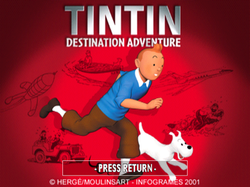
 Tintin: Destination Adventure on PlayStation
 One Piece Grand Adventure on PS2
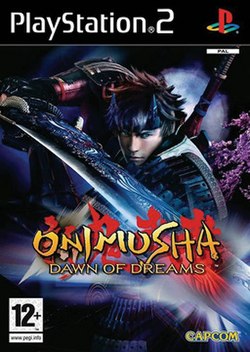
 Onimusha: Dawn of Dreams on PS2
 Taiko no Tatsujin: Dokodon! Mystery Adventure on Switch
 Rayman Raving Rabbids 2 on DS












 Another SquareThought Site