

 Mar 2007
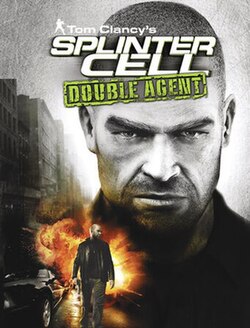

Tom Clancy's Splinter Cell: Double Agent arrives on PS3 as a darker, moodier detour for Sam Fisher - the taciturn, night-vision-goggle-wielding dad we all know. This isn't just another stealth romp with the lights turned low; it's a story about grief, identity, and what happens when a man taught to live in black-and-white is shoved into a world of fifty shades of 'probably very illegal.' The Milan/Shanghai-built PS3 version takes the series' trademark sneaking and folds in an undercover, moral-choice-driven structure that forces you to ask a lot more than "Who do I stab from the shadows?" It's more like "Who do I stab and can I still answer emails from the NSA afterwards?" The game wears its themes on its sleeve: Sam is grieving, the agency is manipulative, terrorists are charismatic, and your thumbs are the jury.
Double Agent's PS3 single-player campaign is built around the idea that stealth can be a social science experiment where you are always the lab rat. Mechanically, the game plays like classic Splinter Cell - crouch in shadow, line up a takedown, hack a terminal, and try not to be that one light that ruins everyone's day. What shifts is context: Sam is placed undercover as a criminal to infiltrate John Brown's Army (JBA), and the mission design frequently asks you to perform acts that make you squirm. You're not just avoiding guards; you're sometimes ordered to shoot people you might otherwise save. That tension is the heart of the gameplay loop. Missions on the PS3 version follow Sam through staged bank robberies, a stint in Ellsworth Prison where he bonds (begrudgingly) with Jamie Washington, a tense oil-tanker takeover in the Sea of Okhotsk, a hotel sting in Shanghai involving Dr. Aswat and red mercury, and a cruise-ship test in Cozumel that doubles as a quiz in ethics. The choices you make - whether to jam a bomb signal, frame a weapons expert, spare a CIA asset, or obey your terrorist overlord - don't just change a cutscene; they actively shape relationships with two ideological principals: the JBA and the NSA. Each side keeps a trust meter, and the game nudges you toward the mental gymnastics of balancing cover with conscience. Sam's playstyle is flexible, and the PS3 build preserves classic Splinter Cell tools: camera cams, chokeouts, sniper positions, and stealthy gadgetry. However, the moral branching is the real mechanic here. The Cozumel mission is the first major test: let the bomb go off and keep JBA trust, jam the signal and lose credibility with Emile (and watch Enrica die in a moment that proves guilt can be contagious), or use insider knowledge to frame the weapons expert and somehow keep both sides reasonably placated. Decisions ripple. Saving a character like Hisham Hamza, the CIA operative embedded with the terrorists, can alter later options - including whether you end up with the moral authority (or the guilt) to shoot or spare a captured handler. The most striking interactive element is how Double Agent treats assassination orders and 'stock' covert acts as narrative tools to expose character. The mission to shoot Hisham from a radio tower can be completed by pulling the trigger or by showing mercy and extracting him. That single binary changes the tone of subsequent scenes and the game's endings. The climax in the JBA HQ is built as a moral pressure cooker: you're ordered to shoot Lambert (your handler) to keep cover, and the decision to do so or to instead kill Jamie Washington (your cellmate) is presented in no comfortable way. Unlike a game that merely hands you branching text boxes, Double Agent turns actions into character beats - you define who Sam is by what you make him do. For players who prefer a purer mechanical stealth experience, the PS3 version still delivers satisfying stealth set pieces and tense sandbox moments. For those who want story-first stealth, the moral-choice system offers genuine emotional weight because the game doesn't pretend those choices are clean. The payoff varies depending on your tolerance for guilt, but it is rare to play a Splinter Cell mission and not finish it thinking, "Well, that was morally ambiguous and now I need snack therapy."
The PS3 release of the Milan/Shanghai version is notable for being built on a custom engine (rather than simply reusing the older tech from the Montreal-built consoles). This decision shows: character models have a grittier feel, lighting leans into dramatic contrasts, and many cutscenes share the same polish across versions. Critics generally praised the game's look - some called it "great" - though aggregate scores for PS3 were a touch lower than Xbox or Xbox 360 counterparts (Metacritic sits around the high 70s for PS3). Visual fidelity does a solid job supporting the narrative: rain-slick neon in Shanghai feels oppressive, Ellsworth Prison's concrete is convincingly cheerless, and the JBA compound is designed like an ideological funhouse where every shadow hides a moral choice. There are caveats. Because Double Agent tried to do something new narratively, the PS3 build sometimes shows its seams: a few animations are stilted, and certain textures and pop-in moments remind you that the engine is doing a lot of heavy lifting. Where the visuals succeed is in atmosphere. The game uses light and shadow not just as a stealth gimmick but as a storytelling device that mirrors Sam's inner life: when Fisher is isolated, the environments feel colder; when he is embedded among terrorists, the world looks theatrically warm - as if radical charm has a color palette. The soundtrack, largely Michael McCann's work with contributions to the main theme from Cris Velasco and Sascha Dikiciyan, elevates the visuals with a score that knows when to whisper tension and when to slam a cymbal on your conscience.
Double Agent on PS3 is a study in how a stealth franchise can stretch into thriller territory without losing its sneakers-and-plastic-wrist-gizmo identity. The biggest success is the way characters and player choice are braided into gameplay: Sam Fisher's arc - a grieving father turned reluctant NOC operative - is not merely told, it's performed. You see him crack and rebuild in missions where doing your job sometimes requires committing small betrayals that add up into a moral ledger you can't balance with a single takedown. Lambert's presence as both mentor and potential target frames the whole experience as a question: how far will an agency push a man tagged as an asset? Emile Dufraisne emerges as the charismatic antagonist whose ideology is unsettlingly consistent, and Enrica's arc as a weapons expert who both trusts and suspects Sam ends tragically for some routes, becoming a crucial emotional fulcrum. Jamie Washington is less a supporting NPC and more the human anchor that makes some of Sam's choices feel like real betrayals. Even smaller figures like Carson Moss and Dr. Aswat function as narrative accelerants: they push Sam (and the player) toward moral decisions that don't have neat answers. If you want spotless stealth with unambiguous heroism, Double Agent will irritate you - not because the mechanics fail, but because it forces discomfort. If you want a stealth game that asks you to play politics with your conscience and then punish or reward you accordingly, it's one of the series' most interesting turns. The PS3 version isn't perfect: the port sometimes lags behind the best-optimized releases, and a few visual hiccups exist, but the core remains compelling: a morally gray Sam Fisher skating the thin line between patriot and traitor. Ultimately, Double Agent makes you complicit in its moral theater; when the credits roll, you won't just remember which missions you cleared - you'll remember who you decided Sam should be. That is rare, messy, and, yes, a little brilliant.
 Teenage Mutant Ninja Turtles: The Cowabunga Collection on Switch
 Double Cross on Switch
 Tenchu 2: Birth of the Stealth Assassins on PlayStation
 Thief Simulator on Switch










 Another SquareThought Site