

 Aug 2013
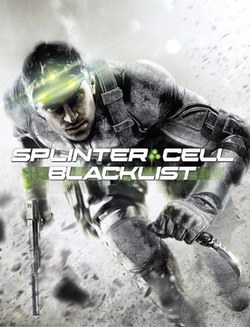

There was a time, not so very long ago in the pantheon of console tomes, when stealth gaming was an austere exercise in patience and punished improvisation. Splinter Cell launched in that mold and, like a scrappy private eye with night-vision goggles, it built a reputation on shadows, patience and the precise mathematics of line-of-sight. Blacklist, the seventh entry in the series and the first to be helmed by the then-newly crowned Ubisoft Toronto, arrives in the autumn of the last console generation with an ambition that is at once conservative and slightly deranged: restore what made the series surgical while grafting on the adrenaline of its more recent, action-minded sibling Conviction. The result is a game that wears its pedigree like a battered trench coat - a little patched, occasionally smelling faintly of smoke, but unmistakably a Splinter Cell at heart. I review this on the PlayStation 3, a machine that by 2013 had settled into a mature, sometimes cantankerous adulthood. Blacklist is not ashamed of that maturity. It is a title that aims squarely at the live-wire tension of stealth, provides the player with a generous toolkit, and then watches, with a clinical interest, how you choose to use it. This is a Splinter Cell that remembers its roots and, more importantly, is willing to entertain the era's appetite for spectacle without entirely selling out the silent arts.
Blacklist's central conceit is simplicity dressed in options. You are Sam Fisher, older, irritated and given control of Fourth Echelon - a black-ops outfit that operates out of a converted cargo plane called the Paladin. The Paladin serves as the game's hub: between missions you pace its metal corridors, talk to your crew, accept side-ops and spend the currency of success - money and "Ghost Points" - on upgrades. The strategic mission interface, a kind of mission-planning menu, lets you study maps, enemy placements and plan. It is a tidy bit of design that rewards forethought; the modern player, used to a quest log and little else, will appreciate the sense of agency it provides. Gameplay itself is a blend of old and new. Blacklist tries, with dogged determination, to reconcile two schools of Splinter Cell thought: the methodical, equipment-first stealth of Chaos Theory and the more kinetic "aggressive stealth" of Conviction. The balance mostly holds. You may carve a level into bits of shadow like a surgeon - dropping lights, slipping through vents, hiding corpses - or you may choose the panther approach: mark targets, enter Killing in Motion and watch Sam execute several foes in a lethal ballet. The mark-and-execute system returns from Conviction, refined to allow multiple targets to be queued and dispatched with a single, satisfying flourish. It is very nearly planetary in its appeal: satisfying for the cold strategists and intoxicating for the hot-headed button-mashers. Tools are plentiful and well considered. Fisher's tri-rotor drone functions as a pocket reconnaissance and mischief-maker; it spies, zaps and can self-destruct in a tidy little explosion. Sonar and night-vision goggles remain essential, now improved to let you peer through walls and plan your route. Environmental traversal is enhanced with ledges and zip-lines, and levels feel designed to be triaged into routes and approaches. Enemies include soldiers and dogs; the latter are a singularly effective mood killer if you forget they can detect you. The game rates playstyle in three categories: Ghost (pure stealth), Panther (stealthy aggression) and Assault (open guns blazing). Experience gains and unlocks reward stealth more generously, and a universal economy selects for repeat play: do it clean and you will be richer. Co-op and multiplayer are not appendages but full organs. Ubisoft Toronto resurrected the asymmetrical Spies vs. Mercs mode - a fan-favourite from Pandora Tomorrow - and updated it to modern pacing and progression. Spies move in third-person with a bag of stealth tricks; Mercs see in first-person with heavier firepower. Blacklist supports classic 2v2 and a larger 4v4 Blacklist variant. The co-op campaign offers fourteen missions that play differently from single-player: mark-and-execute changes because helmets and paired takedowns require players to coordinate. Split-screen co-op remains a welcome, almost anachronistic inclusion in a market that had mostly abandoned couch play. Cooperative levels feel like miniature laboratories of teamwork, and the best moments arise when two players choreograph an assault like a dark pas de deux. There are, naturally, frustrations. Some levels nudge you toward mark-and-execute by design, which will irk players committed to pure Ghost runs. The universal economy sometimes feels like giving a racehorse a saddle and then rewarding it for looking pretty: unlocks are plentiful to the point of reducing risk. AI, while dynamically responsive, occasionally telegraphs inhumanly precise sightlines or fails to notice absurdly staged carnage. But these are quibbles in a system that, more often than not, yields the quiet, fruit-sweet satisfaction of a well-executed infiltration. For players who have followed Fisher since the days of pixelated cloaks, Blacklist provides both reassurance and a few fresh teeth.
If there is a complaint that critics and players repeated like a vinyl skipping on the same groove, it is this: Blacklist looks competent but not revelatory. On PS3 the visuals do the job without trying to shame next-generation titles. Character models can be rough around the edges; faces, especially in cutscenes, occasionally sit in the uncanny valley like an awkward dinner guest. Lighting - crucial to a game that makes darkness its currency - is one of Blacklist's stronger suits. The team gives you deep, tactile shadows and the satisfying flicker when a guard's flashlight passes over your hideout. The night-vision and sonar modes are functional and stylish enough that they feel like genuine tools rather than cosmetic filters. Performance concerns were noted at launch: frame-rate dips and the occasional screen-tear affect moments when the game wants you most present. These are not catastrophic failures but they are irritating; a stealth game trades on precision and a stutter can be the difference between a flawless Ghost run and an explosive firefight. The art direction quietly serves the narrative: dank installations, windswept docks and claustrophobic server rooms. The Paladin hub is an attractively cramped set-piece and, in a retro way, reminded me of the days when a single well-designed hub could elevate an entire campaign. Perhaps the more important visual criticism is not purely technical. Blacklist, by design, wants to be both cinematic and surgical; sometimes it tries to be both at once and ends up being neither. You will find moments of genuine cinematic flair - the kind that commands attention - and stretches that feel like set dressing, a backdrop for gameplay that could have benefitted from a little more texture or polish. Still, on the PlayStation 3, Blacklist is perfectly serviceable, and there are sequences whose lighting and composition will reward the patient observer.
Tom Clancy's Splinter Cell: Blacklist is not a reinvention; it is an act of reconciliation. Ubisoft Toronto set out to marry the polished brutality of Conviction with the procedural, almost surgical stealth of the series' golden era, and on the whole, it succeeded. The game is a stable of ideas: a measured hub in the Paladin, a strategic mission interface that rewards planning, a refined mark-and-execute that scratches an itch few systems manage to hit, and multiplayer that is robust enough to stand on its own merits. Critics at the time praised its level design, story beats and especially the return of Spies vs. Mercs, and those assessments hold up. The criticisms - middling character models, occasional technical hiccups, a campaign that sometimes feels insufficiently punishing - are real but forgivable. For the veteran who remembers reading strategy guides under a desk lamp, and the newcomer who expects a modern balance between action and stealth, Blacklist will offer hours of satisfying play. It is not the dark, ascetic masterpiece some longed for, nor is it a flashy, soulless shooter. It occupies that rarer space of being thoughtful and enjoyable. It remembers what made Sam Fisher's first outings compelling and is generous enough to give a few new tricks. In a catalogue where a misplaced leap can ruin an entire infiltration, Blacklist mostly lets the player do what players should be allowed to do: plan, adapt, and then, when the moment is right, disappear into the shadows with a wry, well-earned satisfaction.
 Teenage Mutant Ninja Turtles: The Cowabunga Collection on Switch
 Teenage Mutant Ninja Turtles: Mutants Unleashed on Switch
 Tintin: Destination Adventure on PlayStation
 One Piece Grand Adventure on PS2
 Taiko no Tatsujin: Dokodon! Mystery Adventure on Switch
 Onimusha: Dawn of Dreams on PS2
 Far Cry 6 on Xbox Series X/S
 Watch Dogs: Legion on PS5
 Far Cry 6 on PS4
 Far Cry 6 on PS5
 Watch Dogs: Legion on Xbox Series X/S










 Another SquareThought Site