

 Aug 2025
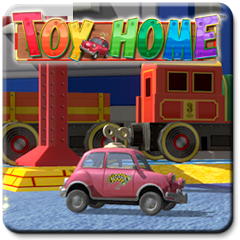

Toy Home arrives like a sugar-high fever dream for anyone who's ever left a Hot Wheels car under the couch and wondered what it got up to at night. On paper it is a modest downloadable racing game for the PlayStation 3: eight racetracks, a handful of rooms in a house serving as arenas, coin collecting, hidden medals, and a ticking clock that can be bribed with checkpoint bonuses. In practice it is an unexpected piece of micro-theatre in which tiny plastic heroes pursue tiny plastic destinies-looping, flipping and occasionally belly-flopping toward slightly more meaningful lives. This review is pitched as an in-depth analysis of characters and their story arcs, which is a goofy but surprisingly fitting lens. Toy Home doesn't have an epic narrative, and its developers never pretend otherwise. Instead, the game stages a dozen small, repeated moral plays every time you press "start": the arc of the scrappy underdog toy car, the tragicomic fall of the overambitious jumper, the stoic veteran who just wants to reach the next checkpoint. These arcs unfold in levels that reward curiosity and cheeky risk-taking-collecting coins, discovering medals, and getting creative with flips and smashes. The following breakdown treats those toys as if they were soap-opera protagonists, because giving cardboard depth to plastic objects is one of the few things we can safely do on the internet without being cancelled.
Toy Home's gameplay is modest, tightly focused and, if you let it, emotionally revealing. The mechanical scaffolding is simple: collect coins, find hidden medals, and pass checkpoints to earn 10 extra seconds apiece before time runs out. Points are awarded for theatrics-jumps, flips and smashing into furniture-so there's a constant tension between pragmatic survival (get to the next checkpoint) and performative glory (pull off the most absurd stunt without destroying your chances). The result is a cast of archetypal characters that the player gets to inhabit in short, sweet arcs. The Rookie: Every play session begins with the Rookie, a bright plastic thing with enthusiasm in its wheel hubs and a mission statement that reads "I will collect every coin." The Rookie's arc is a classic coming-of-age compressed into two minutes: nervous, bouncy starts, tentative jumps off the first couch cushion, then a dawning competence as it learns that checkpoints are both a safety net and a scoreboard. The Rookie's emotional climax usually happens when you discover a hidden medal in a dusty corner-suddenly the world is larger, and the Rookie stands a little taller on its suspension. The Daredevil: This is the toy who sees a ramp and assumes fate is asking it to commit. The Daredevil's story is a tragedy told in three acts: ambition, miscalculation, and reinvention. Toy Home rewards flips and smashing, so the Daredevil can live out glorious short stories where each stunt is an attempt at immortality. Success brings high points and a dopamine rush; failure usually results in a comedic tumble and a humbling respawn. Over repeated runs the Daredevil learns restraint: the best flips are not the most violent but the most precise, and the long-term arc moves from chaotic bravado to purposive spectacle. The Strategist: Not all toys are irresistibly reckless. Some will prioritize checkpoints, milk the extra 10 seconds, and methodically harvest coins. The Strategist's arc is about acceptance: admitting that the scoreboard does not always reward maximal chaos, and finding a rhythm that turns small increments of safety into a satisfying run. In multiplayer, these Strategists become underrated team players who can outscore braggarts by consistently finishing levels with steady times and neat combos. The Socialite: Multiplayer mode supports up to eight players online, and leaderboards let your choices have meaning beyond the living room. In eight-player matches Toy Home becomes a soap opera where the Socialite thrives-flirting with other cars, forcing opponents into obstacles, or simply hogging the best stunt spots. Their arc is interpersonal: from loner to community figure, leaving behind a legacy on the leaderboard that reads like an oblique social résumé. Mechanically these arcs are supported by eight racetracks, each representing a different "room" in the house. The rooms are tiny ecosystems: a kitchen with slippery surfaces, a bedroom full of soft obstacles that bounce you in surprising directions, and a living room where ramps are built from remote controls and discarded cereal boxes. The beauty of the design is that the tracks are not about raw speed so much as navigation of a cluttered, scaled-down world. You're not racing against sleek sports cars but against the physics of a house that treats small toys like unruly pets. Control takes cues from the PS3's peripherals: the Sixaxis is used for steering and drifting, allowing these little characters to telegraph personality through handling (a twitchy Sixaxis turn is pure panic; a gentle tilt is zen), while DualShock 3 rumble support provides tactile punctuation to triumphs and failures. Leaderboards and online play give those arcs a social afterlife: a well-executed run, a neat medal hunt, or a signature trick can live forever in someone else's high score. That persistence gives Toy Home an unexpectedly poignant angle: your plastic protagonist is ephemeral on-screen but immortalized on the boards. The game's reward loop is uncomplicated and effective: checkpoints give you time to breathe, coins and medals provide immediate gratification and long-term collectible goals, and the stunt scoring system encourages experimentation. There's a tension that gives rise to small stories every run-will you be the player who sacrifices everything for a hidden medal in a blind corner, or the one who conserves time and grinds out a consistent finish? Those decisions form the spine of Toy Home's character-based drama. Finally, Toy Home's multiplayer and leaderboards create dynamics that mirror human social arcs: bragging rights, redemption runs after humiliation, and the slow, quiet joy of sneaking a hidden medal into a run while your friends chase flashy but doomed stunts. The result is an emotional throughput that's impressive for a game that wears its simplicity as a badge rather than a limitation.
Graphically, Toy Home is charming rather than photorealistic. The environments are deliberately stylized: oversized furniture, cheeky set dressing, and exaggerated physics give the rooms personality without pretending to be the next-gen showcase. This aesthetic suits the "toys in a house" conceit-textures are glossy where they should be shiny, and collisions have a cartoon bounce that sells the comedy of error when a car takes a tumble off a bedside table. The PS3 era's downloadable games often lived in a sweet spot where clever art direction could compensate for limited budgets, and Toy Home leans into that well. Lighting is warm and homey, with shafts of sunlight cutting through curtains in a way that makes coin glints feel like treasure. Models are simple but thoughtfully animated; cars have just enough little quirks (a wheel that wobbles, a bumper that squeaks) to give them personality without needing a full voice cast. The visual clarity is functional too-obstacles and rewards are readable from a distance, which is important when split-second decision-making defines success. If you're looking for high-fidelity textures, layered shaders, or dazzling particle systems, Toy Home won't impress. But if you want a tiny kingdom where each object could plausibly be the secret lair of the toy you left under the couch last Christmas, the art direction has a cozy, whimsical charm. In multiplayer the camera sometimes struggles to keep up when eight players are packed into a small room, but that chaos sometimes reads as tableau: a colorful pileup of personalities rather than muddled visuals.
Toy Home is a small, affectionate PS3 downloadable title that accomplishes exactly what it sets out to do: provide quick, charming races in a toy-sized world, with a scoring system that rewards exploration and theatrics. Its "characters" are the toys themselves-each run allows you to inhabit archetypes like the Rookie, the Daredevil, the Strategist, and the Socialite-arcs played out in ninety-second bursts rather than sweeping epics. Framing the game as a series of tiny character studies is a useful way to appreciate its strengths: the decisions you make during a run reveal personality, and the leaderboards give those personalities an afterlife. Critically, Toy Home's modest ambitions are both its greatest virtue and its limiting factor. Review aggregation skews toward the middle-Metacritic lists a mixed 57/100-and individual reviews ranged from praise for its charm to criticism over repetitive content. If you want long-form depth, an evolving story, or a technical showcase, this isn't the toybox for you. If you want an experiment in character conveyed by arcs of risk, reward and small, repeatable dramas-plus a surprisingly social multiplayer layer-Toy Home is a neat, inexpensive time-waster with real heart. Score: 6.0/10. It's not a masterpiece, but it's the sort of tiny game that will make you smile when you pull off an absurd jump or snatch a hidden medal no one else noticed. Sometimes that's enough.
 Gone Home on PS4
 Toy Story Mania on PS3
 Roary the Racing Car on DS
 Team Sonic Racing on Switch
 Garfield Kart: Furious Racing on Switch
 Ben 10: Galactic Racing on PS3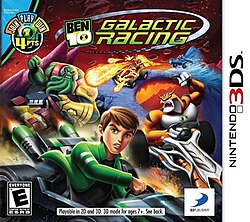










 Another SquareThought Site