

 Aug 2025
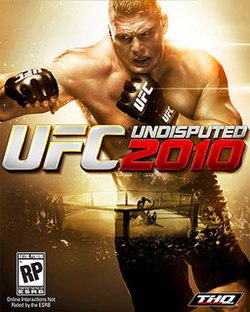

There are games that try to imitate a sport and there are games that insist the sport does the imitating. UFC Undisputed 2010 - the sophomore effort from Yuke's and THQ - belongs firmly to the latter category. Presented with the sort of deadly earnestness that made 1990s magazines obsessed with realism, this sequel tightens the screws on its predecessor and tries to convince the player that mixed martial arts is more than button-mashing fury: it is a set of tools, a chessboard of strikes and submissions, and occasionally, if you get things right, sheer cinematic violence. Played primarily on the PlayStation 3, Undisputed 2010 arrives like a contender in the late rounds: it is leaner, smarter in spots, and confident enough to show off a few new tricks - clinch and ground grappling have been reworked, cage usage has been expanded, and new fighting styles (karate, Greco-Roman wrestling, and judo) have been introduced. If you remember reading heavyweight previews in the days when reviews came with scores and small pictures of the reviewer looking solemn, this is that kind of game: meticulous, occasionally pedantic, and unafraid to let the combat do the talking.
UFC Undisputed 2010 does two things immediately: it refuses to be a mere re-skin of the 2009 game, and it places the art of combat at the front of its design. Controls have been improved - not merely rejigged, but redesigned in places - with notable attention paid to the clinch and ground grappling systems. Those who played the previous entry will find the transitions between stand-up, clinch, and ground work smoother and more intentional; the result is a game that rewards timing and positional thinking over flurries of arbitrary input. The career mode, expanded and polished, is the game's beating heart. You create a fighter and take a painstaking, career-spanning route from amateur cards to the World Fighting Alliance and finally to the UFC itself. The structure reads like a career diary: fight, train, polish weaknesses, take the PR, survive a press workout, and accept or decline the temptations of pay-per-view glory. Training is not a mere stat screen but a management mini-scheme in which you pick exercises and either play sparring minigames to raise stats or let the system auto-raise them. Focusing obsessively on one attribute causes decay in others, so the mode nudges the player into balanced development rather than a single-stat exploit. There is a pleasing throb of authenticity to the career progression. After you prove yourself in smaller Fight Night shows you are summoned to pay-per-view cards, Joe Rogan interviews follow PPV fights, weigh-ins add theatrical tension to title bouts, and optional activities like photoshoots and press sessions with personalities (Arianny Celeste and others) give the career mode an oddball charm. The career arc even allows for division-hopping: win a title, defend it a while, then attempt to dominate another weight class. After 54 fights the game retires your character to the trainer's stool and, if you've done well, grants you a Hall of Fame entry - a tidy, old-school career coda. Ultimate Fights Mode returns from the previous game as a curated museum of classic bouts. Playing as history's winners unlocks fight highlights; playing as the losers yields post-fight interviews. It's a neat way of mixing nostalgia and unlockable media, and it provides a carrot for completionists who enjoy reliving famous moments. Combat has been deepened in practical ways: use of the cage is meaningful (wall-walking out of trouble, pinning an opponent, or raining elbows while the crowd roars), and the introduction of TKO via cuts and injuries adds a layer of realism to damage management. The roster is fully featured - each fighter brings individual moves and stances - but Yuke's frustrates slightly by keeping most move-lists gated behind the pause menu during play rather than presenting an accessible, browsable compendium. Unlockables such as Shaquille O'Neal and the Tapout crew provide a wink of levity in an otherwise serious sim. The game's approach to difficulty and balance is laudably authentic. Matches can conclude by submission, KO, or technical stoppage; the learning curve rewards patience and study, not frantic reaction. Online and exhibition modes support the more competitive players, and the demo that shipped ahead of release gave a solid taste of the light heavyweight roster to come: Lyoto Machida, Mauricio "Shogun" Rua, Rashad Evans and Quinton "Rampage" Jackson. There are rough edges. The career mode is rich in systems but occasionally menu-heavy, threatened by tedium when the management side becomes too clerical. A handful of reviewers catalogued visual glitches on occasion, and while these do not break the game they can pull the player out of the experience. For most combat-focused players the core mechanics will outweigh these sins: the fighting itself is the reward, often brutal, often elegant, and frequently satisfying in a way only a well-tuned fighting engine can be.
Presentation is where Undisputed 2010 shows its best and occasionally its oldest face. On PlayStation 3 and Xbox 360 the fighters are modelled with convincing detail, the arenas are full-bodied, and crowd and lighting work in concert to create the sense of a televised pay-per-view. The game includes new arenas (GM Place, Centre Bell and The O2), and their introduction feels more than cosmetic: the octagon looks and sounds like an event, not a generic stage. Animation, particularly in strike-to-grapple transitions and submission sequences, is accomplished; the wrestle-and-roll moments on the mat have an ugly poetry to them that the engine captures successfully. Yuke's pushes character likenesses and stances hard, which benefits the immersion - a well-known fighter moves differently, and that matters in a game so dependent on read-and-react decisions. However, perfection is not on the ticket. A few publications noted graphical glitches and hiccups - flickering models or the occasional collision glitch - that remind the player this is a 2010-era production with limitations. The PSP port is a pragmatic adaptation rather than a full visual translation; it manages to be competent on a handheld, but is understandably a step down from the console versions. The iOS release serves as a curiosity more than a primary experience: an admirable attempt to put the system on a mobile device but not the version you buy if you want the fullest audiovisual spectacle. Sound design, including impact effects and the commentary, leans into the broadcast aesthetic. The commentary and interviews (Joe Rogan, for instance) contribute to the sense of authenticity, even if the repetition of lines becomes audible after many hours. Overall, the audiovisual package does its job: it makes the octagon feel like a place you can inhabit, fight in, and occasionally be destroyed within.
UFC Undisputed 2010 is not a revolution so much as a confident, well-executed sequel. It corrects stubborn faults from its predecessor, deepens the grappling and clinch mechanics, and layers a substantial career mode over a core fighting system that is at once technical and viscerally entertaining. For players who want a fighting game that respects MMA as a discipline - with tactics, positioning and consequences - this is the most persuasive entry of its time. If you are a purist seeking arcade immediacy you may grumble at the game's patience; if you are a completionist you will appreciate the Ultimate Fights Mode, the unlockables, and the career arc with its 54-fight retirement. The PSP and iOS versions are respectable but inevitably compromised; the PS3 and Xbox 360 builds are where the game reveals its best self. Critics broadly agreed: high marks for the consoles, middling for the handheld. The nomination for Fighting Game of the Year from the Academy of Interactive Arts & Sciences is no accident. Buy it if you want a detailed, often ruthless fighting simulation with the pomp of pay-per-view presentation. Skip or rent it if you want candy-coated, pick-up-and-play beat-em-ups. For those who grew up with stern magazines and sterner reviewers, this one is a worthy title - serious about its subject, occasionally flawed, and ultimately satisfying in the final bell.
 UFC 2009 Undisputed on PS3
 Undisputed on Xbox Series X/S
 Accolade Sports Collection on Xbox Series X/S
 Deca Sports DS on DS
 EA Sports MMA on PS3
 ACA Neo Geo: Art of Fighting 2 on Xbox One
 Online Pro Wrestling on PS2
 AEW Fight Forever on Xbox Series X/S
 Earth Defense Force: Iron Rain on PS4










 Another SquareThought Site