

 Aug 2025
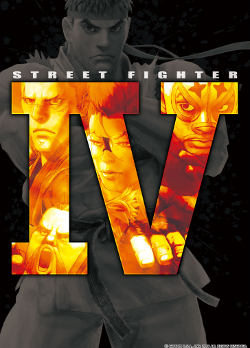

When Capcom announced the return of its flagship pugilistic property a decade and a half ago, few could have imagined the quiet, relentless renaissance that would follow. Ultra Street Fighter IV is not a new beginning so much as a final, fan-minded restitching of a fabric that had already been mended many times. For PlayStation 3 owners who have kept the faith through arcade editions, Super updates and balance patches, Ultra arrives like an evening edition of a much-loved paper: familiar headlines, extra pages and a few new columnists to argue with. It is, in the best possible sense, the definitive iteration of a game that reintroduced Street Fighter to a modern audience and then refused to stop improving itself. Reading the credit crawl on Ultra is to witness an industry comfortable with iteration. This is the version that collects Capcom's lessons, community feedback and the occasional artful tweak into a package intended for players who prize depth above flash. As such it is both conservative and ambitious. Conservative because its foundation remains the classic six-button scheme and the two-dimensional plane of the series; ambitious because it grafts on new mechanics, a fat roster and options that try to balance competitive rigor with the casual player's appetite for spectacle. For anyone who remembers quarters, cabinet smoke and back-alley tournaments, Ultra is an assured, grown-up sequel of a sort the 1990s reviewer in me is primed to respect.
Street Fighter IV's core is an exercise in balance and compromise: three-dimensional models and camera flourishes aside, the fights play out on a traditional 2D plane with meticulously tuned 2D hitboxes. That decision-eschewing a purely 3D hitbox system in favour of the series' pixel-perfect legacy-was wise and speaks to Capcom's reverence for the franchise's mechanical DNA. Ultra retains the familiar six-button layout, the nuanced timing windows of classic series tech, and the combo sensibilities that reward reading and precision as much as memorised sequences. If the original Street Fighter IV reintroduced the Focus Attack and the Ultra Combo, Ultra Street Fighter IV refines those systems and adds a set of new toys. The Focus Attack remains a central strategic element: performed by holding both medium punch and kick, its layered charge stages reward patience and timing, letting players absorb and then retaliate or convert into movement cancel options. Into that framework Ultra inserts Red Focus, a high-risk, high-reward variant that expands reversal possibilities and modifies reaction windows across the roster. The game also preserves Super Combos and EX cancels, creating a three-tiered grind of meter management that is, remarkably, still rewarding after dozens of balance patches. The titular "Ultra" additions are where the update stakes its claim. Five new characters-Rolento, Elena, Hugo, Poison and Decapre-join the roster alongside system changes that feel like small tectonic shifts rather than seismic rewrites. "Edition Select" is a delightful nod to history: players can choose different character builds from past iterations of Street Fighter IV, effectively enabling matchups between versions of Ryu, for example. "Ultra Combo W" lets players pick both of a character's Ultra moves at a cost, introducing interesting branch decisions at character select. The delayed wakeup mechanic and the active removal of many unblockable setups represent Capcom's willingness to listen to tournament-level feedback and burn the exploits that ruin spectacle for sport. For the competitive-minded, the balance work in Ultra is the real headline. Moves are tweaked, properties adjusted and hitboxes refined; the result is a system that plays faster and cleaner than the earliest console builds while retaining the muscle memory and pacing veterans crave. The Challenge Mode remains an excellent training tool for the new player and a practical lab for the old hand learning a new character. Online play on consoles is serviceable-it's not flawless, but the PS3 version benefits from the maturity of its online infrastructure and the established community. For local fights, the input responsiveness and muscle memory are intact, which is the only measure that truly matters when two players are facing each other without a net between them. Ultra Street Fighter IV asks little of its audience beyond a willingness to learn and a desire to read opponents rather than simply memorize a sequence of inputs. It preserves the honour code of spacing, footsies and frame knowledge while providing enough modern safety valves-meter systems and Focus mechanics-to keep matches dramatic and variable. In short, this iteration is a fighter designed for players who remember how to lose with grace and how to win without boredom.
Graphically, Ultra Street Fighter IV wears its age with a certain pride. The decision to render characters as three-dimensional models while preserving two-dimensional gameplay allowed Capcom to mix painterly aesthetics with the fidelity of modern hardware. The art direction takes its cues from non-photorealistic rendering-ink smudges, calligraphic flourishes and exaggerated animation arcs-so the rounds look like moving panels from a graphic novel. On the PlayStation 3, the game does not strive for absolute realism; instead it emphasizes clarity and character silhouette, which is crucial in a game where seeing an opponent's limb is seeing a threat. The stages are varied and often charming, with a handful of new arenas added in the Ultra update. These range from the familiar training rooms and bustling urban backdrops to a smattering of more exotic locales. The camera will break into cinematic angles for Ultra Combos, the system's long, stately finishers; such moments are intentionally showy and capably executed, offering the television-ready razzle without undermining the combat flow. One cannot discuss the visuals without mentioning the sprite-like homage in UI and palettes. Ultra keeps the UI readable and sharp: health bars, meters and stun indicators are unambiguous and arranged in a way that competitive players will instantly recognize. On the PS3, the frame-rate is generally stable, and the animation is smooth enough that input telegraphing remains consistent. It is not the most technically dazzling fighter of its era, but it is coherent, elegant and serves the gameplay first-an aesthetic decision in keeping with Capcom's 1990s sensibilities where function often trumped ornamentation. Audio design deserves its own nod. Hideyuki Fukasawa's score mixes new compositions with rearranged themes for returning characters, and the extensive voice work-both English and Japanese-gives the cast a theatrical presence previously rare in the series. The arcade-style announcer and impact sounds are satisfying; the sound cues do as much tactical work as any on-screen prompt, and that is precisely how a fighting game should design its aural feedback.
Ultra Street Fighter IV is not an audacious reinvention; it is a careful, considerate evolution. For PlayStation 3 owners it represents the end of a long line of iterative improvements that began in 2008, culminating in a package that is both generous and exacting. It is the sort of release that would have been treated in the 1990s as a healthy, game-savvy update: new fighters, better balance, options for both the tournament purist and the casual showman. Capcom has managed the rare trick of respecting legacy while still moving things forward; the result is a fighter that rewards time rather than punishing newcomers with inscrutable systems. If I have a quarrel, it is with the franchise's tendency to multiply versions. For a newcomer, the history of SFIV's many patches and spin-offs can appear bewildering. Yet Ultra mitigates this problem with tools like Edition Select and a robust Challenge Mode that educate as much as they entertain. For the veteran, Ultra is a compendium-an archive of practical improvements and careful rebalances that will sustain local tournaments and online rivalries for years. In the final tally, Ultra Street Fighter IV on PS3 feels like the last great punch of a long match: measured, precise and delivered with authority. It is a model of how to support a fighting game post-launch, and it remains a benchmark for contemporary design: deep enough for the specialist, generous enough for the curious. For those who collect consoles the way some people collect vinyl records, this one is essential; it is a heavyweight title that wears its pedigree cleanly and still finds time to teach you new tricks. If you own a PS3 and value fighting games done with care, this is money well spent.
 Street Fighter 6 on Switch 2
 ACA Neo Geo: Art of Fighting 2 on Xbox One
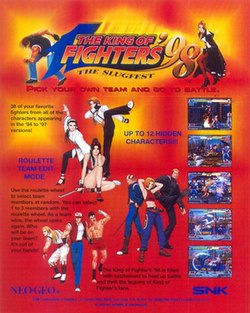
 ACA Neo Geo: The King of Fighters '98 on Xbox One
 Touhou Hyoibana: Antinomy of Common Flowers on Switch
 Art of Fighting Anthology on PS2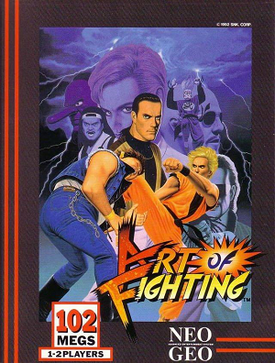










 Another SquareThought Site