

 Aug 2025
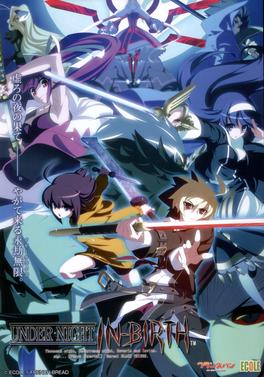

In an era when arcades still hummed like neon beehives and the PlayStation 3 was the living room's crown jewel, a modest but fierce 2D fighting game crawled out of the shadows and dared to elbow its way onto the roster of modern classics. Under Night In-Birth began life on Sega arcade hardware in 2012 and returned in a smarter, sharper form as Exe:Late in 2013. The PlayStation 3 received a home conversion in 2014, courtesy of Arc System Works, and with it a fighting game that wears its pedigree on its sleeve: this is French-Bread's post-Melty-Blood offspring, matured, high-definition, and stubbornly opinionated about how two people should ruin each other's Friday night. If you remember the 1990s magazine back pages where reviewers sounded part academic, part referee, and part connoisseur of badly timed button-mashing, you'll feel right at home. Exe:Late is not flashy for flashy's sake; it is an intelligent little machine of counters and momentum, with a visual style and soundtrack that make the whole affair feel like a midnight anime special dotted with blood and polite rage. It will reward patience and scold impatience. Courtship of this game requires time, but once you've learned its language, it replies in brutal poetry.
Under Night In-Birth Exe:Late wears the fighting-roots badge proudly: four attack buttons (weak, medium, strong, plus a fourth tied to the game's Grind system), cancels that let combos flow like ink across a scroll, and a super meter system that delivers both fireworks and tactical knife-twists. If you have spent evenings with Melty Blood, Guilty Gear or BlazBlue, you'll recognise the DNA; if you haven't, think of it as a chess clock made of fists. The game's headline innovation - and the thing that makes matches in Exe:Late feel like a tug-of-war with a heartbeat - is the Grind system (abbreviated GRD). The Grind Grid is a visible gauge between the two fighters that measures 'influence' over the fight. Aggressive, precise play pushes your side of the grid towards victory; playing timidly or getting smacked pushes it the other way. At set intervals the game checks who has the upper hand and hands the lead a handful of advantages: damage boosts, access to special cancels, and the possibility to flip the tempo on the opponent. It is less a gimmick than a meta-layer of psychological warfare. The Grind system makes feints matter, guard choices matter, and the decision to run away a tactical error rather than a safe option. You will feel rewarded for playing like a thinking person, not a frantic puppet. Complementing GRD is the EXS Gauge, a more traditional resource that funds enhanced specials and the devastating Infinite Worth super attacks. Those Infinite Worth EXS moves, especially when performed at low health, are the game's cinematic finishers: flashy, violent, and often match-deciding. Exe:Late also bolsters defense by adding Guard Thrust, a reversal-like defensive choice that lets the brave and precise pull a damaged card from the sleeve and regain momentum. Character tools are not vanity; they are personality. Each fighter gets Force Functions - special, character-specific moves that consume GRD - added in Exe:Late. These give distinct tactical identities across a modest but well-built roster. The original arcade release began with ten playable characters and through updates and ports grew into a much larger cast, but the PS3 incarnation offers a comfortable range of archetypes: hard-hitting grapplers, zoning spell-slingers, and nimble combo artists. Moves cancel into each other in nearly any order you could dream up, making clutch improvisation possible without breaking the whole system. The learning curve is not for the faint-hearted. Exe:Late's controls are approachable - a welcome nod in an era where some 2D fighters demand doctoral-level memorisation - but its systems are layered. Reviews at the time noted that the basics could have been better explained; the PS3 package does not exactly hold your hand through the Grind's psychology or the timing windows of Guard Thrust. Expect to get yelled at by the training menu and humbled by the first online opponent who knows how to harvest GRD. Netplay on the PS3 generation had its usual quirks; this is not a knock-out online package like later rollback-netcode games, but the core experience is in the arcade feel. The single-player options are functional: arcade mode, versus, and training provide the usual playground, but the later releases introduced elaborations - Chronicle Mode, a visual-novel style addition in subsequent updates, offers story beats and helps the universe feel lived-in. Exe:Late on PS3 focuses on the fighting, and the fighting itself is smart, satisfying, and occasionally cruel. Destructoid called it 'an intelligent, tactical fighting game' upon release, and I concur. Match pacing leans toward mid-speed; it is neither the manic scramble of some anime fighters nor the deliberate pacing of old-school one-hit wonders. Rather, it situates itself where decisions mean everything: whether to press the advantage or bait a defensive slip. That middle ground gives the game depth without drowning new players in muscle memory, although investing time will pay off more than a weekend of button-spamming. If you enjoy games where momentum shifts and a single well-timed defensive read can change the entire match, Exe:Late will feel like coming home - a home where the floor is lava and your neighbour has eight swords.
French-Bread took a different path than many small studios at the time: instead of leaning on polygons and lighting toys for drama, they embraced high-definition, hand-drawn sprites. The result is a visual presentation that is simultaneously retro and modern. Character animation is crisp, full of weight and little attitude ticks; attacks feel like they land on the screen rather than in an invisible register. Scenes and backgrounds have the sort of layered 2D detail that was becoming rarer on consoles where 3D was king, and artist Seiichi Yoshihara's touch gives the game a palette that straddles gothic and graffitied high-school manga. Sound design, courtesy of composer Raito, matches the visuals. The music is propulsive and theatrical, the kind of soundtrack that pushes your blood pressure up during a clutch encounter and then rewards you with a sting when you succeed. Voice work is primarily Japanese: the PS3 release keeps the original cast, which suits the game's anime-tinged story and characters. On the technical side the PS3 port is solid: it carries the arcade's crisp sprite work into living rooms with little degradation and keeps the frame-rate stable during the chaos of special attacks and screen-filling effects. If there is a visual gripe, it is that the presentation, being so stylised, occasionally buries clarity under spectacle - when both players are in Vorpal or EXS states and the screen is a lyric of blades and particle effects, discerning precise hitboxes can be a small chore. That is a stylistic choice more than a flaw, but it will frustrate perfectionists who demand absolute visual clarity in every exchange.
Under Night In-Birth Exe:Late on PS3 is the kind of fighting game that will make you feel both clever and punished, often in the same round. It is a title built for people who like their combat systems to ask questions and expect answers. The Grind system is an inspired piece of game design: simple to see, fiendish to master, and responsible for many of the game's most memorable swings. French-Bread's hand-drawn sprites and Raito's music give the package character and charm, and while the PS3 port is not a revolution in presentation, it is faithful and dignified. The barriers are real. The learning curve will bounce off casual players, and the PS3 era online is not as forgiving as modern rollback-netcode implementations. A better tutorial and clearer explanation of meta systems would have made this a more immediate recommendation. Still, for anyone who learned to love 2D fighters in the 1990s and craves something that rewards study and precision rather than mere reflex, Exe:Late is a delight. It sits comfortably with the year's better fighters and justified the modest praise it received on release. Score-wise, it earns an 8 out of 10: a serious contender in the 2D fighting ring, precise, stylish, sometimes cruel, and ultimately rewarding for the patient and curious.
 Test Drive Le Mans on PlayStation
 Under Night In-Birth II [Sys:Celes] on PS5
 Tokimeki Memorial Drama Series Vol. 3 Tabidachi no Uta on PlayStation
 Oshiete! Popotan on PS2
 The King of Fighters: Kyo on PlayStation
 Melty Blood: Actress Again on PS2










 Another SquareThought Site