

 Aug 2025
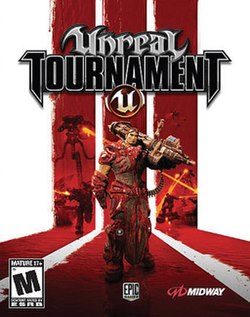

If you remember arena shooters as that comfortable place where rocket launchers and ridiculous hats go to have quiet, violent conversations, Unreal Tournament 3 on PS3 arrives like a very friendly but heavily armed guest who loudly announces they brought the latest engine and then proceeds to turn your living room into a fragile ecosystem of explosions. Built on Unreal Engine 3, UT3 is the franchises glossy continuation: same fast reflex worship and ridiculous weaponry, but with shaders, motion blur and the kind of lighting that makes everything look important. On the PS3 specifically, it shipped with support for mouse and keyboard, user-made mods (yes, really), and got patched into something resembling maturity with updates that added split-screen, trophies and PC mod browsing. Its not a reinvention. It is, however, very polished chaos.
Unreal Tournament 3 is, at its core, the sort of multiplayer game that politely refuses to let you stand still for more than three seconds. The PS3 edition is loyal to series tradition: its multiplayer-first, frantic, and built around modes that are variations on "kill or capture or both, depending on your mood and whether your team is actually communicating." The familiar deathmatch and team deathmatch are present and correct, rewarding aim and map knowledge. Capture the Flag returns with the expected adrenaline spike when someone nails a flag run, and Duel keeps one-on-one queues feeling like a gladiatorial waiting room. Beyond the classics, UT3 stretches its legs with Warfare, a hybrid of Onslaught and Assault that introduces countdown nodes and an "orb" mechanic that spices up objective play. Vehicle Capture the Flag is vehicle-enhanced chaos with hoverboards issued to every player for that extra dimension of vulnerability: ride one and youre faster and cooler; get hit and you discover the healing properties of ground-slamming. Betrayal is a mode clearly designed by someone who studied human greed and thought, "Lets make that a game mechanic." Team pots grow as you kill enemies and anyone can betray to claim the pot, which creates tense micro-dramas where your teammates exit strategy is also their moral bankruptcy. Greed, named after a UT2004 mod, is skull-hoarding nonsense that rewards opportunism and base-capturing rather than pure fragging. Vehicles are factionalized into Axon and Necris types. Axon vehicles feel like nostalgia for UT2004s hardware with changes to balance their roles; Necris toys are creepier, often violent looking, and occasionally make you question how you got into a vehicle apocalypse themed holiday. On vehicle maps the personal hoverboard is the real winner: its a skateboard/grappling device combo that lets you latch on to moving vehicles and travel like someone late to a very important explosion. Using a hoverboard looks cinematic and feels risky because the slightest damage knocks you off and leaves you exposed. The game intentionally punishes airborne cowards. The single-player campaign is simultaneously the most and least surprising part: most because it actually exists as a decent offline multiplayer ladder with AI, least because it doesnt pretend to be some sprawling moral epic about the Tournament Grand Championship. Instead the narrative explains the bot violence with a tidy sci-fi footnote: a Necris invasion breaks out on a colony called Twin Souls, releasing Krall and generally causing unpleasantness. You play as members of the Ronin who, with various allies and betrayals, try to drive the Necris off Taryd and later follow them to Omicron-6 for a slightly melodramatic conclusion involving loyalty, betrayal and rocket launchers. Campaign missions mirror multiplayer matches, so expect to see familiar gameplay with a thin veneer of plot acting as an excuse for AI-induced chaos. Controls and console quirks deserve a note. PS3s support for mouse and keyboard is unusual for the era and means that if you have a desire to be especially precise, you are not punished by thumbsticks alone. The game also supported community-made mods via the PS3 HDD or external media, which was ambitious: a console attempting to be indie-friendly before that became a trend. The 1.1 patch fixed cross-region matchmaking and headset problems, while the 2.0 patch added smarter AI, split-screen local multiplayer, trophies, and improved mod support. Online play longevity was a victim of the eras server ecosystem; GameSpy shutdowns eventually ended official PS3 and PC multiplayer services in 2014, but for years the game provided very healthy multiplayer experiences. For anyone picking up the PS3 version post-patch, the game feels feature-complete and oddly thoughtful for an arena shooters standard list of demands.
The obvious headline here is Unreal Engine 3. UT3 celebrated it by making explosions feel photogenic and every weapon radiant enough to have a LinkedIn profile. The lighting, motion blur and high-definition textures turn map traversal into something that almost looks like architecture porn between bouts of vehicular murder. Epic used motion blur effects tastefully enough that it rarely becomes the cinematic over-gloss that ruins visibility; instead it mostly helps convey the speed this game worships. Maps are designed with classic arena balance in mind: verticality, sightlines, and places that promise glory and usually deliver death instead. Vehicle maps are larger and feel appropriately grand, with room for hoverboard shenanigans and tactical driving. Character models and enemy factions are distinct: the iron-clad Axon troops, the slightly unnerving Necris with their nanoblack augmentation, the tribal-looking Krall - all wear their inspirations on their sleeves and sometimes on their shoulders where a rocket launcher will inevitably land. Sound and score are workmanlike but effective. Jesper Kyd and Rom Di Prisco remix and rework themes, while Kevin Riepl contributes cutscene scoring; the soundtrack integrates old Unreal motifs with modern electronic flares. It wont be the reason you buy the game unless you are a composer moonlighting as a person who likes explosions, but it fits the tone and elevates the more cinematic moments. The PS3 versions visual upgrades and patches further reduced the little issues that initially made the port feel like a console experiment. The Titan Pack later added maps and mutators that altered visuals and scale, such as the Titan Mutator which has players grow in size and carry alternative armaments - its ridiculous and visually satisfying.
Unreal Tournament 3 on PS3 is a strange, polite beast: it asks you to commit to high-speed fragging and rewards the commitment with excellent level design, varied modes, and the kind of technical polish that makes you forget youre playing a game that is, at times, basically organized mayhem. The single-player campaign is competent and functional, useful as an extended training montage against convincing bots and an excuse to experience modes without co-opss inevitable betrayal. Multiplayer is where the heart is; Warfare, Betrayal and Greed add enough variety that the match types rarely feel stale, and the hoverboard mechanic gives vehicle maps a personal-risk thrill that is rare in modern shooters. It has a few era-specific caveats: online services were eventually shuttered due to third-party server dependencies, and the PS3s hardware quirks mean the experience youll have depends on patches (get 2.0 if you can). Mods on PS3 were a forward-thinking inclusion, but console mod support was always a little fiddly compared to PC. Still, UT3 sold over a million copies worldwide and generally earned the positive critical reception that suggests it did most things extremely well. If you enjoy fast, unapologetic arena shooters with a sheen of modern tech, this port is a very good place to scream "rocket!" at strangers and feel morally officiated by trophies while you do it. Score: 8.5/10 A refined fragathon that remembers why you loved getting blown up in the first place, and dresses the explosions up in high-definition clothes before doing it again.
 MotoGP 20 on Switch
 The Witcher IV on Xbox Series X/S
 PixelJunk Shooter 2 on PS3
 Warhammer 40,000: Boltgun 2 on Xbox Series X/S
 PixelJunk Shooter on PS3
 Tower of Guns on PS3
 Fortnite on PS5
 Fortnite on Switch 2
 Bulletstorm: Duke of Switch Edition on Switch










 Another SquareThought Site