

 Apr 2020
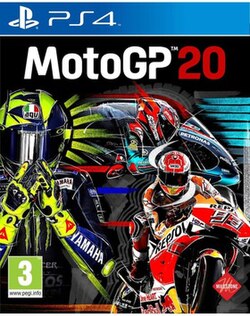

MotoGP 20 arrives bearing the kind of update notes that make sim-heads twitch in a good way: an upgraded AI labelled "Neural AI 2.0", a revived managerial career system with named staff roles, and the faithful reproduction of the 2020 season as it was planned before the COVID-19 chaos. On Nintendo Switch the title carries those ambitions into a handheld console that sits somewhere between pocketable distraction and surprisingly competent racer hardware. Milestone built the game on Unreal Engine 4 and shipped it across PC, consoles and Switch, which means there are engineering choices and trade-offs that are interesting in their own right. This review focuses on the technical bones of the Switch release: how the AI behaves, what the career systems actually simulate under the hood, how the engine choices impact visual fidelity and performance, and whether the modes and features justify buying the game on a platform where horsepower is at a premium. Expect more torque numbers for systems than for engines, and a dash of sarcasm for flavour.
If you want the short version: MotoGP 20 is a technical stew with ingredients that simulate variables real riders sweat over. The long version is where the fun - and the engineering - live. The game lists its modes plainly: Historical, Multiplayer, Career, Fast Modes, Personalization and historical Content. That catalog masks a surprisingly layered simulation core. Neural AI 2.0 is the headline mechanical change from the previous entry. Milestone advertises it as being more efficient in riding and able to manage tyre wear and fuel consumption. From a systems-design perspective, that implies the AI is not simply following optimized racing lines but is also running resource-management heuristics over the duration of a session. Instead of treating tyre degradation and fuel as cosmetic timers, the AI appears to model them as stateful constraints that influence braking points, corner exit aggression and overtaking risk profiles. On Switch you can feel the difference in how pack dynamics evolve over a race. Opponents are less robotic about defending a corner line and more likely to adjust pace as tyre health declines. That makes for more believable mid-race strategy where the CPU may start slower laps leading to opportunities for you to capitalize. Because tyre and fuel management are explicit variables, overtakes aren't just a matter of precise braking; they're also a question of reading the state of an opponent's resources - which the AI now simulates. This adds real tactical depth to single-player races, especially in longer formats and in the Managerial Career mode where season-long development matters. The Managerial Career returns with improvements and is arguably the game's most technically ambitious mode. It layers a light management sim on top of the on-track racing. You pick a team and engage with roles such as a Personal Manager, Chief Engineer and Data Analyst. These roles aren't window dressing: they drive feed-forward systems for bike development and race preparation. The Data Analyst provides track telemetry and helps identify where lap-time is being lost, the Chief Engineer schedules upgrades and development paths, and the Personal Manager manages contracts and negotiations. From a technical standpoint, this is a set of interlocking state machines with resource allocation. Milestone designed it so that player input steers development priorities and the underlying systems translate those priorities into numerical performance deltas - lap-time improvements, reliability adjustments and handling shifts. Career micro-decisions cascade into macro results over a season that, in MotoGP 20, is represented as the 2020 calendar was intended. The Nintendo Switch version includes that season configuration - including the Thai Grand Prix placed later in the calendar after Aragon and the inclusion of the cancelled Finnish Grand Prix for the first time. These calendar-level choices create test cases for the development loop: you must tune setups for different tracks, and that tuning interacts with the AI's tyre and fuel models in ways that feel deliberate. Multiplayer and Fast Modes are technically straightforward but important. Fast Modes are effectively stress-tests for your understanding of the physics and AI: they let you chain short sessions without the overhead of career meta. Multiplayer on Switch is present and functional, though on handheld hardware networking overheads and matchmaking ecosystems are less forgiving than on larger platforms. The document cites a Nintendo Life review of the Switch eShop release, which corroborates that the game is a competent port rather than a trimmed-down afterthought. Control-wise, the Switch brings its usual design considerations. The game supports standard controller input and (likely) gyro-assisted steering and button mapping for those who want a more tactile or motion-driven steering feel. The true measure of the simulation is whether precision inputs map cleanly to throttle/brake/lean outputs, and MotoGP 20 mostly succeeds: the input-to-physics pipeline feels tight enough that small corrections produce predictable outcomes. That predictability is essential when you're trying to nurse tyres or time a slipstream pass in a field where the AI dynamically adapts their behavior. Where the Switch release is constrained is in optional telemetry and parallel processes. Unreal Engine 4 is powerful but not magical; on a low-power platform developers often have to prune background simulation fidelity to preserve frame-time stability. Milestone seems to have prioritized the core stateful systems (AI tyre/fuel, career progression, track physics) over exhaustive per-frame visual fidelity, which is the correct trade-off if your goal is believable racing rather than photorealism.
MotoGP 20 is powered by Unreal Engine 4, and that choice shows everywhere: lighting models, material shaders and particle effects benefit from an engine that has mature toolchains and a large ecosystem. On Switch, Unreal Engine 4 provides a solid baseline but also forces choices. Developers typically balance texture resolution, shadow detail, post-processing and draw distance to hit target frame rates. The game's visual identity on the Switch is competent - the bikes look convincing, helmet and suit liveries carry accurate logos and the track geometry is faithfully reproduced - but there are clearly fidelity concessions compared to PS4/Xbox/PC counterparts. The most visible trade-offs are in texture detail and post-process effects. Textures on surfaces like runoff areas and distant crowd assets are down-sampled, and post-processing such as film grain, bloom and screen-space reflections are dialed back. That's not an indictment so much as an engineering reality: when you run a physics and AI simulation that now accounts for tyre life and fuel, CPU and memory budgets shrink for rendering. Milestone appears to have accepted that visual clarity comes second to simulation fidelity, which aligns with the game's technical priorities. Another place where the engine choices matter is in lighting and shadows. Unreal Engine 4 can perform well on Switch when baked lighting and clever LODs are used, and MotoGP 20 employs those tactics. Shadow detail is reduced and cascades are short, which can make lighting look flatter at a distance, but close-up bike models remain crisp enough to read essential visual cues like brake disc glow, wet-weather spray and tyre deformation. Particle systems like dust and spray are simplified, but they are functional; they convey enough information for gameplay decisions (is the rider ahead getting squirrely in braking zones?) without swamping the GPU. Performance-wise, the Switch build focuses on stability over flashy framerates. The goal is predictable frame timing so that input latency remains manageable. A stable 30fps or a variable mode that trades resolution for smoother frame pacing is an acceptable compromise for a simulator that relies on precise inputs and feedback. The documentation provided mentions Nintendo Life's review for the Switch eShop, suggesting reviewers found the overall package solid, which in practical terms means Milestone delivered an acceptable visual-performance balance for the platform. Lastly, UI and telemetry presentation are worth noting. On the Switch, screen real estate is limited, and MotoGP 20's HUD design scales down sensibly. The critical telemetry data - tyre wear indicators, fuel readouts, lap timing and mini-map - are readable without burying the action. In a physics-driven racer that's a small but significant engineering win, because clear feedback loops are necessary for players to respond to the AI's stateful behavior.
MotoGP 20 on Switch is not a visual showcase, and it never pretends to be one. What Milestone prioritized - an upgraded Neural AI that simulates tyre wear and fuel management, an improved managerial career with distinct staff roles, and an accurate representation of the 2020 season (including the oddities caused by that year's calendar turmoil) - are gameplay-first choices that make sense for a sim. On the Switch, those choices translate into meaningful on-track dynamics: CPU opponents behave more like opponents and less like predictable obstacles, and the career meta actually feels consequential. If you care most about graphical fidelity, the Switch won't be your primary recommendation. If you care about believable racecraft, nuanced single-player strategy and a career system that models the kinds of trade-offs real teams manage, MotoGP 20 is a commendable effort on a constrained platform. Aggregate scores landed around the mid-70s on Metacritic, and major outlets - Game Informer, Nintendo Life, Push Square and Shacknews - clustered around 8/10, reflecting a consensus that the game delivers solid racing with technical smarts. For an 18-year-old who wants more than arcade thrills - someone who likes tuning setups, reading telemetry and sneaking past a rival who misjudged tyre life - this is a Switch title worth slotting into your library. It's a functional and technically-minded port that errs on the side of simulation fidelity over eye candy, and for many riders, that's exactly the point. Score: 7.6/10.
 MotoGP 18 on Switch
 MotoGP 15 on PS4
 Roary the Racing Car on DS
 Team Sonic Racing on Switch
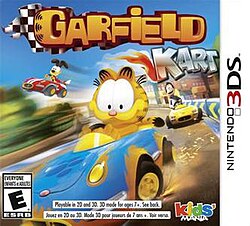
 Garfield Kart: Furious Racing on Switch
 Ben 10: Galactic Racing on PS3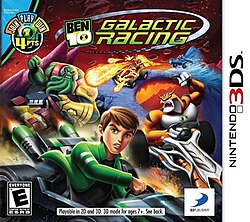
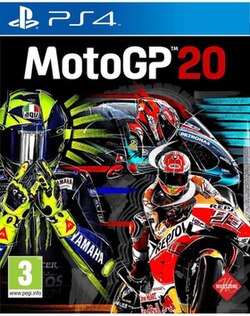 MotoGP 20 on Xbox One
 Monster Energy Supercross: The Official Videogame 4 on PS5
 Monster Energy Supercross 4 on PS4
 Monster Energy Supercross 2 on PS4
 Monster Energy Supercross: The Official Videogame 5 on PS5










 Another SquareThought Site