

 Feb 2013


Urban Trial Freestyle arrives on PS3 as a compact stunt-racing package with a curious pedigree: the game's aesthetic and stunt focus were shaped in consultation with Julien Dupont, a Red Bull athlete, which the developers cite as inspiration. Released via PlayStation Network on February 19, 2013 (the same launch window as its Vita sibling), the title tried to bottle an arcade-style trials experience into short, concentrated stages. Critics' reactions were lukewarm across platforms - Metacritic aggregated the PS3 version around the mid-60s (64/100) - and the aggregate reception is important context for anyone approaching the game expecting an exhaustive, simulation-grade trials title. This review leans deliberately technical: I dissect how the core systems (physics, controls, level design, UI, and performance) interact on the PS3 build, and why those interactions are the primary reason Urban Trial Freestyle feels both stubbornly addictive and annoyingly shallow at once.
Urban Trial Freestyle is built around short stunt courses that emphasize momentum management, obstacle traversal, and timing-based trick inputs rather than long lap races. The entire loop is a high-score and time-attack engine - complete a level, chain tricks, hit checkpoints, and shave time off your best runs. That loop can be engaging when the systems harmonize, so let's break those systems down. Controls and input fidelity: At its core, the game asks the player to perform a small vocabulary of inputs - throttle, brake, lean, and a trick button or two - then chain them precisely over varied geometry. On PS3 the control mapping is straightforward and responsive in most cases: throttle and brake have acceptable analog sensitivity, and lean inputs map cleanly to the sticks. Where Urban Trial stumbles is in the nuance layer. The difference between 'I meant to lean forward' and 'I catapult myself into oblivion' often feels thinner than it should. The physics model here skews arcade-oriented: mass, inertia, and angular momentum are present but tuned aggressively to keep airtime entertaining rather than realistic. That's a design choice, not necessarily a flaw, but it has critical implications. Physics and predictability: The physics are light and permissive. Combined with generous collision bounds for ramps and rails, this creates a game where you often get away with bold choices. However, arcade physics magnify the importance of precise feedback. The game occasionally fails to communicate the moment-to-moment consequences of a micro-adjustment; a tiny tweak to lean or throttle can yield outsized changes in rotation and landing vector. That inconsistency moves the challenge away from pure skill and toward a mixture of adaptation and memorization. Because this is a level-based trials experience, memorization of ideal brake/accelerate windows is always part of the equation, but when the physics model doesn't consistently reward the same inputs with the same outputs, that memorization becomes frustrating. Level design and gating: Levels are compact stunt courses with a series of technical checkpoints. Each stage funnels you through sequences of jumps, rails, and environmental props that are meant to be rhythmically linked. The design philosophy is one of short, repeatable runs that invite chaining. This works in principle: small stages reduce downtime between attempts, which is ideal for learning. In practice, the placement of some obstacles leans toward punitive rather than instructive. A single missed trick often means restarting or losing a long combo, which, paired with those physics quirks, magnifies frustration during the learning phase. The pacing relies on tight telegraphing - if the stage fails to visually telegraph the intended line, the player's learning curve spikes. Progression and content loop: Urban Trial packages its content into bite-sized tracks with a trick and time-based scoring ladder. There's replayability in chasing higher ranks and leaderboards (where present), and that loop is part of why it performed decently on PSN sales charts in 2014 despite mixed reviews. The downside: the game does not offer deep mechanical progression (no significant upgrades or complex unlock trees). Tricks are stylistic score multipliers rather than systemic changers, so the long-term retention strategy is essentially 'beat my score' rather than 'unlock new systems.' For players who love optimizing lines and shaving milliseconds, that's fine. For those expecting a broader meta-game, the reward scaffolding is thin. Difficulty and learning curve: Urban Trial Freestyle attempts to be accessible, but accessibility is complicated by two things: first, the tight windows required for perfect runs; second, the occasional unpredictability of the arcade physics model. Beginners will appreciate short runs and immediate retries, but they'll also quickly hit a wall where improvement depends less on better inputs and more on learning idiosyncratic level quirks. For a trials game, that's an uneasy tradeoff: it rewards practice but sometimes feels arbitrary rather than skill-based.
Visually, Urban Trial Freestyle leans into clean, stylized urban locales with bold colors and readable obstacles. The aesthetic reflects the stunt-sport vibe it's trying to capture - ramps, scaffolding, and graffiti-friendly backdrops - and that clarity is a practical strength because the game needs you to parse geometry quickly at speed. On the PS3 the art pipeline favors clarity over shader complexity: materials are simple, lighting leans toward baked ambient light and directional key lighting, and textures are pleasantly economical. That economy is not a failing; it supports frame-rate stability in principle and keeps the foreground geometry legible. Technical observations: geometry pop-in is minimal in most stages because the tracks are short and the camera is designed to frame the immediate line of travel. This helps preserve immersion and focus. Level-of-detail transitions are conservative enough that you rarely notice jagged draw pop, but you do notice aliasing on thin geometry like guardrails and wires - a typical PS3-era artifact when MSAA budgets are limited. Particle effects for dust and sparks are used sparingly and effectively to accent landings; they don't overwhelm the scene. The camera is functionally serviceable: it chooses cinematic angles for big jumps and snaps to a behind-the-bike view during technical sections. That cinematic intent increases spectacle but occasionally interferes with precise depth perception, especially when timing a backflip to clip a narrow landing surface. Audio and UI: The sound design leans into adrenaline-friendly cues: engine revs, landing thuds, and trick confirmation tones give immediate feedback. It's functional and upbeat without being memorable. Menus and HUD are straightforward and unobtrusive, supplying time, score, and combo multipliers cleanly. One small UI complaint: when you fail late in a run, the penalty/reward overlay feels abrupt rather than explanatory. For a system that incentivizes learning through repetition, clarity in end-of-run analytics would have been a welcome technical flourish.
Urban Trial Freestyle on PS3 is a compact, arcade-focused trials game that wears its design intentions clearly: short runs, stunt spectacle, and score-chasing. Technically, the package is competent - readable visuals, competent input mapping, and a level architecture designed for rapid retries. The elephant in the room is the tuning: an arcade physics model that prioritizes spectacle over predictability introduces moments where success feels as much about memorizing level quirks as executing better inputs. That makes the core loop feel less like a pure test of skill and more like learning a rhythm that occasionally trips on inconsistent feedback. Critically, the game received mixed reviews across platforms (Metacritic aggregated the PS3 version in the mid-60s), which matches my sense that Urban Trial Freestyle is fun in short bursts for players who love time-attack, but limited for those seeking depth. The involvement of Julien Dupont in development shows in the game's authenticity of stunt attitude, but authenticity alone doesn't solve the underlying mechanical thinness. If you're buying the PS3 version expecting a deep, simulator-like trials experience, you'll probably be disappointed. If you want a handful of high-energy stunt courses to grind, chase leaderboards, and enjoy quick retry loops, it delivers that reasonably well. Final verdict: a competent, occasionally frustrating arcade trials title with fun moments and limited longevity. It earned a modest place on PSN sales charts, and that commercial performance reflects a game that hooks a particular player profile: those who enjoy short-form stunt runs and don't mind a physics model that sometimes demands rote memorization. For everyone else, the experience tops out at entertaining but not essential - a mid-range purchase recommended for fans of stunt-driven, arcade-style trials rather than simulation purists.
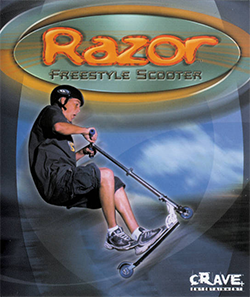
 Razor Freestyle Scooter on PlayStation
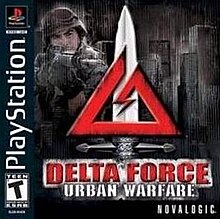
 Delta Force: Urban Warfare on PlayStation
 Roary the Racing Car on DS
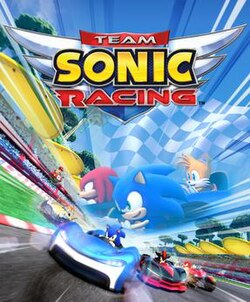
 Team Sonic Racing on Switch
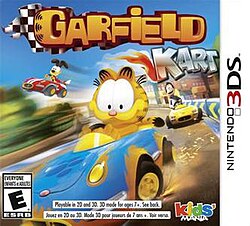
 Garfield Kart: Furious Racing on Switch
 Ben 10: Galactic Racing on PS3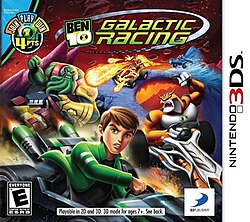










 Another SquareThought Site