

 Sep 2025


WRC 4 arrives as Milestone's official take on the 2013 World Rally Championship season, dropping onto the PlayStation 3 with the modest ambition of letting you slide, bounce and occasionally roll a variety of homologated rally cars across revised routes and seasonal stages. The package is unapologetically aimed at fans who want the WRC calendar in their living room: Rally New Zealand is out of the mix, Rallye Deutschland and Rally Mexico have been reworked, and the game ships with single- and multiplayer modes and a career framework. Reception was mixed at launch - critics agreed that the career mode and track variety were positives, while challenge, loading times and audiovisual presentation were commonly called out in reviews. This is a technical teardown with jokes, not a love letter or a eulogy.
At its mechanical core, WRC 4 sits somewhere between sim-lite and arcade pragmatism. The handling model is clearly tuned to be approachable: many reviewers and players noted a lack of bite in the learning curve, and that manifests as relatively forgiving understeer/oversteer recovery and traction behaviour. For players looking for a brutally honest simulation of weight transfer, suspension kinematics and granular tyre degradation, this isn't quite the physics bible - the model favors consistent predictability over chaotic realism. That design choice makes the career mode accessible and, crucially, fun for longer sessions; you can string together stages without constant mechanical frustration. The career mode is the game's beating heart. It structures progression, team contracts and a steady rotation through the calendar. The career's pacing is competent: you jump from gravel to tarmac to snow, testing the chassis across conditions without bloating the experience with excessive menus. Stage design is varied, which reviewers flagged as one of the stronger aspects - the revised routes for Rallye Deutschland and Rally Mexico add enough novelty to keep later events feeling distinct. On a technical level, the track construction shows care in elevation changes and corner sequencing; stages are built to reward memorization and throttle discipline even if the underlying vehicle model doesn't punish every mistake. Artificial intelligence and challenge are the weak links. Opponent tempo and rally pacing err towards the steady rather than the ruthless, which is consistent with the earlier observation about accessibility. If you prefer cutthroat pace where a few tenths of a second decides a stage, you may find the AI lacks that razor edge. Multiplayer exists but does not radically reinvent competitive rallying - it offers standard head-to-head and time-attack style engagements, useful for chasing leaderboard times but not a deep eSports ecosystem. Loading times are a technical blemish that cantankerous players will notice immediately. The game has a higher frequency of loading screens than is comfortable for a PS3 title of its era, and that disrupts flow between stages and menu transitions. From a systems perspective that suggests non-optimal streaming of assets or inefficient state transitions between event logic and rendering contexts; the end result is a game that feels like it's pausing for thought a bit too often. For a rally game, where rhythm and stage momentum are part of the appeal, these breaks hurt immersion. Damage and mechanical systems are serviceable but conservative. There is a damage model which affects performance, but it rarely produces catastrophic or wildly unpredictable outcomes - again, the title prefers to let you keep racing rather than hand you a terminal mechanical failure. Brake and tyre wear are modelled in a way that nudges you to tweak your driving and setup across long stages, but the lack of deep telemetry or setup tuning options limits the extent to which a technically minded player can micro-optimize every suspension geometry or anti-roll bar increment. Controller support on PS3 is straightforward: button mapping and vibration feedback work predictably. The DualShock rumble is used to convey surface changes and impacts, but without force-feedback wheels the sense of nuance from the physics model is muted. For players with wheels, the PS3 era peripheral support is present but doesn't elevate the game into top-tier sim territory - wheel inputs feel good, but the car responses retain that accessible tuning. If you're the kind of person who reads telemetry like poetry, you'll finish stages satisfied but wishing for more depth and configurability.
Visually, the game sits in the mid-range for PS3 2013 titles: competent but not showstopping. Multiple reviews and aggregated commentary point to audiovisual disappointment, and that's worth unpacking. Textures, draw distance and LOD transitions are all serviceable at a glance but occasionally betray their generation with pop-in and soft detail on roadside foliage and distant geometry. Lighting is functional: sun angles and particle spray are used to sell conditions, but the renderer doesn't consistently push cinematic mood or dramatic contrast. Weather effects such as mud spray and dust clouds are present and contribute to readability of the surface, but they lack the density and dynamic interaction (for example, tracked mud accumulation over time) that would make stages feel lived-in. Object detail on vehicles is accurate and the liveries are well represented, but reflections and material shaders are conservative. There is a sense of practical optimization - assets are scaled to maintain framerate rather than to wow you with photorealism. Audio also underwhelms relative to the sport's visceral potential: engine tonal complexity, tire roar and suspension clatter come through but don't quite reach the depth reviewers expected. The commentary and stage ambience are adequate for context but not for atmosphere. In short, WRC 4's presentation gets the job done and keeps performance mostly stable, but stylistically it's unambitious. If you were hoping for postcard-level vistas or ear-shredding sound design, this won't satisfy that craving. On the positive side, the stage variety (as noted by critics) helps hide some of the graphical conservatism. Different surface types and the reworked routes provide visual and tactile diversity that keeps repeated runs from feeling stale. The PS3 hardware is pushed steadily but not aggressively - the trade-off is predictable frame pacing most of the time, but the overall production values feel like they were balanced to ship on a schedule rather than to be a system showcase.
WRC 4 is a pragmatic rally game: built around an enjoyable career mode and a respectable roster of stages tied to the 2013 championship, it prioritizes accessibility and steady pacing over simulation extremism. The technical recipe - forgiving handling, manageable damage, and sane progression - makes for a comfortable experience for newcomers and casual fans. Hardcore sim aficionados will find it lacking in punitive challenge, advanced setup options, and deep telemetry. The game's other technical shortcomings - notably the overabundance of loading times and a presentation that reviewers called audiovisually disappointing - drag the overall experience down from 'very good' to 'solid, flawed contender.' If you're after a PS3-era rally title that gets you around the course without a PhD in suspension tuning, WRC 4 will deliver hours of competent, sometimes very enjoyable rallying. If you require razor-sharp AI, world-class visuals and an uncompromising simulation stack, you'll walk away wishing Milestone had pushed a little harder. Its Metacritic scores clustered in the low 60s on PS3 reflect that middle ground: competent, occasionally charming, and equally occasionally forgettable. Final verdict: technically tidy in places, sloppy in others - a neat weekend rally sim but not the definitive one. Score: 6.3/10.
 Harvest Moon: One World on Switch
 Tennis World Tour on Switch
 Nobody Saves the World on Xbox Series X/S
 Roary the Racing Car on DS
 Team Sonic Racing on Switch
 Garfield Kart: Furious Racing on Switch
 Ben 10: Galactic Racing on PS3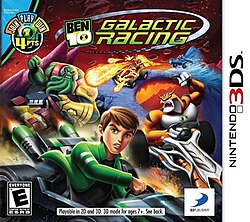
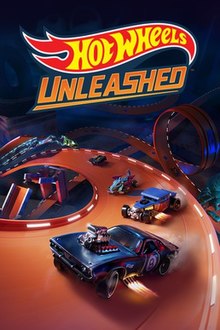 Hot Wheels Unleashed 2: Turbocharged on PS5
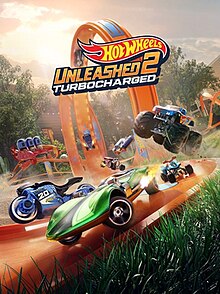 Hot Wheels Unleashed 2: Turbocharged on PS4
 Ride 4 on PS5
 Hot Wheels Unleashed on PS5
 Hot Wheels Unleashed on PS4










 Another SquareThought Site