

 Sep 2011
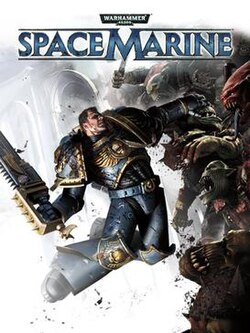

If you woke up in 1995 with a thirst for over-the-top, armour-clad thunder and someone whispered "Space Marines," you would have expected a game that punches you in the face and then apologises by handing you a heavy bolter. Warhammer 40,000: Space Marine-arriving on the PlayStation 3 in September 2011-aims precisely for that old-school certainty: hulking power-armour, cardinal-sized weaponry, and enemies named in a fashion that suggests the scriptwriter ate a dictionary of war cries for breakfast. Relic Entertainment, better known for strategy work, recruited console-experienced talent (the sort who had cut their teeth on Gears and God of War) and set about translating the grimdark miniature universe into a strictly linear, very violent action romp. This is not an ambitious narrative experiment or an open-world saxophone solo of design choices. It is a straight-line march of set pieces, executions and ammunition. Fans of the tabletop universe will recognise the Ultramarines, the cathedral-like manufactorums, and the clean brutality of the setting. Newcomers will get the gist quickly: you are huge, bad things are coming at you, and you have both a chainsword and a boltgun; use both, and stop asking questions. For what it is, Space Marine knows its job and performs it with the confident swagger of a man who eats melta charges for dessert.
The game puts you in the ceramite boots of Captain Demetrian Titus, accompanied most of the way by Sergeant Sidonus and the plucky Tactical Marine Leandros. The campaign is a sequence of scripted battlegrounds on Forge World Graia-industrial, ornately decrepit, and designed to be smashed through in a single direction. Combat is the central hymn here: a hybrid of third-person shooting and aggressive melee. Titus has an "Iron Halo" force shield that soaks initial damage before a cooldown forces you to be mindful; health recovery is interestingly paired to executions-when your armour cracks, forcing a close-quarters quick-time event yields an instant kill and a chunk of restored life. It's a mechanic that feels suitably cinematic even when the camera is doing its best to be unapologetically macho. The Fury meter is the game's other small, clever flourish. Fill it, and Titus becomes a regenerating bruiser: melee hits harden, health trickles back, and ranged weapons receive temporary performance buffs-slowed aim, increased rate of fire, and more damage. These moments are the game's sweet spot; they convert a corridor full of Orks into a glorified blender and make the player feel like an unstoppable object. The roster of weapons leans heavily on Warhammer staples-bolt pistol (infinite ammo), boltgun, heavy bolter, stalker bolter for sniping, melta gun for close destruction, and plasma weaponry for the dramatic overheat bits. Relic even added a Vengeance Launcher, a grenade launcher that fires remotely detonated fusion grenades-deliciously overbuilt for its purpose. Melee feels weighty. Chainswords, a power axe, the thunderhammer and DLC-added power sword all carry different rhythms: the chainsword is fast and messy, the thunderhammer is slow and obeys the laws of momentum. Certain stun moves allow you to chain into Executions, which is a gameplay loop the designers clearly loved-risk low heath, get close, perform execution, live to slash again. There are also jetpack segments that give brief aerial mobility and a complimentary ground-pound attack-these deliver variety in otherwise corridor-dominant levels. Enemies come in two flavours that matter to the plot and to your knuckles: Orks (green, loud, and enthusiastically cruel) and the Forces of Chaos (traitor Space Marines who open Warp gates and invite daemons to the party). Plot beats-such as the activation of the Psychic Scourge that instead rips open a Warp portal-are used to throw increasingly oddball enemies at you and to punctuate the campaign with boss set pieces, including Chaos Lord Nemeroth and the Ork Warboss Grimskull. The experience is relentlessly single-minded: scripted set pieces, marching orders, fight, rinse, repeat. That will please players who want a focused, knockabout shooter; it will frustrate those expecting tactical breadth or open-ended encounters. Multiplayer exists and, in 2011, offered an 8-versus-8 mode and a class-based 4-player survival mode called Exterminatus. The multiplayer leans on class distinctions to keep matches varied and offers some genuine fun when the loadouts and objectives line up. Post-launch DLC (Chaos Unleashed, Dreadnought) added playable Chaos classes, extra maps, and a Dreadnought mode that allowed a team to spawn a lumbering walking siege engine-nice variety for those who dug the online component.
Graphically the PS3 build is competent rather than revolutionary. Relic and its console hires deliver gore and scale with satisfying textures: riveted armour plates, oily factory corridors, and faces irradiated by the light of melting power sources. The game relishes ornamental ruin-cathedral gates, rusted conveyors, and the occasional titanic war engine-and the aesthetic is faithful to the tabletop's gothic-industrial baroque. Lighting does a lot of the heavy lifting, doling out dramatic flares and the occasional bloom to sell explosions and plasma discharges. There are rough edges. On the PS3 the frame pacing can wobble in crowded firefights; a few environments suffer from repetitive geometry, and the camera occasionally argues with the player during melee. Voice acting is solid-Mark Strong as Titus gives the sort of baritone gravitas you want on a battlefield-while the soundtrack by Cris Velasco and Sascha Dikiciyan underlines the game's soldierly drama with bombast rather than subtlety. The whole package looks and sounds like a mid-generation console action title: very competent, sometimes glorious in its presentation, but not immune to moments where budgetary limits shine through.
Space Marine is not subtle. It is not trying to be. It wants to be an unapologetic, linear, soundtrack-thumping slugfest wrapped in Warhammer iconography, and in that ambition it largely succeeds. The melee-shooter hybrid is satisfying when it clicks-executions, Fury bursts, and melta cannons combine into a genuinely thrilling loop-but the campaign's strict linearity and occasional design blandness hold it back from being a classic. Critics in 2011 split between praise for the faithful universe recreation and criticism of the game's convenience and lack of long-term variety; the PS3 version sat amid that middle ground with respectable but not stellar aggregate scores. If you are a Warhammer devotee or a PlayStation 3 owner who wants a stout, immediate action experience-something with thunderous footsteps, blade-to-face violence, and a multiplayer that can be politely vicious-Space Marine is a good purchase. If you crave tactical subtlety, a sprawling narrative or the open-ended invention of a modern sandbox, this title will wear thin after its scripted triumphs. In plain 1990s terms: it's a solid, beefy cartridge-level punch; it won't change how you think about games, but it will make you feel powerful for a little while, and sometimes that is precisely the point.
 Kerbal Space Program 2 on PS4
 Mars Horizon on Xbox One
 Kerbal Space Program: Enhanced Edition on PS5
 PlayStation Home on PS3
 Gaelic Football '25 on Xbox Series X/S
 Together! The Battle Cats on Switch
 Crash Bandicoot: The Wrath of Cortex on PS2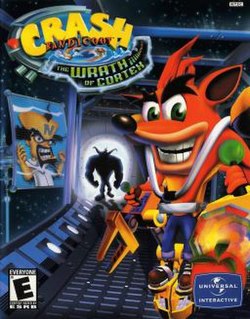
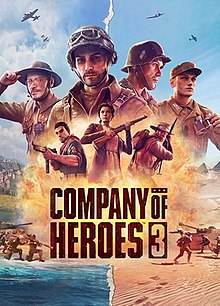 Company of Heroes 3 on PS5










 Another SquareThought Site