

 May 2009


Zen Pinball arrived on the PlayStation 3 in 2009 as the platform's first serious attempt to translate the tactile chaos of a real pinball cabinet into the deterministic world of home consoles. Zen Studios-already experimenting with single-table iOS releases-packaged four tables into the PSN launch and shipped the groundwork for a modular DLC model that would add several themed tables later. The game's critical reception emphasized two technical pillars: physics and presentation. If you care about the tiny details that make a digital ball behave like it has density, rotational inertia and an ego, this is the kind of game that invites you to nitpick and then quietly admit it nailed most of it.
At its core, Zen Pinball keeps the rules of real-world pinball intact: plunger launch, flippers, bumpers, ramps and targets. The interesting work is in how faithfully those systems are modeled under the hood. Reviewers repeatedly singled out the physics engine for praise, calling it "superb" and "first-rate." That isn't just marketing-speak-what that translates to in play is a ball that accelerates, bounces and spins in ways that reward precise timing and angling. The ball's behavior conveys convincing mass and momentum; collisions have believable restitution and the ball can pick up spin (akin to "english" in pool) from angled flipper hits. Those micro-behaviors create emergent gameplay where nudging and torque management matter, rather than being simple reflex flipper spam. Zen doesn't stop at raw physics. It layers gameplay systems on top of that foundation: table-specific missions, multi-stage objectives that open new lanes, and secrets that reward sequence memorization. As you progress through a table, new paths open and the playfield effectively re-configures mission by mission, which keeps the experience from feeling like a single-layer loop. The game also implements standard digital conveniences such as a slow-motion feature and the ability to save progress mid-game-small but meaningful QoL options that change how you approach risk. Slow motion is particularly useful as a diagnostic tool: it reveals how the engine calculates impact angles and bounce priorities, which is delightful if you're the sort of person who reads a game's physics as if it were a plumbing diagram. Multiplayer support is another technical and design decision worth noting. Zen Pinball offers local and online multiplayer, leaderboards and tournament modes. For a physics-heavy game, multiplayer introduces synching challenges: each client must either reconcile authoritative simulation or handle deterministic lockstep to ensure the ball doesn't diverge between players' views. Zen's implementation focuses on online score competition and asynchronous leaderboards rather than frantic split-screen ball-passing, which is a pragmatic approach on hardware where deterministic networked physics can be brittle. The end result is a competitive ecosystem built around consistent high-score chasing rather than attempting to replicate the full physical brawling of a real arcade cabinet. One frequently mentioned criticism was the initial content density: the base PS3 release shipped with four tables, which some critics considered light. Zen responded by delivering additional tables as DLC-Street Fighter II Tribute, Ninja Gaiden Sigma 2 Tribute, Earth Defense and more-expanding mechanical variety and aesthetic themes without changing the underlying engine. From a technical perspective, this modular table approach is sensible: you get an engine and a pipeline for authoring new flippers, ramps, modes and scripted events, which makes post-launch content both viable and consistent. If you enjoyed the core physics and camera systems, DLC effectively multiplies playtime without altering the mechanical DNA of the game.
Visually, Zen Pinball leans into hyper-real presentation rather than purely photorealistic replication. Tables are rendered sharp and crisp with high-detail textures on ramps and playfield art; reviewers referred to the visuals as "beautiful" and the closest thing to standing in front of an actual pinball machine. The game also uses dynamic camera angles during key moments to accentuate drama-zooming into shots, sweeping over ramps and emphasizing multiball chaos. Those camera cuts serve two functions: purely cinematic flair, and functional feedback. They highlight successful hits and clarify complex sequences that would otherwise be visually noisy. The trade-off with dynamic cameras is always clarity versus spectacle. Zen largely sticks the landing: camera transitions are tasteful and informative, not gratuitously disorienting. Lighting and particle effects are used sparingly to emphasize special modes-think bursts of sparks on a successful combo or glow on activated ramps-so the playfield remains readable. Table design follows practical rendering considerations: objects have clear depth cues, collision geometry is well-signposted, and target indicators are legible even as the chaos ramps up. For a game running on 2009-era console hardware, the art and camera systems are tuned to maximize readability without sacrificing personality, which is exactly what you want from a simulation-first pinball title.
Zen Pinball on PS3 is an engineering-first pinball package wrapped in an enthusiast-friendly presentation. Its physics engine does the heavy lifting-delivering ball behavior with convincing weight, spin and bounce-while the UI niceties (slow motion, mid-game save, leaderboards) and visual polish make the experience accessible and replayable. The initial four-table offering felt thin to some, but the DLC strategy offered a steady stream of themed tables that preserved the core technical strengths. If you value fidelity of simulation, tight flipper response, and cameras that enhance rather than detract from the action, Zen Pinball is an easy recommendation. It isn't the most ambitious or content-dense pinball product by modern standards, but as a technical exercise in virtual pinball it succeeds, and it succeeds with a confident smirk rather than a lab coat.
 Planet Minigolf on PS3
 Invincible Tiger: The Legend of Han Tao on PS3
 The Pinball Arcade on PS3
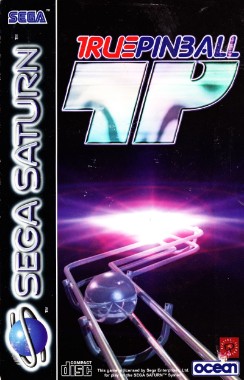
 True Pinball on PlayStation
 Pinball Hall of Fame: The Williams Collection on PS3
 Pinball FX on PS5
 Pinball Fx on Xbox Series X/S
 CastleStorm II on PS4










 Another SquareThought Site