

 Aug 2025
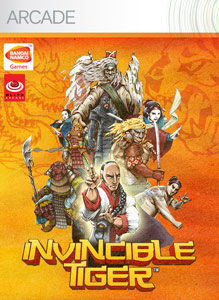

Invincible Tiger: The Legend of Han Tao arrives with a name that sounds like it belongs on a vintage kung-fu poster and a premise that rolls up into a tight, honorable noodle of classic tropes: you are Han Tao, the General of a Thousand Victories, and your objective is to rescue the Star of Destiny from the clutches of the Evil Overlord. On PlayStation 3 the game presents itself as a compact beat 'em-up-hand-to-hand action, a handful of weapons, some Zen-powered flourishes-and a clearly affectionate wink at the pulp wuxia aesthetic. The story is as simple as a stern eyebrow: good guy (Han Tao) versus bad guy (Evil Overlord), with the Star of Destiny playing the shiny MacGuffin that keeps both parties motivated. What the game lacks in Shakespearean subtext it attempts to make up for with cartoonish bravado. The plot reads like someone told an old martial-arts movie "be louder" and then handed the director a motion-capture suit. That choice is not a mistake; Invincible Tiger wears its simplicity like a battle robe-open, breathable, and occasionally stained with the blood of cloned grunts. For anyone looking for a layered, moralistic epic, Han Tao's arc is short and to the point. For players who want to punch their way through tidy levels while occasionally unleashing a glowing, zen-fueled uppercut, it's exactly what the package promises.
The mechanical heart of Invincible Tiger is a fairly straightforward beat 'em-up system dressed up in hyperbolic moves and cheeky presentation. Controls are intentionally pick-up-and-play: square punches, triangle for a heavier attack, a dodge or throw mapped somewhere convenient, and triggers reserved for special Zen-powered attacks. The combat feels designed around satisfying single moments-connect a combo, watch Han Tao spin with dramatic flair, and feel the little vibration of clerical closure every time an enemy explodes into a paper-mache heap. Han Tao as a character is mostly defined by what he does in combat. He is a walking juxtaposition: an archetypal stoic general with a name that suggests historical gravitas, yet he routinely performs moves so over-the-top that they read as affectionate parody. "General of a Thousand Victories" isn't just title fluff; in gameplay terms it's a license to be flashy. The "victories" are not story beats so much as the little choreographed mini-stories told in each room. Every encounter is a short scene in which Han Tao's competence is reasserted: he arrives, dispatches foes with theatrical efficiency, and moves on. This creates a repetitive but oddly comforting narrative rhythm-Han Tao's arc becomes a loop of proving himself, moment to moment. The Evil Overlord is mostly a silhouette at the end of the text: the traditional foil, embodying cartoonish malice and the fortunate ability to keep sending identical foot soldiers until your thumbs fall off. Because the game leans into the whimsical, the Overlord is a compelling antagonist only as myth and objective. He functions best as an off-screen pressure: his presence explains why Han Tao must keep moving, why the Star of Destiny exists, and why, occasionally, there are boss fights that look like someone shook a handful of anime clichés into a blender. The Star of Destiny is peak MacGuffin-something shiny and important that we are told matters enough to power an entire army of goons. In terms of character development, it plays the role of "emotional target" rather than an active agent. Han Tao's "motivation" is thus the kind of motivation that works best in arcade-driven narratives: pure, telegraphed duty. The game trusts the player's imagination to fill in the rest-maybe the Star symbolizes honor, or family, or the last cursed dumpling recipe of a lost dynasty. Whatever you choose, your brain will accept it because the combat keeps demanding your attention. Co-op changes the arc slightly. Invincible Tiger lets you share Han Tao's story in local or online co-op, which does something interesting: it turns Han Tao's solo generalship into a shared saga. Two players tag-team the story, and in those moments the single-minded General of a Thousand Victories becomes part of a buddy-cop subplot. Character beats that might feel shallow on their own gain a touch more warmth when you and a friend are synchronizing special attacks and arguing over who gets the staff weapon. In co-op the narrative becomes communal; the Star of Destiny is rescued by a team, not just a poster boy, giving Han Tao a tiny, welcome arc of learning to share victory (or at least share loot). Where the gameplay intentionally subverts expectation is in modes like Endurance Mode. Endurance takes the core tenets of Han Tao's story-fight, survive, prove yourself-and condenses them into an onslaught. This transforms the General's narrative from "rescue mission" to "existential trial of stamina." It feels almost mythic in a gaudy way: Han Tao does not just defeat enemies; he endures. The mode forces the player to inhabit the grind that supposedly made him "Invincible." In story terms, it is the only place where endurance is foregrounded enough to read like character development: you start fatigued, you adapt, and if you're competent, you finish stronger. The game also includes anaglyph and stereoscopic 3D modes. These are cosmetic flourishes that do little to alter arcs but do change perception-literally. A Zen attack that glows in flat 2D looks more dramatic in a 3D-ready TV. It's less biography and more stage lighting: the same story, but with spotlights. Narratively, Invincible Tiger's weakness is its commitment to simplicity. Han Tao does not undergo a heavy emotional transformation; he proves himself repeatedly and remains the same archetype at the end as at the beginning. For some players that is a design virtue-the constant hero is a rock to lean on when you're mashing buttons and arguing with your teammate about the last health pick-up. For others, the lack of depth makes the character feel like a clever puppet whose strings are mostly combo inputs. The game's charm, however, comes from leaning into that puppet-ness with self-aware, pulpy style and letting the combat tell the story in short, punchy stanzas.
Visually, Invincible Tiger leans into a stylized, comic-book take on wuxia. The art direction favors bold silhouettes, exaggerated animations, and bright effects for Zen-powered moves. On PS3 the engine (BlitzTech) renders characters with a slightly glossy polish-a look that was common for downloadable arcade titles of the era. It isn't trying to be photorealistic, and it doesn't need to be; instead, it uses visual punch to match mechanical punch. A well-executed combo ends with a flourish that reads clearly on-screen and carries an emotional payoff akin to a punchline. The inclusion of anaglyph and stereoscopic modes is an amusing footnote: if you happen to own a 3D-ready TV, watching Han Tao leap through layers of depth can be a ridiculous delight. On typical 2D setups, the aesthetic is still solid: environments are readable, enemy types are distinguishable, and bosses look theatrically menacing. The downside is that the visual palette can feel repetitive over long runs: levels are built primarily to service combat arenas, so backdrops often function as wallpaper rather than as storytelling devices. That said, the character animations-especially Han Tao's hyperbolic moves-are where the game invests its identity. They are cartoonishly expressive and do a lot of the heavy lifting when it comes to character presence.
Invincible Tiger: The Legend of Han Tao is not a deep, twisting saga. It does not attempt to be. What it offers instead is a compact, punchy beat 'em-up that frames its narrative through action beats rather than dialogue trees. Han Tao's arc is essentially a litany of victories-moments of competence strung into a short playable myth. For players who enjoy arcade simplicity, over-the-top moves, and the pleasant camaraderie of co-op, the game delivers a straightforward and often enjoyable experience. For those seeking emotional complexity or narrative surprises, the title will feel a bit like ordering ramen and getting instant noodles: comforting and fast, but not something you'll write poetry about. The game's mixed reception (Metacritic's PS3 aggregate sits in the high 50s) and modest sales suggest it landed in that mid-table niche: a reliable amusement rather than a career-defining epic. It was removed from digital stores in 2013, which gives the whole package a slightly melancholic flutter-Han Tao's digital shrine is gone, leaving behind a handful of screenshots, a reputation for cheerful silliness, and a memory that plays well in short bursts. If you can find it and you want a light, collaborative beat 'em-up that doesn't pretend to be more complicated than a general rescuing a cosmic bauble, this is your kung-fu postcard. Punch, zen, repeat, and remember: sometimes the legend you want is simply the one that lets you high-five a friend after clearing an endless wave of goons.
 Atelier Ryza: Ever Darkness & the Secret Hideout on PS4
 Legend of the Dragon on PS2
 Beat City on DS
 Crisis Beat on PlayStation
 Capcom Beat 'Em Up Bundle on PS4
 Teenage Mutant Ninja Turtles: Mutants Unleashed on Switch










 Another SquareThought Site