

 Jun 2022
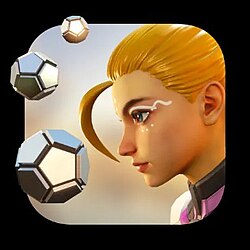

Air Twister arrives like a myth retold on a crisp morning: familiar beats of the rail shooter you loved as a kid, dressed up in a scarf of modern polish and a soundtrack that insists you care about the plot even when you're frantically dodging a flying squid. Designed by Yu Suzuki's YS Net, the game began life as a big-budget smartphone love letter to classics such as Space Harrier and Panzer Dragoon and later spread to consoles (including PS4). On the surface it's a single-player rail shooter - straightforward, arcade-first - but the game's soundtrack and chapter names do the heavy lifting to hint at a surprisingly operatic story. If you want a review that dissects characters like they're in a Netflix drama instead of a shooter, you're in the right place: welcome to the in-depth analysis of Air Twister's cast, their arcs, and why the music is effectively the narrator.
Air Twister plays like your fingers are strapped to a comet: you steer, you shoot, you weave through surreal set pieces. Mechanically it wears the rail-shooter crown proudly - YS Net takes the restraint of the genre and uses it to focus design on pacing, enemy choreography, and boss encounters. But the real curious thing is how the game uses names from its soundtrack as a skeleton for an implied mythos. Treating the track list and stage titles as chapter headings, you can read Air Twister as a short, classical-style tale of growth, temptation, conflict and return. The Rider (the player's avatar) opens the story in "Symphony of the Swans" as a novice skimming the edge of the world. The early levels are training grounds, not just for players to learn strafing and homing fire, but for the Rider to form the first bond with the world - a kind of child-meets-wonder sequence where the controls translate to competence and the music gives the scenes weight. "World's Gone Crazy" accelerates the stakes: foes scale up, landscapes tilt, and the Rider learns that the sky isn't merely a backdrop but a theatre of shifting threats. Allies arrive as motifs: "The White Swan" thread (in tracks like "So White the Swan" and "The Triumph of the White Swan") functions as guide and moral compass. Practically, allies manifest as power-ups and stage-assist cues; narratively, the White Swan is the spirit that shows the Rider how to balance aggression and grace. Its arc is classical: guide, tested, triumphant. The game punctuates white swan moments with luminous set pieces (think soaring islands and crystalline caves), and the Rider's growth is measured in how gracefully they navigate these scenes. Contrast that with the Black Swan, whose presence echoes in tracks titled "The Black Swan" and "The Battle of the Black Swan." Where the White Swan represents balance, the Black Swan embodies corruption: turned machinery, warped flora, and boss designs that remix the world's beauty into hostile architecture. The Black Swan's arc is less about inner turmoil and more about thematic inversion - it mirrors the Rider's progress, escalating threats when the player gets comfortable. The Black Swan's crescendo boss fights are the game's emotional beats, and they nail the rail shooter requirement of making you feel like a protagonist in a climactic duel. Between those two poles stands Gaia, the game's world-entity, referenced directly by the inclusion of "Gaia 2022" on the soundtrack. Gaia functions as both setting and silent character. Early tracks depict wonder and mystery; later compositions ("How the World Was Won," "We Have Come Home") impart consequences and catharsis. The Rider's relationship with Gaia is akin to a traveler learning to be a protector: at first a curious traveler, then a reluctant savior, finally a returning guardian who restores what the Black Swan tore. Supporting cast members appear in the soundtrack with names like "Princess Mystique," "Maia," and "Aglaea 2022." These function as archetypal characters - the enigmatic noble, the elemental sibling, the muse - and their story arcs are short but sharp: they introduce motive, give the Rider emotional stakes, and then recede, leaving echoes in the music. Level design reinforces these roles: "Princess Mystique" levels are ornate and secretive; "Aglaea" levels bloom with flora; "Inside the Crystal Cave" is the introspective mid-game that asks the Rider whether they understand the cost of winning. Air Twister's modes also play into these arcs. When version 1.1 shipped, YS Net added Stardust bonuses, a Turbo mode and an unlockable island in Adventure mode - which you can read as epilogues and challenge arcs. The bonus stages and Turbo mode are the optional chapters where the Rider tests new skills. They don't change the main narrative, but they flesh out the Rider's life after the story's major events: training grounds, heroic afterlives, and hard-mode redemption trials. Yu Suzuki's inspirations matter here. The design language of Panzer Dragoon's mythic corridors and Rez's synesthetic relationship between music and action informs Air Twister's storytelling. Where Panzer Dragoon would show you a story through ruin and beast, Air Twister whispers it through melody and level names. It's less explicit than a fully voiced narrative, but for players willing to stitch together music, stage titles, and boss symbolism, there's a compact hero's journey to appreciate.
Visually Air Twister looks like a dream someone had after watching a bunch of late-90s SEGA shooters and a nature documentary. The game leans into vibrant color palettes and stylized geometry rather than photorealism. Environments are sculpted to lead the eye - floating islands, crystal caverns, and floral expanses are all designed as readable lanes for a rail shooter, which keeps gameplay clarity high. PS4 holds up nicely as a platform for this art style. The framerate is steady and the particle effects - especially during White Swan and Gaia set pieces - pop without turning into a visual mess. Bosses often compose their own little stages, with visual cues that telegraph attacks in a way that feels fair and cinematic. If you like your shooters to look like pop-up storybooks that happen to be haunted by mechanized swans, you'll enjoy the aesthetic choices. The game's visual storytelling is strongest in how it ties to music. Valensia's 19-track score doesn't just accompany scenes; it gives them personality. A level bathed in "Blue Rain 2022" looks wetter, lonelier; "The Triumph of the White Swan" makes the color grade warmer and the particle trails longer. For a game that relies on small hints to craft an implied plot, the graphics and soundtrack together do most of the heavy lifting.
Air Twister is a rail shooter that politely refuses to be just another score-chasing arcade port. It uses compact, evocative storytelling - via track names, visual leitmotifs, and boss design - to suggest a myth about a Rider, two swans, a threatened Gaia, and the supporting cast that make the journey feel meaningful. Gameplay is clean and addictive; the post-launch additions (bonus stages, Turbo mode, unlockable island) show YS Net was serious about polishing the experience beyond its Apple Arcade origins. If you want a dense, literal narrative with pages of dialogue, this isn't that kind of game. If you want a game that trusts you to piece together a story from music, level titles and boss symbolism while delivering tight rail-shooter action, Air Twister is a delightful little myth machine. Valensia's soundtrack is a standout and elevates every encounter; Yu Suzuki's design instincts keep the pace thrilling. For PS4 players who grew up on Space Harrier and Panzer Dragoon, or anyone who likes their storytelling told in flashes and leitmotifs rather than cutscenes, score it an honest 8/10 - charming, stylish, and surprisingly poetic for a game where the primary verb is 'dodge.'
 Kirby Air Riders on Switch 2
 Air Twister on PS5
 PixelJunk Shooter 2 on PS3
 PixelJunk Shooter on PS3
 Tesla vs Lovecraft on PS4
 Air Twister on Switch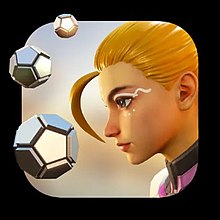










 Another SquareThought Site