

 Sep 2025
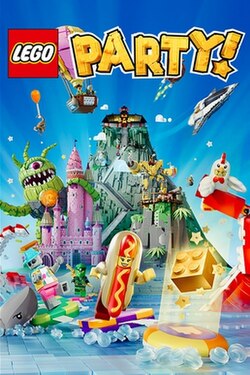

In an age when party games have become the province of a single iconic plumber and his irrepressible kart-racing cousins, LEGO Party! arrives like a polite dinner guest carrying its own cake. Developed by Australia's SMG Studio under the direction of Mark Fennell and built in Unity with additional support from Noble Steed Games, this four-player board-and-minigame compilation aims squarely at the living-room, split-screen, sofa-and-soda experience that many of us remember fondly from the 1990s. It is not trying to reinvent the wheel; it is trying to make the wheel look like it was assembled from plastic bricks, and to insist that everyone play it at once. The game's pitch is straightforward: roll, move, trigger events, play a minigame, collect golden LEGO bricks and studs, and then possibly lose everything to a maliciously placed trap. Previews from Summer Game Fest reported a generally upbeat reception - critics praised the pacing and accessibility - and the team even iterated on family playtests to temper the nastier swings of luck that made children cry. This is a party game that knows what it is and refuses to apologize for it.
LEGO Party! wears its inspirations openly. If you have spent a Saturday in the past three decades hurling digital dice at a friend and immediately regretting it, you will recognize the rhythm: four players take turns advancing across a themed board, landing on tiles that offer boons, traps, or the kind of contrived convenience that makes board games interesting. There are four boards at launch, each modelled on an existing LEGO theme: Ninjago, Pirates, Space, and one more that leans on classic Lego motifs. The objective is elegantly simple - amass the most golden bricks by the time the game ends. The secondary economy, LEGO studs, functions as Mario Party's coins: winners of minigames earn studs and then spend them on modifiers or traps. Where LEGO Party! tries to carve out its own identity is in its minigame design and its handling of mean-spirited mechanics. Over 60 minigames populate the pool; the preview build demonstrated examples as varied as unicycle balance races and an elimination challenge where competitors jump over a rotating octopus tentacle until only one remains. After each round of board turns a bonus minigame is selected from the pool, meaning there is a steady cadence of short, sharp skill tests that prevent the game from becoming a slog. Importantly, minigames do not enforce a purely spectator role for anyone: the designers leaned into inclusivity, so losing players are still often active, rather than watching two others duke it out while they count studs on the floor. A twist that can trigger during a round is the 2-vs-2 tile: land on it and you are forced into a duo. This mechanic injects a pleasing social friction - alliances of convenience form, betrayals are avoided or executed, and duos must cooperate for minutes at a time before returning to the solo grind. Studs buy movement modifiers, useful for engineering a landing on a golden-brick-rich space, and traps purchased with studs can, heartbreakingly, steal golden bricks from an opponent's inventory. The development team noticed the emotional toll of such outright theft during more than 100 family playtests; several children cried when the rules stripped their holdings away with no say. In response, the game implements a 'mercy' choice allowing players to opt out of grabbing a brick from an opponent, a small design concession that shows the developers listened and adjusted. The balance between luck and skill remains the central question. Dice-roll movement keeps the board tense and fun for families and casual groups, but it also inherits the same volatile whiplash of its predecessors: a player can spend a solid stretch performing well only to be foiled by an unlucky roll or an ill-timed trap. The minigames and modifiers provide counterplay and agency, though, and early hands-on impressions singled out the game's pacing - long enough to feel consequential, short enough to remain light-hearted. For owners of PlayStation 4 who have longed for a Mario Party equivalent, LEGO Party! represents a credible alternative that prioritizes accessibility, variety and couch-side chaos.
Visually the game adopts the familiar LEGO aesthetic: bright plastic colors, sparkling studs, and characters that look like they've stepped out of a build-your-own-world set. Unity's engine handles the presentation with a cheerful clarity that favors readability over graphical showboating. On PS4 the framerate appeared stable during preview sessions and animations are satisfyingly snappy, which is important in a title where quick reactions and immediate feedback matter. Boards are lovingly themed - Ninjago temples sway with exaggerated, cartoonish motion; pirate ships creak with improbable buoyancy; space stages lean into neon backdrops and cosmic set dressing. The art direction leans toward the toy-shelf realism of modern LEGO media rather than striving for gritty detail, and that is precisely the correct call. Sound design delivers jaunty, loopable tracks that harken back to the boppy jingles of '90s party games; they are catchy without ever overstaying their welcome, and the minigame cues are crisp and communicative. If you are the sort of person who likes to step on an actual LEGO brick and curse the heavens, rest assured the digital bricks here will inflict no physical pain - only the emotional sting of a stolen golden brick.
LEGO Party! is not a revolution; it is a refinement of the formula that made board-style party games into a living-room ritual. SMG Studio's effort checks many of the right boxes: robust minigame variety, thoughtful family-focused adjustments, pacing that keeps the evening moving, and a presentation that celebrates LEGO's playful identity. Preview coverage has been largely positive, with several critics noting that the game occupies a welcome niche on PlayStation and Xbox, where the Mario Party line does not tread. That said, those who crave deep competitive systems or long-term single-player content will find little here to sate that appetite. This is a social title through and through - it thrives on the physical presence of friends and the indecorous laughs that follow bad dice rolls and spectacularly timed traps. For anyone planning to host a party or reclaim the couch for an evening of friendly backstabbing, LEGO Party! should be near the top of the rental list. It gets a solid 7.5 out of 10: an accomplished, frequently delightful party game that remembers the rules of fun and, more importantly, remembers to let you keep most of your bricks when the room is full of tears.
 Super Mario Party Jamboree – Nintendo Switch 2 Edition + Jamboree TV on Switch 2
 We Dare on PS3
 Moving Out 2 on Switch
 Moving Out 2 on Xbox Series X/S
 Moving Out 2 on Xbox One
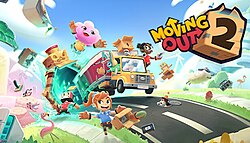 Moving Out 2 on PS4
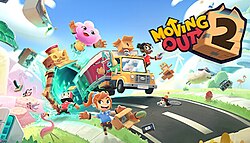 Moving Out on Xbox One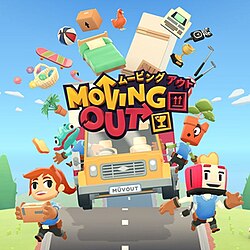










 Another SquareThought Site