

 Sep 2017
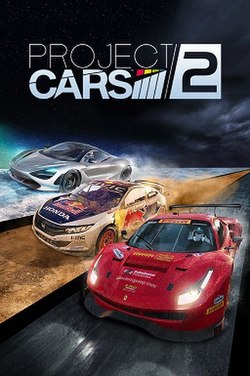

Project CARS 2 arrives like the overachieving nerd of the sim‑racing class: stuffed with specs, eager to discuss tyre compound chemistry at 2 a.m., and prone to the occasional social awkwardness (read: bugs). Built on Slightly Mad Studios' Madness Engine and marketed as a serious step up from its predecessor, the game brags a technical résumé that would make engineering students jealous: LiveTrack 3.0 (dynamic track and weather), a proprietary Seta Tire Model (STM) running up to 200Hz, laser‑scanned circuits, VR and triple‑screen support, and an absurdly large content catalog (the documentation cites roughly 140 track layouts across 60 locations and about 189 cars). On PS4 this translates into a console packaged with ambition - a title that prioritises mechanical fidelity and configurability over pick‑up‑and‑play accessibility. If you're the sort who checks suspension geometry settings like other people check text messages, Project CARS 2 is the kind of brain‑tickling, wheel‑rotating sandbox you were made for.
Where Project CARS 2 earns (and sometimes loses) its stripes is in the nitty‑gritty of its simulation stack. The headline tech is LiveTrack 3.0 - a combined time, weather and track condition simulation that aims to make circuits behave as living systems. Practically, that means each lap can alter racing lines as rubber is laid down, temperatures creep or swing with cloud cover, and surface grip evolves through a session. For players this is not a cosmetic flourish: tyre grip, braking points and even aero‑dependent balance change lap to lap. The game exposes this complexity to the player through adjustable sessions and race weekends, which rewards those who understand set‑up iteration as much as throttle control. The STM tyre model sits at the heart of the handling philosophy and is where Project CARS 2 tries to justify the 'sim' label. Running at up to 200Hz, the model simulates tyre contact patches, carcass flex, wear and transient load transfers with a high temporal fidelity. In practice the result is a car that talks back through twitchy onsets, progressive breakaway behaviour and a realistic re‑engagement of grip - assuming you give it the input resolution to match. A standard controller will get you around the track, but the experience is designed for higher fidelity input: wheels with granular force feedback and proper pedal travel. Reviews and hands‑on impressions converge on the same point: the game is at its best when you use a wheel. That recommendation isn't marketing fluff - the force feedback and steering ratios are tuned to convey nuanced tyre information that a thumbstick simply can't express without feeling mushy. Suspension and drivetrain simulation are similarly earnest. The Madness Engine models kinematics and weight transfer in a way that exposes tuning levers: anti‑roll bars, damper curves, ride heights and even differential behaviour each alter tangible aspects of handling. Cars behave like their real counterparts - heavier GT cars have distinct inertia, open‑wheelers will punish an imprecise turn‑in, and off‑road machines munch bumps instead of politely skipping over them. The inclusion of rallycross and off‑road content broadens the physics scope; the engine handles mixed‑surface transitions, which is technically non‑trivial since tyre grip and vehicle dynamics have discontinuous behaviours across asphalt, dirt and gravel. AI and online are the darker corners of the package. Slightly Mad Studios pushed for esports‑oriented online with ranking, championships and matchmaking, but the single‑player AI has mixed results. Multiple critiques around launch noted sporadic 'AI madness' - questionable decision‑making or physics exploits that could break immersion by producing unrealistic collisions or unpredictable behaviour under pressure. For a simulation that otherwise obsesses over realism, that dissonance stands out. On PS4 these issues felt particularly jarring because the controlled hardware profile means expectations of consistency are higher than on PC, where variability is sometimes chalked up to modding or driver differences. The developer's close work with manufacturers and drivers shows in car fidelity. Slightly Mad Studios leaned on industry partners to calibrate performance curves and auditory signatures. The audio design received praise for being "thundering" and immersive; engine and exhaust voices are used as telemetry by seasoned players, and the interior and exterior mic placements help you triangulate mechanical issues by ear. The game also provides expansive telemetry and setup screens; if you are the kind of person who exports data logs and obsessively iterates on suspension geometry, Project CARS 2 hands you the raw numbers.
Visually the Madness Engine is tasked with several ambitious goals: laser‑scanned tracks, realistic weather, and a lighting model that should carry through different times of day. Laser scanning pays off in surface fidelity - curbs, cambers and runoff have the kind of geometric accuracy that materially affects lines and kerb behaviour. Track micro‑features are not just pretty-to-look‑at; they interact with suspension and tyre models in ways that influence lap times. Lighting and weather are where LiveTrack 3.0 shows both its power and its resource demands. Dynamic skies, cloud cover changes and wetness reflections provide a cinematic and functional benefit: when the surface goes wet, the specular and diffuse components of the shaders update to alter skid behaviour and visual cues. On PS4, these effects are impressive but not without tradeoffs. Consoles have finite GPU memory and a fixed CPU budget, so some compromises are inevitable - texture streaming and LOD transitions are noticeable if you sit and stare at high‑contrast elements. Dotting the landscape are particle effects and puddle reflections that enhance immersion, and triple‑screen or VR modes (the game supports VR up to 12K and wide multi‑display set‑ups) provide the widest field of view and the best sense of speed. On PS4, VR raises the fidelity bar but can reveal frame‑pacing strains, so expect the premium experience to be tempered by hardware realities. Art direction is pragmatic rather than stylised. Cars are modelled with a forensic level of detail, from brake ducting to body work creases, and liveries are reproduced faithfully. Menu and UI design skew toward functionality; the presentation isn't trying to win design awards, it's designed to get you to the garage and back out onto the grid quickly. Reviewers who lauded the game's visuals also noted the audio‑visual pairing - the visuals look the part, and the sound design sells the mechanical heft.
Project CARS 2 is a love letter to technical authenticity. Its major selling points the LiveTrack 3.0 system, STM tyre model, laser‑scanned circuits and broad car catalogue - are not cosmetic badges; they produce meaningful, measurable differences in how you drive, set up and strategise. For players with a wheel, an appetite for setup tinkering, and patience for edge cases, it delivers a deeply rewarding simulation experience. Where it falters is in polish and consistency: AI oddities, sporadic bugs and the platform constraints of consoles sometimes undermine the illusion the physics tries to create. Critics reflected that split reaction at launch, with many praising ambition and simulation fidelity while dinging the title for technical rough edges. On PS4 the experience is compelling and often brilliant, but occasionally reminds you that ambition and flawless execution are different things. If you want a driving sim that treats tyres, temperature and aerodynamics as first‑class citizens, and you're prepared to invest in a wheel to reap the full benefits, Project CARS 2 is one of the better choices available on console - a high‑fidelity tool for racers, not a casual arcade. The game's removal from digital storefronts in 2022 (due to expiring licences) complicates its long‑term availability, but for those who own it, the simulation depth remains intact. Final verdict: an 8.2/10 - excellent engineering, a few annoying gremlins, and a serious recommendation for anyone who measures laps in tenths and speaks fluent telemetry.
 Project Cars 3 on PS4
 Project Phoenix on PS4
 Roary the Racing Car on DS
 Team Sonic Racing on Switch
 Garfield Kart: Furious Racing on Switch
 Ben 10: Galactic Racing on PS3
 Fast & Furious Crossroads on PS4










 Another SquareThought Site