

 Sep 2015


When cartridge-era sensibilities rub shoulders with modern hardware you get odd couples: Sonic with fur, retro pixels in HD, and sometimes a small indie BMX game that insists on being as stubbornly arcade as a quarter-munching cabinet. Pumped BMX + is one such stubborn thing. Developed by Yeah Us! and shepherded onto store shelves by Curve Digital, this is a side-scrolling BMX stunt game that wears its influences on its handlebars. It is not trying to be Tony Hawk 3D; it is trying to be something far purer and narrower: a timed obstacle-course toybox where tricks, rhythm and memorising the layout of each level pay off in leaderboard glory. Pumped BMX + arrived on PlayStation 4 on September 22, 2015, and for a reasonable number of players it will scratch an itch left by old-school arcade racers and score-chasing platformers. That itch, however, is small and specific. If you like your challenges crisp and your failures immediate and blame-free, then Pumped BMX + will feel familiar and oddly consoling. If you prefer sprawling open worlds, cinematic storytelling or physics that pretend they are real, you will not change your mind here. The game is single-player, focused and-depending on how you measure fun-either charmingly addictive or maddeningly repetitive.
If you must know whether the bike jumps or the rider floats, the answer is both in spirit. Pumped BMX + is a side-on, platform-styled BMX stunt game where you race through a string of levels with one simple objective: get to the end quickly and in style. The scoring system is as old-school as a high-score table; quicker times award a higher base score and everything else is a modifier. Airborne tricks, grinds and trick chains increase your tally, and the game obligingly places scoreboards for you to compare your work with friends and the world. Structure is at once simple and deceptive. Each stage is presented in three difficulties-easy, normal and hard-and each difficulty contains four tasks that must be completed before you can advance. These tasks vary from 'finish under a certain time' to 'score X points' or 'complete a named trick combo'. There are over 500 challenges in total, so if you are the sort of masochist who delights in repetition for the sake of squeezing out a better run, Pumped BMX + practically beckons. Controls are tight by design. The game favours precision over spectacle. You are encouraged to string combos by timing jumps, tucks and grinds, and the game rewards consistency. There is an element of rhythm: you can feel when to pump the bike for extra height, when to flick the stick to spin, and when to line up a grind. Failures are instant and usually your own fault, which is oddly satisfying in the way a missed platform in a Mega Man level is satisfying-humiliation followed by immediate do-over. Level design follows the classic arcade principles: learn the track, shave seconds off your time, and repeat until the pattern becomes muscle memory. Each level ramps the difficulty in a way that feels like a deliberate test rather than an arbitrary spike. Early runs are forgiving; they teach you where the ramps are, where the grind rails sit, and how the best lines are taken. Later on, the levels demand perfection: a slightly late ollie, an imperfect landing or a misread grind will cost you seconds that were already owed to the leaderboard. Character customisation exists but is cosmetic. You can choose how your rider looks and which bike you ride, but these choices do not fundamentally alter the mechanical equation. The real customisation happens in the mind-the way you choose to approach a line, which trick chains you prioritise, and the sacrifices you make between going fast and going fancy. This is a score-chasing game first and a dress-up game second. Multiplayer is absent in the traditional sense. There are, however, robust online leaderboards that act like a modern arcade cabinet's high-score list. The social element is therefore asynchronous: beat your friend's score by 0.2 seconds and enjoy the smugness later. For some players that is precisely enough social friction. For others, the lack of direct competition will feel like a missed opportunity. The difficulty curve and sheer number of tasks give the game a shelf life that depends entirely on your tolerance for perfectionism. If you find joy in grinding the same level for minutes until you shave fractions of a second, the 500+ challenges are manna from heaven. If repetition feels like punishment rather than practice, Pumped BMX + will, after an initial flirtation, sit like an accomplished but limited exercise in restraint.
In an era of photoreal ambition, Pumped BMX + chooses a retro-inspired, utilitarian visual language. The game is a side-scroller, and it uses that canvas to emphasise silhouette and motion rather than an embarrassment of graphical riches. What matters here is the readability of the track, the clarity of the rider's movement and the snappiness of animations. Pumped BMX + gets those basics right. You always know where the next ramp is, how high you are from a grind and whether the landing will be forgiving. If you were hoping for lavish textures or ray-traced reflections, you are in the wrong decade; if you were hoping for purposeful, functional visuals that never get in the way of the gameplay, you are in the right arcade. The art direction leans on bold colours and clear contrasts, which helps when the stakes are split-second timing. Animations-particularly during tricks-are satisfyingly crisp. The bike and rider react to inputs in a way that communicates cause and effect without becoming a physics lecture. The menus and HUD are uncomplicated and present information without fanfare. Score, time and challenge indicators are always visible, which is exactly what you want when the twin tyrants of timer and leaderboard are ruling your life. There are no unnecessary particle shows or cinematic cameras; the whole presentation is streamlined toward one purpose: let the player see what to do and then let them do it. For purists, that is a virtue; for spectacle junkies, it may feel austere. Performance on current hardware is steady. The game maintains its responsiveness, which is non-negotiable in a title predicated on frame-perfect inputs. Load times are modest and the occasional visual flourish is more functional than decorative. In short: the game looks like a tidy arcade product built to be played, not ogled.
Pumped BMX + is a compact, determined little machine. It arrives with the exacting focus of a game designed by people who remember how arcades trained players to be both patient and unforgiving. It is not trying to be everything; it is trying to be a pure score-chasing BMX experience, and it mostly succeeds. There is satisfaction to be had in learning routes, mastering trick chains and climbing the leaderboards. The combination of side-scrolling platforming with BMX trick systems creates a gameplay loop that is addictive in the way old-school high-score chasing was addictive: it asks you to be better, then hands you the tools to prove it. But the game's virtues are also its limitations. The lack of direct multiplayer, the relentless repetition and the laser focus on leaderboard minutiae will not appeal to everyone. The cosmetic customisation is pleasant but not deep, and for players who expect a mountain of content framed by narrative or multiplayer spectacle, Pumped BMX + will feel thin. Metacritic's mixed reception is understandable: the game is excellent at its one job but does not attempt a second. If you are a player who enjoys shaving split seconds off runs, who remembers the good old days of quarters and high-score lists, and who likes your gameplay lean and uncompromising, Pumped BMX + will be a rewarding addition to your library. If you need variety, storytelling, or social competition in real time, you should look elsewhere. As a PS4 import of arcade values it is a respectable translation: stubborn, exacting and occasionally brilliant. Consider this a polished niche product-one that will reward the patient and frustrate the easily bored. Dust off your reflexes and your ego; you're going to need both.
 MTV Sports: T.J. Lavin's Ultimate BMX on PlayStation
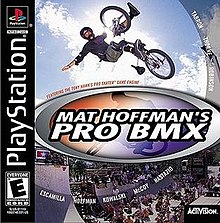
 Mat Hoffman's Pro BMX on PlayStation
 Choro Q 2 on PlayStation
 NASCAR Racing on PlayStation
 Roary the Racing Car on DS










 Another SquareThought Site