

 Jul 2017
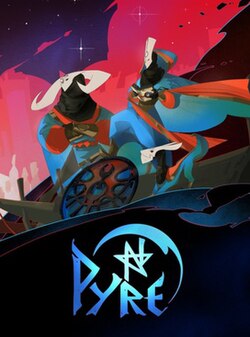

Readers who remember the golden age of games criticism - when magazines arrived on doorsteps and a bruising editorial paragraph could ruin a Saturday morning - will find something oddly familiar in Supergiant Games' Pyre. This is not because Pyre is a retro throwback in its mechanics or because the graphics look like they were hand-painted on a CRT. It is familiar because Pyre has the kind of deliberate, articulate ambition that used to prompt long-form reckonings: a small studio with a distinctive voice choosing to do something strange and then polishing that strangeness until it gleams. From the team that brought us Transistor and Bastion, Pyre is an experiment wrapped inside an RPG and disguised as a mystical sport; it is also, unexpectedly, a meditation on defeat and companionship. If you opened this review expecting to be told whether Pyre is fun, efficient, or tightly balanced, know this: Supergiant's concern is first with tone and design integrity, and only then with tidy scorecards.
Pyre's central conceit is one of those high-concept things that sounds like it was dreamed up during a long plane ride: take the emotional scaffolding of an RPG - character relationships, choices with consequences, a slow-burn narrative - then stage every crucial conflict as a ritualized contest that behaves like a sports game. The designers call these encounters "Rites." Each Rite pits three members of your party against three opponents on a compact top-down arena where two columns of flame, the pyres, serve as goals. The objective is elegantly simple and yet tactically rich: launch a single glowing orb at the enemy pyre until its health is reduced to ash. You control only the exile who possesses the orb; passing is both a survival and a strategy mechanic. Drop the orb, get banished for a few seconds if touched by an enemy aura, and your plan can collapse in moments. If that sounds like Rocket League playing football with a single, sacred soccer ball, it's not far off - except Pyre paints the field in mythic colors and gives each player unique abilities. One exile might dash like a wind-up toy and be useful for quick passes and dodges; another is lumbering but hits the pyre like a battering ram. Passive traits subtly alter how characters move, take hits, and contribute to the team's rhythm. The variety of exiles encourages experimentation: a team of nimble passers will play very differently to a group built around brute force. The depth comes not from complex move lists but from reading the field, timing passes, baiting banishments, and learning how each exile's special move interacts with the arena's geometry. Challenges emerge from the interaction between the overworld management and the Rites. You play as the Reader, a kind of coach, guiding a band of exiles across a high-fantasy landscape. Between Rites you scavenge for supplies, mentor exiles to improve their abilities, and follow on-screen narrative passages that let you probe the game's lore through hyperlinks - a small but charming nod to the way we used to chase footnotes in magazines. Your choices matter. Losing a Rite has consequences: a criminally designed defeat in Pyre isn't merely a loss of points; it carries narrative weight. The game's creative director, Greg Kasavin, explained that the theme is about what happens after defeat, about looking your friends in the face and dealing with consequences, and that is woven into the systems. When you lose, someone from your party may be banished permanently from your roster; victories grant access to new recruits and opportunities. This makes each Rite feel like an audition where the stakes are human, not just numerical. Multiplayer is local only, which is a curious but defensible decision. Supergiant included a two-player local versus mode so two humans can each control a separate team; wedding this with online play would have been nice, but the designers were candid about time constraints and preferred a complete single-player experience at launch. For those who cherish passing a controller across a couch like a baton at halftime, the local mode is a gem. For the online crowd, it's one of the few modern titles that asks you to put the headset down and share a living room. The Rites shew both the brilliance and the limits of Pyre. Critics praised the way the game's branching narrative and choices dovetailed with the combat - choices don't feel tacked on, they feel like the scorecard. On the other hand, some found that teammates could be passive; PC Gamer noted that sometimes the rest of your team simply stands in place while you perform acrobatics, a design choice that makes the sole controlled exile feel like both protagonist and scapegoat. That is by design as much as it is a shortcoming: Supergiant wanted a tight control loop so the player's decisions feel consequential. If you're someone who relishes micro-managing three characters simultaneously, Pyre will sometimes frustrate; if you want a focused, character-driven contest where your decisions matter even when you fail, it will reward you with memorable rites and tense finishes.
Supergiant's visual pedigree shows itself immediately. Jen Zee's art style, already a hallmark of Transistor and Bastion, is present in Pyre with hand-drawn character portraits that brim with personality. The world is rendered in rich, painterly screens that look like they were ripped from a storybook and then dunked in a bottle of midnight ink. Animation is crisp and expressive; when a character is banished the movement reads, the pyres crackle, and the arena's lighting does a quiet job of telling the player's eye where to look. Reviewers at Ars Technica singled out the character portraits as 'personality-loaded,' and they are right - these are faces you remember, each with a silhouette and a smirk that tell you something before any dialogue appears. Technical performance on PlayStation 4 is stable; this is not a title chasing photorealism, so there is no arms race for polygon counts or HDR wizardry. Instead, the game invests its horsepower into smooth animation, frame-consistent Rites, and lush effects that make each score feel cinematic. Darren Korb's music complements the visual palette: a score that blends acoustic instrumentation with electronic textures serves as a patient narrator, underscoring the game's melancholy and occasional triumphs. The audio and visuals together create a unified, theatrical presentation; it's the kind of production that feels like a complete thought rather than a collection of assets.
Pyre is not a game that will be measured best by how long you can grind or how many leaderboards you top. It is a title that asks the player to sit with its premise, to accept that sport and story can be the same ritual, and to care about the faces you shepherd across its map. In the tradition of the great boutique releases of yore, Supergiant has delivered something idiosyncratic and polished: a game that will make some players scratch their heads and others tear up. Metacritic placed the PlayStation 4 version comfortably in the mid-80s, and the nominations for art, story, and innovation are deserved. There are moments when the Rite mechanics feel intentionally narrow - an exile standing around while you perform the heroic maneuvers can feel like a missed opportunity for deeper control - but those moments are outweighed by the game's consistent voice and emotional clarity. If you take your games for brisk adrenaline, Pyre may not be the slam dunk you're after. If you appreciate titles that combine tight mechanical ideas with heartfelt storytelling and uncommon aesthetics, you should at least let Pyre have its say. In an industry that often prefers safe sequels and expansion packs, Supergiant has again chosen to invent a question and then answer it convincingly. Pack your controller, call a friend for local multiplayer, or settle in solo with the audio turned up: Pyre is a rite worth attending. Consider this review my halftime report - and the final score, 8.5 out of 10, is a recommendation signed in ink and respect.
 Line Rider 2: Unbound on DS
 Combat Elite: WWII Paratroopers on PS2
 Onimusha: Dawn of Dreams on PS2
 Action Man: Operation Extreme on PlayStation
 Project Sakura Wars on PS4
 Hades on PS5
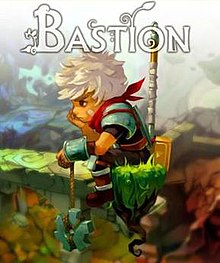
 Bastion on PS4
 Bastion on Switch
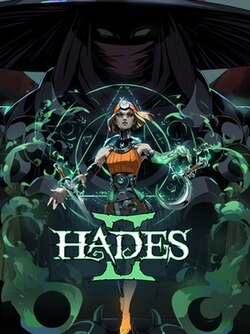
 Hades II on Switch 2
 Hades on Switch










 Another SquareThought Site