

 Sep 2020


Rebel Galaxy Outlaw is the prequel to Rebel Galaxy, rebuilt from the cockpit up by indie studio Double Damage Games and released on PS4 as part of the multi-platform launch on September 22, 2020. It trades the lumbering capital-ship combat of its predecessor for tight, dogfight-focused space combat where a single pilot's skills and loadout decide whether you become a legend or space debris. Under the hood it's powered by the OGRE engine, and that choice - along with clear design decisions about control schemes, difficulty assists, and platform-specific features - makes the PS4 build an interesting case study in porting a technically ambitious PC title to console hardware.
Mechanically, Outlaw is unapologetically about one thing: cockpit-level combat and the systems that support it. The core loop is textbook space-sim economy design - take missions (bounties, escorts, deliveries), earn credits, upgrade ship hardpoints and systems, rinse and repeat - but the combat presentation and control fidelity are where the game earns its stripes. Where Rebel Galaxy (the original) shoehorned fighters into a 2D plane to favor capital-ship brawls, Outlaw gives the player full degrees of movement. That difference isn't just cosmetic; in practical terms it alters camera management, targeting priorities, and input mapping on a gamepad. Turning, pitch, yaw and strafing are discrete inputs that must be balanced with weapon cooldowns, missile locks and the game's rather merciless damage model. A crucial gameplay feature is the optional flight assist. On lower difficulties the assist will automatically track and pursue a selected target - effectively reducing the player's requirement to manage vectoring and keeping the target in arc. On PS4, this is a smart inclusion: the DualShock controller can't match the precision of a mouse for fine yaw/pitch adjustments, so having an onboard autopilot that can be toggled lets the design accommodate both joystick veterans and players who prefer a more arcade-like experience. The assist also functions as a difficulty-smoothing parameter, not a crutch; it changes the handling envelope rather than trivializing combat outcomes. Progression is deeply tied to the economic subsystems. You buy ships, weapons and equipment with credits earned from missions, mining, and trading. The mission variety - from bounty hunting to defending colonies and scouting - is broader than 'fetch-and-blow-up' and creates natural incentives to specialize: do you build a fast interdiction fighter, a missile-armed glass cannon, or a tanky trader with enough hull to survive ambushes? The game even supports piracy as a playstyle, which in turn affects mission availability and faction responses. On PS4, menu navigation and itemization are remapped for the controller; the UI favors radial and list-driven interactions which keeps inventory management from becoming a frustration on a pad. Outlaw also pads its single-player campaign with micro-systems that add texture without massive engineering cost: in-station minigames like slot machines, pool and an Asteroids-like arcade title. These act as plausible diegetic distractions and soft skill breaks between intense dogfights. They don't affect the core progression significantly but are good examples of content variety that increases perceived game length without huge investment. One platform-specific technical tradeoff worth noting is the absence of the PC's advanced ship-painting feature on PS4. The Windows version exposes a Photoshop-like interface for bespoke liveries; Double Damage explicitly removed this from console builds for "technical limitations." From a systems perspective that suggests either memory/resource constraints, input/UI complexity, or platform certification concerns around user-generated content. Regardless, the missing feature is emblematic of the porting compromises required to preserve performance and responsiveness on PS4 hardware while maintaining parity in core gameplay. Narrative scaffolding keeps the action grounded. You play as Juno Markev, a former pirate whose personal story intersects with criminal empires and corporate machinations. The plot delivers mission variety and gives you reasons to visit different systems, but the engine that makes Outlaw sing is the mechanical clarity: weapon loadouts, targeting locks, and the push-and-pull between manual piloting and flight assist.
Graphically, Outlaw's PS4 presentation is competent and stylistically consistent with its mature, space-western tone. Because it's running on the OGRE engine - an open-source scene graph and rendering toolkit - the game leans on straightforward, optimized rendering rather than bleeding-edge GPU features. On PS4 this yields stable frame pacing and clean asset streaming, which are more important for combat responsiveness than photorealism. Ships, weapon FX and particle-based explosions read well in the chaos of a dogfight; VFX telegraph damage and weapon types effectively, which is an underrated quality in a combat-first simulator. There are concessionary choices, most visibly in texture fidelity and the omission of the PC-specific paint editor, but those are trade-offs rather than bugs. The lighting and shader work prioritize clarity over immersion - that is, enemy outlines, missile trails and HUD symbology are designed to be legible under pressure. For a game where split-second target acquisition matters, that design philosophy is the right one. Performance on PS4 is solid; the port avoids the janky framerate drops that can ruin precision flying, and input latency feels suitably low for a controller-driven dogfighting experience.
Rebel Galaxy Outlaw on PS4 is a tightly focused dogfighter wrapped in a smartly designed single-player economy. Double Damage's technical choices - OGRE engine, full 3D movement, an optional flight assist tuned for gamepads, and the removal of PC-only features like the advanced paint editor - show a developer aware of the trade-offs between ambition and platform reality. If you want high-fidelity ship-painting and mouse-precise aiming, PC remains the superior home, but as a PS4 package Outlaw delivers responsive controls, readable visuals and a satisfying progression loop. The narrative does enough to anchor the missions, the minigames add flourish without bloat, and the combat systems reward both practiced pilots and players who prefer to lean on flight assist. It's a technical and design win for an indie studio that knew what to keep and what to trim - and if you're into cockpit-level combat with a smirk and a good soundtrack, this is an easy buy at the price of a few sacrificed vanity features.
 Rebel Galaxy Outlaw on Switch
 Rebel Cops on PS4
 PlayStation Home on PS3
 Gaelic Football '25 on Xbox Series X/S
 Together! The Battle Cats on Switch
 Cy Girls on PS2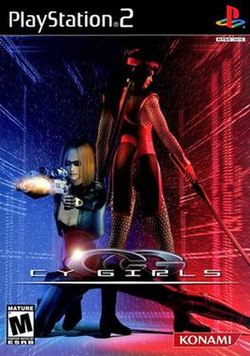










 Another SquareThought Site