

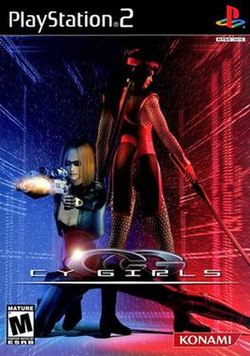

Cy Girls is a 2004 Konami experiment that looks like an action-figure diorama brought to life, runs on the Metal Gear Solid 2 engine, and delivers two complete but wildly different gameplay packages split across two discs. The concept is disarmingly simple on paper: two female agents, Ice (guns) and Aska (ninjato), each with their own mechanics, aesthetics and mission structure. On the box this reads like a double feature; in practice it plays like a pair of prototypes glued together. The game traded on stylish presentation and high-production CG cutscenes by Digital Frontier, but reviewers and players were left wrestling with inconsistent systems, awkward level design, and control and pacing choices that felt more like fashionable stunts than solid engineering. This review takes a detail-oriented look under the hood-how the engine, camera systems, combat mechanics, and level architecture combine (and sometimes collide) to create Cy Girls' particular brand of charm and frustration.
Cy Girls is essentially two engines for the price of one-figuratively speaking-because Konami packaged Ice and Aska as almost distinct games. The practical upshot is that the project behaves as if two different design teams were each given half a console and told to make what they wanted. Ice is built around third-person firearms combat with rudimentary cover mechanics. The game offers a form of cover that lets Ice hug walls and obstacles and pop out to fire; it borrows the general feel of MGS2-era cover and camera framing but simplifies input and targeting. Auto-targeting grants access to acrobatic gunfight moves-somersaults and cartwheels-that are enabled when the lock-on system is active. Those moves are a neat touch from a design perspective because they add flair and a tactical dodge option without adding an extra button to the control schema. Unfortunately, the depth of the firearms system is shallow: weapon handling lacks nuanced recoil, and enemy AI rarely pressures the player into meaningful use of cover beyond basic avoidance. The coding trade-off here seems to have been quantity of animation over complexity of engagement. Aska, on the other hand, is a melee-and-stealth toolkit rooted in guard meters, blocking windows, and traversal tricks like wall-running. The guard meter mechanic is a crisp, readable implementation: it depletes on successful blocks and forces the player to manage defensive posture, creating a push-pull cadence in fights. Wall-run and parkour elements are a highlight-when they work they introduce verticality and alternative routes that reward movement skill. However, the collision detection and surface affinity are inconsistent; some walls register as runnable while visually identical surfaces do not, which signals brittle heuristics in surface-tagging code. In practical terms that inconsistency punishes players attempting to reliably chain parkour across sections and undermines the tactical promise of platforming-based combat. A core systemic design choice is the Cyberspace mode (Cy-D). Mechanically this is an enforced ruleset change: standard moves are disabled, characters are limited to hand-to-hand (punches and kicks), and new skills and moves are unlocked only via 'cyberspace data points'. Cy-D imposes a strict 10-minute timer-narratively framed as a mental strain limiter-and it functions like a forced arcade-styled constraint layered on top of otherwise methodical action-adventure gameplay. From an engineering standpoint it's an interesting risk: the developers effectively re-balance combat on the fly and introduce a short-form, high-tension play loop. The problem arises in how transitions to and from Cy-D are telegraphed and how the time limit affects level design. Levels that require extensive exploration or puzzle solving become poor fits for a countdown mechanic, and the forced change in input responsiveness (punch/kick only) exposes that the game's default control mappings and animations were not tuned for frantic melee combat. The two-disc structure is worth debating from a UX and technical perspective. Disc 1 contains Ice's scenario; Disc 2 contains Aska's. This split allowed Konami to craft distinct assets and balance flows for each character without having to dynamically swap character-specific data during a single session, but it also means the game behaves more like two separate builds packaged together. It affects memory budgets, asset streaming and load times in ways both positive and negative: you get scenario-specific levels that are denser in unique assets, but swapping discs to experience both campaigns is cumbersome and makes the whole release feel less integrated. Konami mitigates this with unlocks and an 'Extra Mode'-the reward loop unlocks additional characters, weapons and outfits after completing a campaign-but those are late-stage bonuses that don't fix the core problems in level flow and pacing. Camera and control systems are a recurring technical theme. Cy Girls offers two camera modes: Novice and Expert. Novice attaches the camera to the character for follow-based framing; Expert hands the camera controls to the player. Konami admitted they originally intended Expert as default but included Novice to smooth the learning curve. The inclusion is sensible-Expert gives players full agency and is preferable for skilled camera manipulation-but keeping Novice as a default acknowledges that the game's level geometry and combat encounters sometimes rely on camera assumptions (framing, occlusion) that are unforgiving without automated follow behavior. The presence of a toggleable enemy lock further complicates matters: with lock-on you get tighter targeting and animation chaining for certain moves, but without it the camera and aim systems feel floaty and under-assisted. For a 2004 PS2 title shipping on a contemporary engine, this is a trade-off between cinematic presentation and pure mechanical clarity, and Cy Girls leans toward cinematic presentation with uneven results. Finally, level design and puzzle integration receive the most consistent criticism across reviews-and for good reason. The game tends toward repetitive exploration with backtracking through large environments. From a systems perspective, frequent backtracking often signals lazy gating (recycling geometry rather than creating connective tissue) or over-reliance on fetch-style puzzle mechanics. The MGS2 engine could produce evocative stealth corridors and memorable set pieces, but here it was often tasked with sprawling corporate and village layouts that lack density of meaningful interactions. The consequence is a pacing mismatch: combat encounters feel interchangeable, puzzles interrupt combat rhythm, and the reward cadence is too shallow to justify repeated traversal.
Presentation is the game's strongest technical pillar. Konami contracted Digital Frontier to create the CG movies used in cutscenes, and the production values there are notably high for a 2004 release-models, hair simulation references and cinematic direction show an investment in pre-rendered storytelling. The in-game assets ride a typical PS2-era balance of stylized textures and mid-polygon models; where the game shines is in character art direction and costume variety rather than raw fidelity. Lighting and material responses feel intentionally 'clean' to match the figures-to-life aesthetic, and particle effects-when used-are serviceable. The engine choice (the same underlying technology used in Metal Gear Solid 2) provides a solid baseline: robust animation blending, layered cutscenes, and a camera framework capable of both scripted and dynamic shots. That baseline also reveals the project's limits. If you compare Cy Girls to contemporaries on the same engine, it's clear Konami prioritized cinematic direction and glossy choreography over tight environmental collision and emergent AI behavior. Sound design is credited to Shizuo Kurahashi; while reviews vary on audio impact, the SFX underpin basic systems like weapon feedback and hit reactions satisfactorily. A few outlets specifically praised the game's stylish visuals even as they docked points for gameplay, which maps cleanly to the technical observation: the art pipeline and cutscene rendering had more polish than the in-level interaction and AI content pipelines.
Cy Girls is a study in uneven engineering wrapped in stylish cosmetics. On a technical level, the game contains many clever and sometimes daring choices: a two-disc, two-scenario architecture; contrasting combat systems tuned to different skill sets; a Cyber Dimension that re-writes the rules mid-run; and a configurable camera system that acknowledges differing player proficiencies. In practice these choices collide. Asset and animation polish, and lush CG cutscenes, create a high-gloss surface. Beneath that surface are brittle level heuristics, inconsistent traversal logic, shallow combat depth for the shooter segments, and puzzle and pacing problems that turn promising mechanics into sources of frustration. If you are curious about Cy Girls from a design or technical perspective-how a major studio reuses an engine to create divergent gameplay blocks, or how cinematic priorities can outpace interactive cohesion-this game is a worthwhile case study. If you want a consistently rewarding action-adventure experience where mechanics, camera and level design serve each other, you will likely find the patchy execution hard to forgive. Reception was predictably mixed (Metacritic around 53/100), and that number feels right: Cy Girls dazzles at moments and disappoints at others, roughly splitting the difference. Score-wise, it sits in the mid-range: interesting, occasionally brilliant in presentation, but ultimately hamstrung by inconsistent systems and design choices that never quite stitched everything into a cohesive whole. Recommended only for completionists, engine nerds, or fans of the Cy Girls figures who want to see the toys animated in a Konami-flavored spy-fi playground.
 BanG Dream! Girls Band Party! on Switch
 Venus Vacation Prism: Dead or Alive Xtreme on PS5
 Tintin: Destination Adventure on PlayStation
 One Piece Grand Adventure on PS2
 Taiko no Tatsujin: Dokodon! Mystery Adventure on Switch
 Onimusha: Dawn of Dreams on PS2
 Metal Gear Solid: Integral on PlayStation
 Metal Gear Solid 3: Snake Eater on PS2
 Metal Gear Solid: VR Missions on PlayStation
 7 Blades on PS2












 Another SquareThought Site