

 Apr 2016


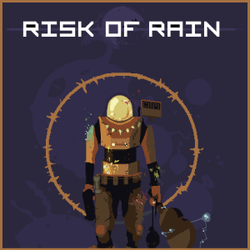
There is a certain stubborn joy to being punished by a video game and then trying, with grim determination, to learn its language. Risk of Rain is one of those titles that delivers punishment with a grin and expects you to smile back. Birthed from the earnest labors of two University of Washington students and polished with Kickstarter money and indie elbow grease, Risk of Rain arrives on PlayStation 4 as a compact, savage little roguelike that wears 8-bit clothing and a surgical timer strapped to its chest. This is not a sprawling console epic with a Hollywood budget; this is a lean, focused test of improvisation, patience, and a willingness to accept that the universe will conspire against you simply because it can.
From the moment you press start the design intentions are clear: pick a combatant, get moving, and do not linger. The PS4 port preserves the original's brittle elegance: you choose from a roster of characters (twelve in total by late game standards, although you begin life as the Commando) and then attempt to survive a random parade of monsters while searching for a teleporter on each level. The Commando is the textbook choice for beginners - dependable, button-friendly, and merciless when upgraded - while later unlockable classes offer distinct approaches, such as the sniper who trades a glacial rate of fire for deliciously satisfying high-damage, long-range kills. Each class has its own statistics and unique moves, and unlocking them forms part of the game's slow-burn meta-progression. Gameplay loops here are compact and elegant. You wander procedurally generated levels, killing baddies to gain experience and money. Experience levels you up, increasing HP and damage; money buys chests, activates attack drones, triggers shrines of varying reliability, or opens shops. The real intoxicant, however, is the item system. There are over 110 items to collect, ranging from modest passive buffs to active useables. You can stack multiple copies of the same passive item, at times producing ludicrous synergies that let you feel briefly, gloriously overpowered. This is by design: the developers accepted that certain item combinations could 'break the game' but treated such moments as carrots on the stick of replayability rather than defects. Risk of Rain's defining mechanical flourish is its difficulty clock. Rather than lock the player into a static difficulty, the game increases challenge as time passes. Monsters scale in health and damage according to a difficulty counter that visibly ratchets every five minutes, though the engine smooths this with a minute-by-minute increment behind the curtains. The effect is mercilessly theatrical: linger too long hunting every last item and the screen fills with nastier foes; move too fast and you might lack the gear to survive late encounters or the teleporter gauntlet. Once you activate a teleporter it begins a countdown during which waves of enemies and at least one boss will spawn. Complete the teleporter event and you can choose to move on or, in a deliciously risky option, loop through previous levels to farm items and experience at the cost of ever-increasing difficulty. Multiplayer works as well as the chaotic design allows. Online co-op supports many players congregating to amplify both the carnage and the laughter; local play is limited to two players but can be combined with online matches. The PS4 port, developed with help from Code Mystics and Sony, adds PlayStation matchmaking and cross-play with Vita, making the tiny apocalypse easier to share. Death is punitive in single-player - one strike and the run is over - while in multiplayer a fallen player can await revival when the rest of the party ascends to the next level. The result is a push-and-pull dynamic in which cooperation can save a disastrous run, but so too can a reckless solo spree produce a heroic, unrepeatable moment. As a game built in GameMaker, Risk of Rain achieves clever design with modest tools. The AI 'buys' enemies for spawn using a point system that scales with difficulty, and clever constraints prevent hardware-straining crowd scenes by occasionally producing elite variants rather than five copies of the same mob. This is an example of resourceful engineering informing design: constraints become features. The PS4 adaptation keeps the code's behavior faithful to the original, and while perfectionists might grumble about the occasional frame hiccup in extremely chaotic scenes, on the whole the experience feels tight and responsive on console.
Risk of Rain dresses itself in 8-bit-like two-dimensional sprites and insists that you pay attention to rhythm and spacing rather than shader porn. The visual language is economical and intentional: small, nimble protagonists against monstrously scaled bosses, readable projectiles, and clear UI elements make for a battlefield where decisions are distilled to their essence. The PS4's muscle is unnecessary for pixel fidelity, but the port benefits from stable performance, crisp scaling, and controller-friendly UI tweaks. The soundtrack, composed by Chris Christodoulou after funds from a successful Kickstarter allowed the team to hire him, is worth a special nod. It manages the rare feat of being simultaneously retro and atmospheric, underpinning raids and retreats with music that can be mournful one moment and electrically menacing the next. In the tradition of 90s console reviews that would remark 'sound will carry this one,' consider this a case where the music augments the tension rather than merely filling silence. Sprite work, though not flashy, is purpose-built: enemies are distinct, attacks telegraph clearly, and the sense of scale - tiny survivor versus towering boss - is conveyed with satisfying clarity.
Risk of Rain on PS4 is a rugged little triumph: a game that refuses to baby you, rewards experimentation, and turns its limitations into personality. It is the sort of title critics in the 1990s might have praised for having a clear design voice and for daring to be difficult for a reason. That voice earned Risk of Rain critical plaudits (the PS4 version registering an aggregate score around 81 on Metacritic), an Independent Games Festival student prize, and millions of sales over time. It also seeded a franchise: Risk of Rain 2 expanded the formula into 3D, and Risk of Rain Returns later revisited the original with modern touches. On PlayStation 4 the game lands comfortably: the control scheme is serviceable, multiplayer is robust, and the port retains the original's bite. If you approach it expecting a sprawling narrative or a forgiving hand you will be disappointed; if you crave a compact, replayable ordeal that rewards knowledge, cunning, and occasional blind luck, you will find Risk of Rain a superb companion. It is generous with its challenge and sly with its rewards. For those willing to accept its terms, the planet is merciless, but escape tastes all the sweeter. Recommended for players who like their platformers with teeth and their roguelikes with a stopwatch.
 Risk on PS3
 Risk of Rain 2 on PS4
 Disney's Chicken Little: Ace in Action on PS2
 Onimusha: Dawn of Dreams on PS2
 Action Man: Operation Extreme on PlayStation
 Door Kickers: Action Squad on Switch
 Risk of Rain 2 on Switch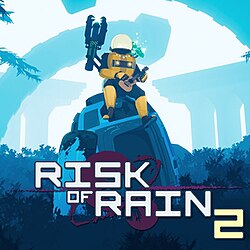










 Another SquareThought Site