

 Sep 2016


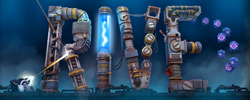
Rive arrives on PS4 like a small, sarcastic robot that thinks it's the hero of an action movie - loud, nimble, and allergic to subtlety. Created by Dutch studio Two Tribes (the first big thing they shipped after their 2013 downsizing), Rive is a 2D side-scrolling platformer married to shoot-'em-up DNA. The Wikipedia-sourced facts read like the robot's CV: a project with roots back to a 2005 DS concept, reborn on a proprietary engine (the same one that handled Toki Tori 2+), and shepherded by a ridiculously small core team. The game launched in September 2016 on PC, Mac, Linux and PS4, later getting a pumped-up 'Ultimate Edition' on Switch with extra features. Critics were generally kind-Metacritic put the PS4 version around the mid-70s-so Rive isn't exactly indie folklore, but it's not trying to be; it's more like a neon-soaked, explosive love letter to old-school twitch platformers. Because Rive's narrative is economical (read: it mostly tells you to shoot things until they stop moving), approaching its "characters" requires a different lens. The real cast isn't a parade of voiced NPCs; instead, it's a set of play systems, enemy types, and the player's own ship. For a review in the style of "in-depth analysis of characters and their story arcs," that means treating gameplay elements as personalities and tracing how they evolve over the roughly 6-8 hour runtime. Yes, I will psychoanalyze robots. You're 18 - this is peak entertainment.
At the center of Rive is the player ship, our unwilling protagonist. It's nimble, armed with a gun that fires in 360 degrees, and capable of dashing, jumping and clinging to walls with the kind of desperation you reserve for late-night platforming. The ship's arc, narratively speaking, is about agency: beginning as a simple blender of bullets, it gradually accumulates tools that let it manipulate the world - most notably "hacks" that reprogram enemy behavior. Those hacks are the closest Rive comes to character development, because they let you force change on other actors rather than merely obliterate them. Turning a turret into a temporary ally? That's character growth through applied logic, and you feel like a hacker-poet doing it. The robotic enemies populate the levels like a civic society of predictable personalities. There are the grumpy turrets who only care about feeding you lead, the roaming brutes that learn to block your dance moves, and the little drones that behave like caffeinated pigeons. Each enemy type functions as a short story beat: encounter, study its routine, exploit its weakness. The mission system and score-chasing high-score boards treat these encounters like episodic arcs; a room is not just a room, it is an act. Completing a mission feels like finishing a short chapter in which you solved the dramatic tension via reflexes and pattern recognition. Two Tribes designed Rive to be both punishing and generous. The combat has teeth - bosses bite, cramped arenas pressure you into micro-decisions, and hazards show no mercy. But the game's structure invites practice via its mission system and leaderboards, which means failure is treated as a narrative device rather than a final verdict. You are allowed to flounder, learn, and return like a protagonist on the sequel tour. This creates an interesting psychological arc for the player-character: you begin as a fumbling rookie and become a confident, sometimes ruthless, urban legend of plasma and polished metal. Mechanically, Rive's 360-degree shooting turns each encounter into a little stage play where the choreography matters more than dialog. The dash and wall-cling let you pull off daring save-the-scenario recoveries, usually when the screen is literally full of particle effects and your brain is screaming "why did I think this was a good idea?" Hacking enemies introduces a meta-layer of characterization: by uploading a hack to an enemy, you forcibly rewrite that robot's story. The hack system is a storytelling tool disguised as a power-up - enemies can be pacified, turned hostile to other foes, or made into explosive allies. This twist lets you feel like an author in a scriptless world. Because Rive's team was so small, the game keeps things focused. There are no sprawling quest trees or moral dilemmas; the drama is distilled into design. The mission structure and scoring encourage replay and optimization, turning personal improvement into a character redemption arc: mastery replaces confusion, and high-score runs become the protagonist's highlight reel. If you treat the player ship like a person, Rive gives it a coherent arc - from awkward tester to sleek exterminator - and the enemies become a gallery of short-lived tragicomedy. It's not Shakespeare. It's not trying to be. It's the mechanical equivalent of an action-comedy montage where the hero gets better with each cut.
Visually, Rive is the neon-noir cousin of classic arcade sprites. It favors crisp, metallic level design with plenty of cinematic particle effects and explosions that make you feel like you've accidentally started a fireworks factory inside a hardware store. The engine (shared heritage with Toki Tori 2+) handles the chaos well: hit sparks, debris, and background animation provide a satisfying sense of consequence when you turn enemies into confetti. On PS4 the game looks sharp and stylistically cohesive, although later ports (notably the Switch 'Ultimate Edition') squeezed out higher frame stability-Switch even got a 1080p/60fps boast for docked mode, and additional features like Copilot Mode and extra achievements. On PS4 you get a stable, punchy presentation that occasionally stutters under extreme onscreen chaos, but the overall aesthetic never lies: it's lively, industrial, and a little smug about it. The art direction isn't aiming for photorealism; it's aiming for readability. When the screen is saturated with missiles, you can still tell what's dangerous and what's destructible - a crucial clarity in a game that depends on twitch reactions. Backgrounds provide depth without stealing focus, and the color palette emphasizes contrast so that enemy patterns pop. Sound design backs this up with satisfying weapon thuds and mechanical coughs. Together, audio and visuals make the 'characters' - the ship and robots - feel alive even though they don't say more than a machine beep or two. It's expressive in a minimalist, mechanical way.
Rive on PS4 is a tidy, energetic package for someone who loves mechanical storytelling over verbose narrative. If you came here expecting a sprawling character drama, you'll be disappointed in the traditional sense; there are no monologues or moral quandaries. But if you accept the premise that characters can be systems, and arcs can be mastery curves, Rive offers a surprisingly rich emotional experience: the triumph of learning, the gleeful cruelty of turning foes into allies, and the tiny victories of cleaning up a room in a single life. Two Tribes used a compact team to craft dense, satisfying encounters, and that focus shows. The PS4 version sits comfortably at the kind of score it earned on Metacritic - solid, occasionally brilliant, sometimes fiddly. For an 18-year-old who likes to feel like a badass improving over time, Rive is a snug fit: part arcade, part bootcamp, part gleaming robot soap opera. It gets a 7.5 out of 10 because it does almost everything it intends very well, even if its idea of character development is "rewrite their code and watch them explode beautifully." If you want something that rewards repetition and treats every room like a tiny narrative, Rive will make you feel like the protagonist of a fast, metallic fable.
 The Wacky History of Platform Games
 Roblox on PS4
 Toki Tori on Switch
 PlayStation Home on PS3
 Toki Tori on PS3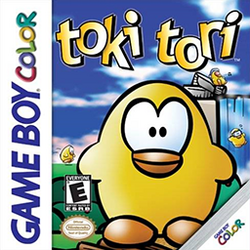










 Another SquareThought Site