

 Sep 2025


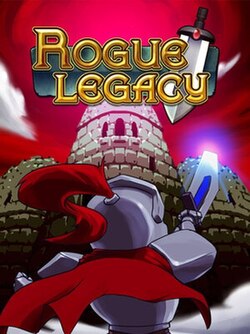
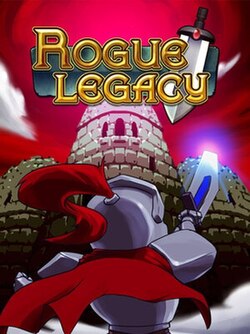
Rogue Legacy wears its personality like a cursed heirloom: delightfully ragged, occasionally sharp, and strangely addictive. On PS4 it's the same genealogical roguelike that earned indie laurels on PC-an elegant mash-up of platforming, Metroid-style exploration and permadeath-driven progression. The twist that makes it feel almost literary is that your protagonist is not one hero but a line: each time someone dies, a new heir rises with quirks, strengths, and comedic handicaps that rewrite the tiny family saga every five minutes. If you like your action games with a side of family drama and the occasional hereditary malady, Rogue Legacy is basically daytime soap set in a haunted castle with swords.
Rogue Legacy's mechanical heart is simple: run, jump, slash, cast-repeat until either you triumph over a boss or spectacularly fail and pass the crown to your next descendant. But where most action games lock you into one avatar and call it characterization, Rogue Legacy turns character into a roulette wheel. When a knight dies, the next heir is one of a handful of randomly generated descendants, each stamped with a trait that affects play in often hilarious ways. These traits are the game's storytelling shorthand. A color-blind hero transforms the world into noir vision, which reads as a brief artistic mood swing; an heir with ADHD zips faster, giving the illusion of boundless enthusiasm; a dwarf sneaks into tight spaces like a stubborn subplot; dyslexia, Tourette's, and other offbeat traits show up as mechanics, sometimes controversial but almost always memorable. The result is emergent characterization: a roster of micro-characters who are less novels and more absurd, two-line biographies that nonetheless shape how your run unfolds. The manor functions as both a save file and a character arc. Every gold coin looted from the castle feeds legacy progression: stat upgrades, new classes, and services from the blacksmith, enchantress and architect. Each upgrade is a chapter in the family's slow upward mobility. If early runs are starvation-level-your second cousin twice removed showing up with a twig of a sword and the gallows sense to die quickly-later generations show up with heavier armor, new spells, and double jumps that read like evolutionary leaps. Mechanically this softens the roguelike sting: death is no longer purely punishment but a plot beat in an ongoing story of familial improvement. Bosses act as the external antagonists in this saga. There are four main biomes and a boss at the end of each, plus secret remix bosses that flip the script on familiar encounters. Boss fights don't scale with infinite New Game+ ramping the way enemies do, so they feel like fixed milestones: you either prepare your family line for the fight through manor investment or you accept another messy funeral and try again with someone entirely new. This creates a satisfying rhythm of tragedy and advancement that reads surprisingly like a multi-generation epic, where the hero's bloodline, not a single hero, carries the narrative forward. The classes you unlock-mages, warriors, assassins, and more-are less templates and more anecdotes about family vocation. An assassin in one playthrough might mean a generation of sneaky savants who die beautifully; a mage could usher in a spate of mana-dependent prodigies whose deaths often result in a puff of arcane smoke and a new heir with more practical talents. The architect's ability to lock a castle layout down is a lovely meta-story option: it lets you preserve a particularly cherished chapter of your family's history, returning to the same map and trying to make that generation the one that finally breaks the curse. Rogue Legacy's New Game+ mechanic complicates the story in an interesting way. Each completion pushes the castle into higher difficulty while offering richer rewards, which is a narrative device that reads like looping history growing harsher with time. Enemies get tougher, chests pay more-heritage becomes a tool and a burden. The secret Traitor class unlocked by beating secret remix bosses is the kind of myth-building Easter egg that feels like uncovering an out-of-print family diary, and it rewards players who've cared enough about the line to pursue legends rather than just loot. What makes all these mechanical pieces resonate as character arcs is the game's cheerful cynicism about heroism. Every run is an epic in miniature: a brief arc where a newborn heir, armed with a few traits and a blade, attempts one more climb up the family's ruined tower. Death is inevitable and often comedic. But death also moves the plot forward. In that sense, Rogue Legacy's story is less about the people who live forever and more about how the family, across dozens of short lives, slowly becomes something better. It's weirdly touching to realize that the castle isn't just an obstacle but the family home that each generation tries to redeem.
The PS4 version preserves Rogue Legacy's crisp, cartoonish pixel art with a level of clarity that flatters both the caricatured heirs and the grotesque bosses. The art direction is intentionally theatrical: sprites exaggerate traits so that a dwarf is obviously pocket-sized and a knight's armor reads as both heroic and slightly stuck-in-the-mail-order sense of style. Environments are readable and visually distinct-each biome has its own palette and set dressing that turns randomly generated rooms into believable stages. Animations are economical but expressive; a failed jump doesn't need cinematic drama because your heir's flailing silhouette already conveys the tragedy. The presentation isn't trying to convince you of photorealism; it wants personality, and it delivers with a wink.
Rogue Legacy on PS4 is an indie game that tells a big story through a million tiny failures. It's not a character study in the traditional sense-there's no single protagonist arc to track-but it's one of the most convincing multi-character anthologies in gaming, where traits, classes and the manor's slow improvements knit together into a genuine saga. It rewards persistence, creative adaptation, and a taste for darkly comic heredity. If you're the kind of player who enjoys crafting a legacy out of chaos, who laughs when a color-blind knight storms a lava room, and who appreciates the bittersweet poetry of progress through loss, this is the sort of game that will worm its way into your PS4 library and stay for the long haul.
 Rogue Legacy on Switch
 Rogue Stormers on PS4
 The Wacky History of Platform Games
 Roblox on PS4
 Toki Tori on Switch
 PlayStation Home on PS3
 Rogue Legacy 2 on Switch










 Another SquareThought Site