

 Jun 2023


There was a time, in the halcyon days of pixel-dense magazines and earnest editorials, when sequels were measured by their audacity to improve rather than merely to repeat. Rogue Legacy 2, arriving on PlayStation 4 after a well-received early-access pilgrimage on PC and Xbox, is such a sequel. Cellar Door Games has taken the DNA of its 2013 original and subjected it to a surgical-yet affectionate-rebuild. The result is a game that respects its predecessor's roguelite heart while grafting on enough fresh systems, classes and progression scaffolding to justify its own existence. If you liked the first Rogue Legacy, you will recognise the skeleton; if you did not, this sequel might still surprise you by assembling a more durable body.
The core loop of Rogue Legacy 2 is disarmingly simple: enter a procedurally generated dungeon, fight your way through rooms and bosses, gather gold, die, and spend that gold to make the next venture a touch less fatal. Yet beneath that neat loop lies a system of incentives and frustrations that keep the game perennially interesting. Permanent upgrades-new weapons, armour, runes and castle improvements-soften the sting of failure and provide a steady sense of long-term progress that many roguelikes either neglect or intentionally eschew. Character choice has been expanded beyond the knight-and-mage binary of the past. You will meet the Ranger, who summons platforms and looses arrows with a patient lethality, and the Barbarian, who prefers to cleave with brute force. Each class feels distinct in its reach and rhythm, which matters when rooms can punish recklessness and reward methodical play. Combat is responsive and weighty: moments of triumph are earned when you thread a parry, land a charged strike, or kite a larger foe into a pit of flame. Rogue Legacy 2's genetic quirks are a stroke of personality. Upon death you select from a set of heirs-literal inheritors with randomly generated traits that can either bless or bedevil your run. One offspring may be color-blind (a mild annoyance in the heat of battle), another might be hyperactive, and another might be a behemoth of strength. These modifiers are never purely cosmetic; they alter playstyle and force adaptation, making every run feel like a new prompt. The Heirloom system, hidden in special rooms, gifts permanent abilities and is one of the most satisfying risk-reward hooks in the game: find them and your later runs open in genuinely different ways. Designers have wisely leaned into Metroidvania sensibilities without abandoning roguelite chaos. The world is still assembled room-by-room each run, but the castle upgrades and permanent unlocks construct a meta-map of possibilities. Early runs feel rewarding because they unlock tools that let you probe previously impossible areas on later attempts. Developers gestured toward balance by ensuring perma-upgrades scale in cost-the grind exists, but it rarely morphs into hollow repetition. The game curates a steady flow of new toys and challenges, and the pacing manages to keep frustration from calcifying into bitterness. If there is a complaint of consequence it is one about occasional sharp difficulty spikes. Certain bosses and mini-boss configurations demand a precision that can feel at odds with the randomness of your genetic loadout. Even so, Rogue Legacy 2 ameliorates despair with frequent stepping stones-small rewards that make the next run more promising-so the inevitable deaths feel like chapters in a long campaign rather than permanent condemnations.
On the technical front, Rogue Legacy 2 presents a modern 2.5D sheen while retaining an unmistakable hand-crafted aesthetic. Cellar Door Games builds its dungeons with modular tiles and visual flair: torchlight, particle effects, and varied enemy silhouettes make every biome recognisable. Running on the Unity engine, the PS4 port is competent; the framerate holds respectably steady and visual clarity remains high even during hectic encounters. Animations are crisp and convey the necessary feedback for combat-enemy tells are readable and your character's strikes land with satisfying visual punctuation. Where the game truly shines is in its characterisation by detail. Each heir, even the ones cursed with unfortunate traits, has a personality conveyed through portraiture and snappy descriptors. Environmental variety keeps longer play sessions from feeling homogeneous; you will move from overgrown ruins to hellish forges with a pleasing change of palette and hazard type. The presentation is not trying to convince you it is photorealistic, and it does not need to. Instead, Rogue Legacy 2 embraces a stylised clarity that serves gameplay first and aesthetics second, a choice any old-school critic should nod at approvingly.
Rogue Legacy 2 is a rare sequel that broadens and deepens without losing sight of why players loved the original. Cellar Door Games offers an experience that rewards patience, experimentation and the occasional stubborn refusal to accept death as final. Critical reception has reflected this polish-professional outlets have heaped praise upon it-and the PlayStation 4 version arrives as a well-portioned package of content, challenge and character. For PlayStation owners longing for a roguelite with both teeth and heart, this is a firm recommendation. Score rationale: the mechanics are robust, the class variety meaningful, and the permanent progression systems strike an admirable balance between grind and reward. Minor gripes-sporadic spikes of difficulty and the unavoidable friction of procedural repetition-prevent perfection, but they do not significantly mar the experience. In the language of the 1990s magazines I grew up reading: Rogue Legacy 2 is not merely a faithful sequel; it is an evolution. Buy it, play it, die often, and enjoy the increasingly entertaining funeral procession of your noble bloodline.
 Rogue Legacy on Switch
 Rogue Stormers on PS4
 The Wacky History of Platform Games
 Roblox on PS4
 Toki Tori on Switch
 PlayStation Home on PS3
 Rogue Legacy 2 on Switch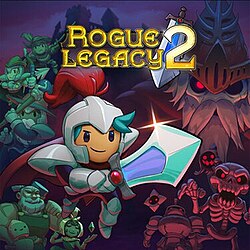










 Another SquareThought Site