

 Feb 2016
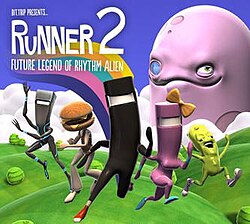

Runner2 arrives like a friendlier caffeine rush: loud, relentless, impossibly upbeat, and narratively mischievous. On the surface it is a sequel in the Bit.Trip lineage, an auto-run platformer that trades the stark 8-bit silhouette of its predecessor for a polygonal wardrobe change. Underneath that shiny exterior, though, the game stages a surprisingly juicy parade of character beats and micro-arcs, all stitched to the soundtrack so tightly that missing a jump feels like forgetting your line in a musical number. CommanderVideo remains the nominal hero, but Runner2 treats the entire cast as a rotating theatre troupe instead of a single protagonist. Unlockable faces - CommandgirlVideo, Unkle Dill, Reverse Merman, Whetfahrt Cheeseborger, and more - are not mere skins. They function as narrative notes: each costume and cameo telegraphs a mood, a mini-plot, a joke about identity and evolution. The art direction consciously refracts the series' past: the characters are no longer trapped in nostalgia; they have been polygonally liberated, and that liberation doubles as the game's soft statement on growth, risk-taking, and what happens when a beloved mascot learns some new dance moves. The presence of Charles Martinet as narrator adds an oddball paternal commentary, like a theater director who occasionally whispers stage directions and dad jokes mid-run. The result is a platformer that is, at heart, a string of tiny character scenes disguised as levels.
Runner2 is organized with pleasingly old-fashioned spoil-safety: five themed worlds, fourteen main levels and five bonus stages each, totaling ninety-five bite-sized acts. The rules are simple: your selected character runs automatically, and you shepherd them across hazards using jump, slide, kick, hang, shield, and a handful of new moves - glide, loop-the-loop, diamond-timing challenges, and a dance that trades mobility for points. The design is cruelly generous: misses rewind you to the start of the level, but checkpoints and mild penalties mean you can keep flubbing without a ragequit curse. If you like repetition refined by rhythm, this is candy. Interpreting these mechanics as character beats is the fun part. CommanderVideo's jump is his leap of faith; a clean spiral through a loop-the-loop is his confident twirl. The glide move reads like a character realizing they can go farther than before. Checkpoints act as story beats: hit one and the hero gets a moment of respite, a line of dialogue from Martinet, a short internal reset before the next crisis. Collectibles like gold bars, mode upgrades, and Famicom cartridges function as narrative MacGuffins - they don't just pad a score, they represent side quests that flesh out who these avatars are. Finding a chest that contains CommandgirlVideo feels like discovering a barista who can also bench-press your emotional baggage; unlocking a retro CommanderVideo is nostalgia folding back into the present. The game's rhythm mechanics give players the sensation of contributing to the soundtrack. Each action has an associated sound, and timing your moves well is both mechanically efficient and narratively expressive. When you chain perfect inputs, Runner2 rewards you with a cannon shoot that ends in a bulls-eye for a Perfect+ rank - the equivalent of a standing ovation for your character. Boss levels are segmented into phases with checkpoints; these are mini-act finales that demand you adapt or get sent back for practice. Retro levels, unlocked by grabbing hidden cartridges, serve as flashbacks: pixelated dream sequences that explain why some characters behave the way they do, or at least give you an 8-bit version of their mood. Unlockables and DLC are treated like cameos in a sketch comedy tour. Characters such as Dr. Fetus, Josef, Quote, Raz, and the Spelunker arrive as guest stars from other indie worlds, and their presence rewrites the tone of a level without changing the core mechanics. Instead of new abilities, these alternates reframe your playthrough: playing as a grim, villainous cameo feels different in your headspace than playing as a goofy cheeseborger. Costume hunting - opening chests and finding keys in Key Vault levels - becomes an investigation into personality, as if each outfit is a different mask someone tries on to get through the day. The result is a platformer where gameplay and imagined narrative co-author the experience.
Runner2's visual pivot from the series' retro roots to a more polygonal look is deliberate and narratively resonant. Gaijin Games admitted they wanted to 'spread their wings,' and the team succeeded in leveling up character expressiveness. Faces have smugness now; limbs can flail with comic timing; costumes read instantly, even at the breakneck speed of an auto-run level. This graphical retooling reinforces the story arcs: characters aren't trapped in a fixed sprite; they're actors with more gestures and therefore more emotional vocabulary. The game still honors its chiptune heritage by burying retro levels with Disasterpeace's 8-bit-inspired tracks, creating tonal flashbacks that contrast with the main polygonal world. The soundtrack and sound design remain central to the game's identity: every jump, slide, and kick contributes to a living musical score. Narration by Charles Martinet layers a theater-broadway vibe on top of the proceedings; he punctuates moments with a knowing voice that can feel like mentor, cheerleader, or prankster depending on the beat. Visually and sonically, Runner2 builds characters through motion and rhythm rather than long cutscenes, and that restraint is one of its strongest choices.
Runner2 is a platformer that understands how to make character out of mechanics. It does not present an epic drama with multi-hour arcs, but it excels at tiny revelations: a costume that reframes your sense of self, a retro cartridge that refunds you with nostalgia, a well-timed glide that feels like personal growth. The game's generous failure system, strong level design, and soundtrack-synced feedback loop make each character moment satisfying even when the actual plot is minimal. Critically the game was rewarded for this blend - high review scores, warm praise for its music and accessibility, and over a million units sold by early 2014 across platforms. On PS4 the experience is the same confident, colorful rush, with the added sheen of the console's power smoothing load times and polish. If you appreciate platforming that treats every skin, costume, and cameo as a chance to tell a small joke or reveal a small truth, Runner2 will charm you nonstop. It earns an 8.5 out of 10: a near-perfect stage performance from a game that knows the value of rhythm, personality, and how to make a running joke into a running life.
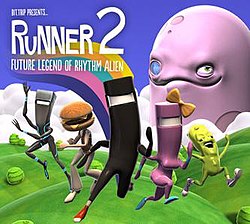 Bit.Trip Presents...Runner2: Future Legend of Rhythm Alien on PS3
 Professor Layton and the Unwound Future on DS
 The Wacky History of Platform Games
 Roblox on PS4
 Toki Tori on Switch
 PlayStation Home on PS3










 Another SquareThought Site