

 Oct 2017
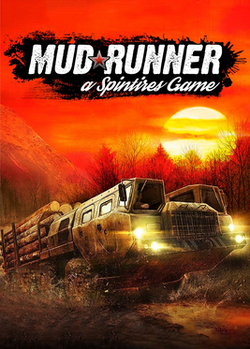

Spintires: MudRunner positions itself as a patient, mud-splattered engineering test rather than a turbocharged arcade romp. Built on Havok middleware and released to consoles on October 31, 2017, it takes the core DNA of the original Spintires-old Soviet trucks, a compass, a topographic map and a stubborn refusal to make life easy-and polishes it into a dedication to mechanical fidelity. On PS4 the game found a mixed reception (Metacritic: 67), which makes sense: the parts that work feel like a simulation taxonomy class you actually wanted to attend, while the parts that don't work read like a practicum where someone forgot to hand out the safety goggles.
If you like videogames where the principal antagonist is terrain, MudRunner is for you. The core loop is deceptively simple: retrieve logs and deliver them to lumber mills until you hit the required load points. Underneath that simplicity sits a web of interlocking technical systems that reward attention to detail. Vehicles are organized by class and assigned balance points; choosing a rig is a resource-management problem as much as a driving one. Trailers, fuel tankers and auxiliary gear alter center-of-mass behavior and hydrodynamic resistance through water crossings, and swapping modules forces you to think like a field mechanic rather than a stunt driver. The physics model is the headline act. Terrain deformation is computed dynamically: repeatedly plowing the same track softens the substrate, reduces traction and changes the handling envelope in measurable ways. The simulation ties directly into drivetrain mechanics-using all-wheel drive and locking differentials increases fuel draw and torque delivery, but it also changes how wheels interact with the newly softened rut lines. This isn't an aesthetic mud smear; it meaningfully alters steering inputs, wheelspin and recovery tactics. The H-pattern shifter is available for every vehicle, exposing a gear-selection layer that rewards manual control. In hardcore mode the game disables differential lock when you're in automatic, forcing manual engagement and turning what might have been a simple ascent into a gearbox choreography challenge. Navigation intentionally lacks hand-holding. You have a map and a compass, and that's it. Checkpoint markers are deliberately vague on harder difficulties, so reading topography and planning routes around water, steep inclines and treacherous flats becomes a spatial-puzzle exercise. Fuel consumption is modeled, not trivialized: flipping permanent AWD on is an operational choice rather than a crutch, and mismanagement leads to stalled recovery runs or stranded trucks-these outcomes are part of the tension the game cultivates. Multiplayer co-op shares the same six main base maps as single-player, which is a smart design choice: cooperative physics problems (towing, winching, and trailer alignment) scale well and feel organic. Challenge mode offers small, focused maps that act like field tests for discrete skills-winching around a bog, crane operation, or vehicle balance-but the reward structure is thin. Bonus objectives unlock achievements but don't feed back into the mechanical economy, which makes challenges feel more like trophies than tools for learning. DLC expanded the mechanical toybox in meaningful ways. American Wilds introduces licensed trucks and a "scavenge" log system that randomizes log spawns and forces route adaptation. It also tweaks environmental tone-higher saturation and warmer lighting-shifting the game's aesthetic response and, by extension, how terrain cues are read. Other expansions added maps and vehicles but kept the core simulation intact, which is the right call for a game whose primary selling point is systemic depth.
MudRunner's visual design takes a pragmatic approach: fidelity where it contributes to gameplay, atmosphere where it doesn't. Terrain shaders and particle systems are tuned to emphasize depth and stickiness-mud clings, water ripples react to your wheels, and vegetation reacts to repeated passes. The Havok-powered physics extend to visual deformation, so graphics are not mere decoration but a feedback channel for underlying state changes (soft ground equals visual rut formation). The American Wilds DLC ratchets saturation and warmth, which improves object readability on console screens and makes routes more visually distinct against the environment. On PS4 the art direction leans toward utility over spectacle. Lighting is functional, day-night cycles are serviceable, and draw distance is adequate for route planning. The engine prioritizes deterministic physics and consistent collision responses over glossy post-processing: that tradeoff benefits the simulation, but players expecting cinematic vistas will be mildly disappointed. The UI is utilitarian-map, compass and a minimal HUD-which fits the aesthetic but sometimes feels sparse when you just want another tiny QoL navigation aid.
MudRunner is a technical love letter to off-roading simulation. It rewards players who enjoy systems thinking: drivetrain management, terrain deformation, manual gear selection and logistics planning. Its strengths are in how mechanical subsystems interact and produce emergent problems that feel authentic. The biggest friction points are design choices that lean into realism at the expense of convenience-navigation is deliberately minimal, rewards for challenge modes are thin, and the learning curve can feel punitive. On PS4 the result is a solid simulation experience that some players will prize and others will find too unforgiving. If you want a sandbox that treats mud like a serious technical adversary and are willing to learn a truck's personality rather than mash a throttle, MudRunner is worth your mileage. If you prefer instant gratification and GPS-level hand-holding, this is likely to be a slow, sticky evening of frustration. Score: 7.0/10.
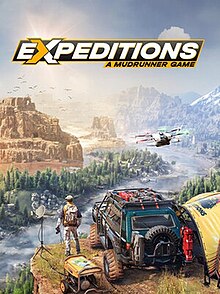 Expeditions: A MudRunner Game on Switch
 Pro Evolution Soccer 2015 on PS4
 MotoGP 19 on Switch
 Derby Stallion 04 on PS2
 Power Pro Kun Pocket 13 on DS
 Warhammer 40,000: Space Marine 2 on Xbox Series X/S
 Star Wars: Knights of the Old Republic — Remake on PS5
 Warhammer 40,000: Space Marine II on PS5
 MX Nitro: Unleashed on PS4
 World War Z: Aftermath on PS5










 Another SquareThought Site