

 Sep 2017
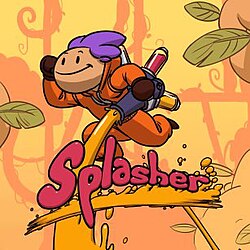

Splasher is a compact, fast-paced 2D platformer born in the era of indie twitch-platform precision, but with enough personality (and paint) to avoid feeling like a direct clone. Developed by Splashteam-formed by ex-Ubisoft Montpellier folks who know their way around tight platforming-Splasher delivers 22 bite-sized levels inside the Inkorp factory that are explicitly engineered for speed. The central mechanical hook is a paint gun that modifies surfaces and mobility, a clear conceptual cousin to Portal 2's "Power of Paint" ideas but translated into side-scrolling chaos. On PS4, the package is the same concentrated test of execution that launched on PC earlier in 2017, with console-friendly menus and the same leaderboards, time trials, and three flavors of speedrun modes that give the game its competitive spine.
Splasher's gameplay is best described in two words: precision engineering. Each level expects pixel-accurate movement, frame-perfect inputs and a willingness to die and retry until the muscle memory clicks. The protagonist's toolset is small but expressive: run, jump, shoot paint, and use the paint to alter traction and movement properties of the environment. This small taxonomy expands dramatically when you consider how the paint gun interacts with level geometry. Different paint applications let you stick, slip, or launch off surfaces, which turns otherwise mundane platforms into timing windows for advanced maneuvers. The end result is a mechanical vocabulary dense enough to support both casual routing and high-skill optimizations that speedrunners will adore. Level design is deliberately compact: 22 levels, each with six hidden splashers and a seventh gate-locked by a 700 Golden Ink requirement. That structure pushes players to learn routes intimately-whether you're chasing the 'Selfish Speedrun' (no collectables), the 'Standard Speedrun' (some collectibles), or the masochistic 'Gotta Catch 'em All' (100% collectables while speedrunning). From a technical perspective this is brilliant: the game effectively layers multiple difficulty curves on one spatial canvas, so a single level must be mechanically sound across a range of execution fidelities. Designers must therefore ensure enemy placement, hazard timing and platform spacing are consistent, because any variability would disproportionately punish the precise play the game demands. On a systems level, Splasher wears its origins in Unity on its sleeve. Unity's 2D toolchain allows the game to iterate quickly on collision primitives and animation blending, which is crucial for a title that lives or dies by tight hitboxes and crisp player feedback. The developer's decision to collaborate with speedrunners during development shows in the responsiveness: inputs feel immediate, and movement transitions (run to jump, jump to wall-slide, wall-jump to dash) are animated and coded to preserve momentum rather than interrupt it. That's not accidental-implementing momentum-preserving physics often requires fine-tuning friction coefficients, gravity scaling, and counter-forces so that a jump arc is predictable across run speeds. Splasher's physics parameters are tuned for consistency rather than spectacle, which is the correct choice for a speed-focused platformer. Respawning and checkpoint placement are design tools here. Splasher opts for brutal-but-fair spacing: death is cheap and instant, and the cost of error is mainly time and repetition. That lowers the barrier to experimentation and makes the time-attack modes feel like practice rigs for execution refinement. Speaking of modes, the inclusion of leaderboards for both speedrun and time attack shows that the devs prioritized online competitiveness. From a network viewpoint the leaderboards are straightforward, but their presence changes the player's relationship to the levels: every jump becomes a split-time to shave. A few technical caveats are worth noting. The entire experience hinges on deterministic and consistent collisions; any micro-stutter or input lag would dramatically alter high-level play. The developers' choice of Unity and the iterative prototyping process (including multiple pre-release prototypes on itch.io) likely helped iron out many of these issues, but the PS4 port arriving months after the PC launch always raises questions about platform parity. In practice, on a modern console the hardware is more than capable of maintaining stable frame pacing for a 2D game with modest draw calls, so long as the port keeps physics updates decoupled from frame rendering and preserves fixed timestep logic. Given Splasher's positive reception and the developer's speedrunner collaboration, the port is clearly treated with care, aiming to preserve the input-to-action fidelity that the design depends on.
Visually, Splasher is a 2D sprite-driven confection: bright inks, bold contrasts and energetic 2D animations by Richard Vatinel. The aesthetic choices are functional as much as they are stylish-the color palette helps visually separate interactive paintable surfaces from inert scenery, which is critical in a game where misidentifying a surface costs precious seconds. Animation timing is also a technical vector for gameplay clarity: wind-up frames, landing frames and recoil from the paint gun all communicate state changes to the player. Smooth frame-to-frame interpolation and snappy keyframes ensure the player can read the character's state and react appropriately. Because the game lives on 2D sprites in Unity, rendering overhead is low and the art can favor high-fidelity frame-by-frame animation instead of expensive shaders. This allows for fluid character motion and responsive visual feedback without taxing the GPU. Particle effects for splashes and golden ink glints are used sparingly and serve as both reward cues and environmental signposting. The UI is utilitarian and minimal, with clean indicators for ink collection and a clear leaderboard interface. Composer credits (Aymeric Schwartz and David Boitier) point to a soundtrack that complements tempo-driven play: short, punchy loops that reinforce momentum rather than distract from it.
Splasher is a love-letter to twitch platformers executed with the rigorous attention to input fidelity and level design that speedrunning communities demand. Its technical foundation-Unity-based 2D systems, carefully tuned physics parameters, and iterated prototypes with speedrunners-aligns cleanly with the game's design goals. On PS4 the experience is the same compact, brutal, and immensely satisfying platforming workout that critics praised on PC and Switch: bright visuals, tight controls, and a variety of speedrun options that increase replay value substantially. If you prize mechanical purity and enjoy optimizing routes, Splasher is a small technical triumph: concise levels that double as training grounds, solid animation and collision work that reward precision, and leaderboards that make every run meaningful. Casual players looking for a sprawling narrative or exploratory platforming might find it too focused, but as a piece of design engineering aimed at speed and repeatability, it earns its place on your PS4. The 8.2/10 score reflects a top-tier execution of a narrow, ruthless idea-if you like to be punished and then improve, Splasher will make you very happy (and very fast).
 Roblox on PS4
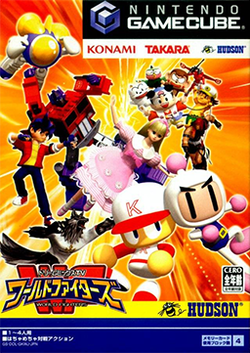
 DreamMix TV World Fighters on PS2
 Toki Tori on Switch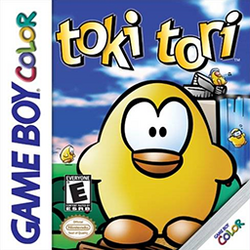










 Another SquareThought Site