

 Mar 2017
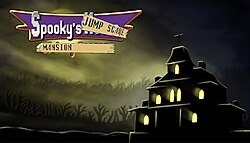

Spooky's Jump Scare Mansion: HD Renovation on PS4 is the bizarre little ghost story that shows up at your door in a party hat and then slowly removes the hat to reveal teeth. On paper it's a tidy premise: an unnamed, unseen protagonist goes poking around a derelict mansion and meets a bubbly ghost girl named Spooky who cheerfully tells them they must survive a thousand rooms to escape. In practice, the game is a masterclass in tonal whiplash and narrative sleight-of-hand. What starts as a jokey walk through nursery-room horrors gradually becomes a psychological onion, each layer peeling back to reveal darker shards - and occasional screaming faces - beneath. Viewed through the lens of character and story arc, the mansion is less a place and more a gauntlet of relationships. There is the protagonist - a blank-slate history nerd whose curiosity is both virtue and fatal flaw - and Spooky, the game's most charismatic and confounding figure: equal parts sugar, safety-belt instructions, and the creeping sense that you may be taking directions from something with teeth. Secondary narratives hide in environmental crumbs: letters from a former researcher, the specimens roaming the halls, and the mansion itself, which functions as a character with moods that shift from playful to predatory. The HD Renovation rearranges these pieces into cleaner visual language on PS4, but the heart of the experience remains a study in how personality, implication, and mechanical escalation can tell a story without ever fully naming its players.
Mechanically, Spooky's is a first-person survival horror romp that at first reads like a prank. The premise is deliciously simple: reach the final room of a randomly generated set of rooms - purportedly one thousand - while surviving the mansion's jump scares and encounters. The gameplay loop is intentionally modest: explore rooms, react to set-piece scares, run from or avoid hostile 'specimens', and pick up narrative hints when you find scattered letters left by a former researcher. Yet the emotional arc of play is what carries the story work. The protagonist's arc is written in pacing rather than cutscenes. Early rooms lull both player and protagonist into complacency: pastel corridors, toyish monsters, and Spooky's chirpy announcements create a safe falsehood. That safety is the first character beat - curiosity rewarded with novelty. By the time the fifty-room threshold is crossed, the mansion begins to flip the table. The letters become more explicit, tone darkening from whimsical notes to clinical, frightened entries. These documents are the researcher's voice, a slow burn that converts the player character's curiosity into confusion and then dread. The researcher's implied arc - earnest investigator to unreliable decedent - reframes earlier rooms, retroactively tainting the cutest encounters. Meanwhile, Spooky's arc is the most deliciously ambiguous. She begins as a guide, a teacherly ghost who assigns the thousand-room challenge with an almost kindergarten patience. Her insistence that you complete the rooms so you can 'escape' reads as supportive, but the more hostile specimens appear and the more the mansion's architecture twists, the more her cheer transforms into something unreadable. Is she a playful punisher? A wilful manipulator? A cryptic friend who knows more than she tells you? The game thrives on that uncertainty. Specimens fill the antagonist role but are more tragic than cardboard-evil. They attack, but their design and the way they appear - patches of distortion, rhythmic telegraphing, or sudden, surreal presence - suggest experiment and contamination rather than simple malice. Their story arc is collective: from background prank to relentless hunter, they function as the visible symptom of whatever rot is in the house. They force the protagonist's arc from intrigued explorer to survival-focused runner, and they also feed the researcher's backstory: what if the specimens are the product of curious minds gone wrong? There is no tidy reveal, which is the point. The game lets the player stitch these arcs together from encounters, leaving interpretation as the final gameplay mechanic. On PS4 the HD Renovation tightens the controls and cleans up the presentation, which matters because the game relies on timing and psychological rhythm. The remaster adds the option to play in VR with PSVR and PSVR2, which translates the mansion's personality into bodily space; the protagonist's vulnerability no longer lives only in UI meters or scripted scares, it sits in your neck and hands. That shift amplifies every character beat, making Spooky's cheerful directives feel physically nearer and the specimens' approach palpably looming. The only real complaint about gameplay is that the deliberately repetitive 1,000-room framework can blur into grind if you treat it like a checklist rather than a narrative experiment. But that repetition is also the tool the game uses to escalate tone: what starts as gag-based jump scares builds into psychological pressure by virtue of endurance.
The HD Renovation rebuilds the original GameMaker oddness in Unity for a crisper PS4 look while preserving what made Spooky visually memorable: morbidly cute, almost childlike designs that can flip from charming to menacing in a single frame. Originally the devs used clever 2D tricks to simulate a 3D space; Albino Moose Games shelled that out into true 3D polish without sterilizing the aesthetic. Spooky herself is cartoon-simple: big eyes, a perpetual smile, and an energy that reads as both comforting and unsettling. That simplicity is deliberate - it lets small, uncanny animations sell tonal shifts. The specimens are where the art direction really earns its keep. They're often grotesque without relying on hyperreal gore; instead the game suggests deformation, motion, and impossible proportions so your brain fills in the worst bits. The mansion as character is a visual triumph. Lighting shifts are the game's vocabulary for mood - bright, candy-colored lamplight in the first sectors; colder, strobe-slashed corridors later - and the HD Renovation handles those transitions cleanly. Texture work and particle effects on PS4 lend weight to the horror without abandoning the game's toybox aesthetic. The VR option intensifies this: objects that felt placid on a flat screen can become threatening in head-tracked space. If you loved the original's charmingly crude visuals, the HD remaster keeps that soul intact while making the scares easier to read and harder to ignore.
Spooky's Jump Scare Mansion: HD Renovation on PS4 is a deliciously strange exercise in how character can be told through toys, tiles, and timing. Rather than delivering a single, tidy narrative, it offers several overlapping arcs: an unseen protagonist whose curiosity is both engine and trap; Spooky, a caretaker/antagonist whose cheer masks deeper knowledge; a researcher whose letters bleed panic into the margins; and specimens that evolve from gag to genuine threat. Those arcs don't resolve into a neat ending so much as they converge into an atmosphere - one that is at times playful, at times cruel, and often wonderfully uncanny. If you're in the market for a horror game that prefers implication over exposition, and if you enjoy piecing together stories from tone shifts and environmental clues, this PS4 remaster is worth the ticket. The VR option is highly recommended for players who want the mansion to get under their skin in a very literal way. The repetitiveness inherent in the thousand-room conceit may frustrate players who want faster narrative payoffs, but for those willing to be patient, the emotional and psychological arcs pay off in spades. Consider this a haunted house that sneaks up on you by being adorably sinister, then refuses to explain exactly why - and that's precisely its charm.
 Jump Rope Challenge on Switch
 Doodle Jump Journey on DS
 Resident Evil 7: Biohazard on PS4
 Dementium: The Ward on DS
 Warhammer 40,000: Boltgun 2 on Xbox Series X/S
 Obscure: The Aftermath on PS2










 Another SquareThought Site