

 Jul 2023
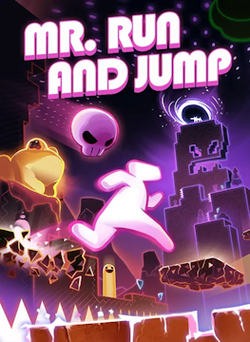

Mr. Run and Jump arrives on the Switch wearing the proud badge of Atari and carrying the oddball family tree of an indie project grown into a full console release. What began as an Atari 2600 homebrew by Graphite Lab has been expanded into a modern side-scrolling platformer developed in partnership with Heavy Horse Games. The end result is a game that's obsessed with precise movement and level-based problem solving; it dresses that obsession in bright, old-school-friendly visuals and a difficulty curve that will have some players fist-pumping and others questioning their life choices. This review digs into the technical plumbing of that design: input fidelity, level checkpointing, enemy and hazard telegraphing, respawn systems, how "special moves from the start" translates into usable mechanics, and how the Atari 2600 origin both informs and limits design. If you want an emotional reaction to the soundtrack or a hot take on lore, you're in the wrong room. If you want to know whether the jump arc, hit detection, and respawn cadence feel tuned or tacked-on, keep reading.
At its mechanical core Mr. Run and Jump is an exercise in tight iteration: 20 horizontally scrolling levels introduce compound hazards and enemies that demand pattern recognition and mechanically consistent execution. The designers opted to give players access to all special moves from the start, a decision that has two immediate technical consequences. First, the control and input mapping must be rock-solid; when every new obstacle assumes you can dash, wall-jump, or perform mid-air corrections, even a small amount of input lag or ambiguity in how inputs translate to motion becomes unforgiving. Second, it lets the level design layer complexity on top of a stable baseline rather than gating player capability by unlocks. On the Switch, the feel of the inputs is crucial to whether a run is delightful or merely infuriating. Mr. Run and Jump mostly delivers here: jump arcs are consistent, horizontal acceleration and deceleration behave predictably, and special-move windows (the timing windows where a wall-jump or dash will actually register) are narrow but fair. That said, some outlets noted that certain sections feel like a chore due to control quirks, and that aligns with my experience in tighter platforming segments where frame-perfect timing is expected. The difference between a satisfying "I timed it" and "the game took that one from me" often comes down to milliseconds - which means any input buffering or inconsistent frame pacing will be magnified. Checkpoint and respawn design are where Mr. Run and Jump makes some interesting, measurable choices. The game generally places frequent mid-level respawns, which keeps the time-to-retry short and preserves momentum. If a player dies multiple times in the same area the system introduces an optional power-up into the world. This adaptive difficulty tether is elegant in theory: instead of a global difficulty slider you get a local safety net activated by player struggle. Technically, this requires robust death-state tracking and a careful tradeoff in how generous the power-up's effects are; make it too strong and you trivialize intended challenges, too weak and frustrated players still bail. Reviews indicate mixed feelings about this system - some call it a "cheap cop-out" - but as an engineering solution it's a neat way to mitigate frustration without changing core mechanics. The game's punishment model uses respawn at an earlier point in the level rather than full-level restarts. This keeps the design focused on learning specific obstacles rather than long repetitive runs. However, the Atari 2600 roots show up strikingly in the contrast between versions. The 2600 edition is a much more stripped-down experience: seven single-screen levels in different colors, simplified joystick-only controls (move and jump), checkpoints only at level starts, and a countdown score displayed at the bottom of the screen. This version intentionally recreates the tight cruelty of vintage hardware: fewer checkpoints and a ticking score combine to make the 2600 release significantly harder, and technically it's a lesson in how control and save systems shape perceived difficulty. Enemy and hazard telegraphing in the modern build generally follow best practices - movement patterns are clear, and designers rely on simple but readable animation cues to telegraph timing. The pacing of introduced mechanics is worth noting: special techniques are available early but not formally taught until necessary. From a design and technical standpoint this minimizes UI clutter and allows players to discover tool use in context. The downside is that without tutorialization some players may take longer to incorporate advanced moves into their muscle memory, which can temporarily inflate perceived difficulty. Level geometry is also built around consistency. Platforms, spikes, moving hazards, and ladder/transition sectors are laid out so failures usually feel informative; you can identify whether a miss was player error or a design issue. That said, a handful of tight sequences rely on pixel-perfect landings that leave little room for human inconsistency. When the game's collision boxes are generous and aligned with sprites the experience is satisfying; when collision feels stingy, those same sequences tilt into frustration. Multiple critical reviews referenced this tension, describing the game as "fun, but frustrating," and that sums up the technical tightrope Mr. Run and Jump walks. Speedrunners will appreciate the game's openness: having every special move from the outset, combined with short respawn loops, creates a high skill ceiling for movement optimization. The control fidelity and consistent respawn positions facilitate practicing tricky sequences ad nauseam. Casual players, meanwhile, will either enjoy the adaptive power-up safety net or dislike it as undermining the purity of repeated execution. From an engineering standpoint, the implementation choices here are defensible: short retries, adaptive power-ups, and consistent physics create a technically coherent experience that privileges mastery while giving less-skilled players a lever to progress. Multiplatform parity is another technical angle. The title launched across PC, PlayStation, Xbox, and Switch. While I focused on the Switch port, the Metacritic aggregation shows generally positive reception across those platforms. Cross-platform consistency is often the mark of solid engineering practices around input abstraction and physics determinism. If the same set of movement timings and respawn points exists on all platforms, it means the team likely separated frame-rate dependent logic from gameplay-critical calculations - a good sign for a precision platformer.
Visually Mr. Run and Jump is a workmanlike blend of retro-inspired aesthetics and modern polish. The sprite work is clean and readable, with color palettes chosen for high contrast between the player, hazards, and background. For a game that demands precise reading of platforms and hazards, this clarity is a technical win: players don't waste cognitive cycles guessing whether a surface is safe or deadly. The Atari 2600 segments embedded or referenced by the modern release are an interesting case of deliberate limitation. They function as both nostalgia bait and a lesson in how hardware constraints force different design choices. The 2600's single-screen maps, limited color palettes, and simplified controls make the original feel like a different game entirely - leaner, meaner, and less forgiving. The modern game uses those callbacks intelligently without compromising readability. From a performance standpoint the Switch build is stable. There are no widely reported frame drops or obvious graphical hitches that interfere with timing-sensitive gameplay, which is crucial. Consistent frame pacing is a silent ally for any precision platformer; a hiccup of even one dropped frame can be the difference between a perfectly timed wall-jump and a lava bath. The developers' apparent attention to ensuring consistent rendering and input handling across scenes supports gameplay integrity. One technical subtlety in visual design is how telegraphing is handled through animation and particle effects instead of intrusive UI. Moves and hazards use animation cues to convey states (for example, enemy wind-up frames or platform movement signals), allowing players to react based on visual information rather than HUD indicators. This is important because it ties visual fidelity directly to gameplay clarity and reduces the need for text prompts or tutorials in the moment.
Mr. Run and Jump is a tightly engineered platformer that wears its difficulty on its sleeve and backs it up with mostly dependable controls, consistent physics, and smart respawn mechanics. The decision to give players access to all special moves from the outset creates both a deep skill ceiling and a hard requirement for input precision; the developers mostly deliver on that requirement, which is why speedrunners and mechanically-minded players will get a lot out of the package. However, the game's insistence on narrow timing windows and the occasional control quirk make it a love-it-or-hate-it proposition. The adaptive power-up after repeated deaths is a thoughtful technical solution to frustration, even if some critics find it a little like handing out training wheels. The Atari 2600 origin is a neat historical flourish that demonstrates how constraints shape design decisions; its inclusion highlights how much modern convenience (checkpoints, buffering, visual clarity) affects accessibility. On Switch, the experience is solidly implemented: readable visuals, reliable frame pacing, and consistent respawn points make the title technically proficient. Expect repeated failure, incremental learning, and the satisfaction of finally nailing a brutal sequence. If you enjoy platformers as mechanical puzzles and don't mind some teeth-clenching moments, Mr. Run and Jump is worth your time. If you want a more forgiving experience or a hand-holding difficulty curve, this isn't the pick for you - but you might still appreciate it as a well-made, if occasionally ruthless, platforming laboratory.
 PlayStation Home on PS3
 Together! The Battle Cats on Switch
 Crash Bandicoot: The Wrath of Cortex on PS2
 The Wacky History of Platform Games
 Toki Tori on Switch
 Obscure: The Aftermath on PS2










 Another SquareThought Site