

 Sep 2019
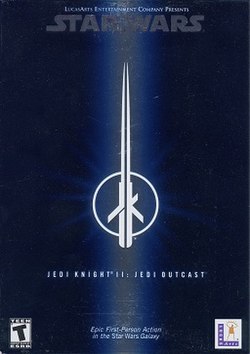

Star Wars Jedi Knight II: Jedi Outcast on PS4 is the video game equivalent of being handed a lightsaber and politely told where the stairs are. Originally a 2002 masterpiece built by Raven Software on id Tech 3, this re-release carries over almost everything people remember fondly - intense lightsaber duels, Force powers that make you feel like a slightly overenthusiastic deity, and a linear campaign that thinks puzzles are plot devices. The PS4 version arrived in 2019 as a tidy nostalgia package, minus the multiplayer playground that gave PC owners endless gladiatorial joy. If you wanted to duel strangers using custom lightsaber colors, tough luck; the port is a single-player love letter with the multiplayer pages ripped out.
Jedi Outcast's single-player is a neat machine: you push buttons, record the screams of stormtroopers, and occasionally remind yourself this is canon-adjacent. You play Kyle Katarn, a mercenary-turned-reluctant-Jedi who starts the game pretending that the Force is a thing he stopped caring about - the emotional equivalent of deleting a dating app and then reinstalling it the next day. The campaign is linear and story-forward, sending you from Kejim to Cloud City to Yavin 4, with visits to mining colonies and star destroyers for variety and existential dread. Mechanically the game splits its soul between blasters and blades. The early levels lean on shooter mechanics - health and shield meters, energy weapons, and explosives - which is useful because when the lightsabers arrive they do so like an emotional tidal wave. Raven reworked the hack-and-slash combat from previous Jedi Knight titles and focused the game on melee. You get three lightsaber styles (fast, medium, strong), each offering different speed and damage profiles, plus a decent selection of combos. The combat system rewards timing and reading your opponent, in part inspired by games like Bushido Blade: it's less 'mash until something dies' and more 'wait a beat and then make someone regret their life choices.' Force powers are available and become increasingly central as the campaign progresses. There's a Force Meter that governs how liberally you throw Pushes, Jumps, Grabs, Heals, and Lightning around like a toddler with a toy set. The powers are tiered by level, so progression feels meaningful: you don't just get better gear, you get better metaphysical tantrums. Unlike some earlier entries where your moral compass is binary, Kyle has both Light and Dark powers in single-player - handy because sometimes healing won't cut it and you need to electrocute a roomful of enemies for closure. Enemies scale from mercenaries and stormtroopers to the more upsettingly determined Reborn and Shadowtroopers. Reborn are the flavour-of-the-month Dark Jedi footsoldiers, and Shadowtroopers introduce cortosis armor that resists your pretty lightsaber - because nothing says 'immersion' like a suit designed to make your main toy useless for a minute. Boss encounters (Desann, Tavion, Galak Fyyar, Reelo Baruk) are appropriately melodramatic and resolve in ways that would make a soap opera proud: betrayal, revelation, and a lot of shouting into space. Puzzles and occasional 'level design choices' slow the game down - critics at the time called out a sluggish start and some obtuse puzzle moments. Those sections exist primarily to test your patience and assert dominance over your controller. On the plus side, friendly NPCs sometimes tag along, helping in firefights and providing that warm, illegal-smuggling camaraderie you want from a Star Wars story. Multiplayer was a massive deal in the original: PC players enjoyed full LAN and internet servers, mod support, and custom Force builds. The PS4 port, however, neuters that toy: no multiplayer. This means no online battles, no custom servers, and no watching someone flail a blue lightsaber with terrifying gusto. For single-player fans who just want to slice things in a well-lit cinematic corridor, that omission is forgivable. For people who thrive on competitive saber-shenanigans, this port is a museum exhibit labelled 'Remember When.'
The game runs on id Tech 3, which in 2002 felt like a high-tech lightsaber - fast, sharp, and occasionally prone to overheating. The PS4 version is a faithful port rather than a complete makeover: environments retain the original's architectural charm, character models are unmistakably early-2000s glorious, and the lighting does its best to make chrome and cloth look cinematic. Cutscenes, historically, were the awkward cousin of the game's otherwise confident visual presentation; console ports in the past suffered with weaker pre-rendered or in-engine cutscene fidelity, and the PS4 release doesn't completely rewrite that script. Voice work is surprisingly solid, with cameos from Luke Skywalker and Lando Calrissian that remind you the developers managed to hire talent who didn't sound like they recorded lines between shifts at a space deli. If you play on a modern television, textures will look soft in places and character faces will flirt with the uncanny valley before deciding to just be themselves. Frame rates are stable for the most part, and the action feels responsive, which is the important part when your job is swinging a glowing sword and immediately regretting it. For purists, there is charm in how the visuals wear their age - like a leather jacket that still looks cool despite a few heroic tears.
Jedi Outcast on PS4 is essentially the sensation of actually being competent with a lightsaber, married to a plot that understands the useful dramatic beats of a Star Wars side-story. The PS4 port's biggest sin is the absence of multiplayer: take away the arena and you remove half the social mayhem that made this title a cult classic. The single-player, however, remains a tight, satisfying ride. Combat is the star - it rarely fails to deliver that visceral, cathartic sensation of felling an entire room without resorting to terminal-level button mashing. Critics praised the PC release for its combat and story (Metacritic loved it), and while console versions historically took slight hits for ports and missing online features, the PS4 release keeps the important stuff. If you want a modernized Star Wars lightsaber simulator with the multiplayer bells and whistles, this isn't it. If you want to play as a reluctant Jedi who stares into the moral abyss and then electrocutes it anyway, buy it, charge it up, and enjoy. There are also community efforts like OpenJK and decades of mod culture that keep the spirit alive for the technically inclined, but the PS4 version is about simple pleasures: swing, block, Force-push, repeat, feel powerful. Score: 8.5/10 - because being a Jedi never felt better, even if the multiplayer park is closed.
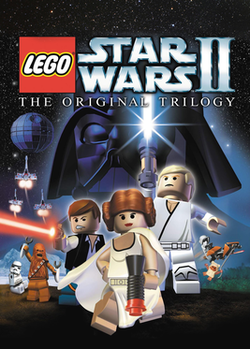
 Lego Star Wars II: The Original Trilogy on PS2
 Angry Birds Star Wars on PS3
 PlayStation Home on PS3
 Gaelic Football '25 on Xbox Series X/S
 Together! The Battle Cats on Switch
 Crash Bandicoot: The Wrath of Cortex on PS2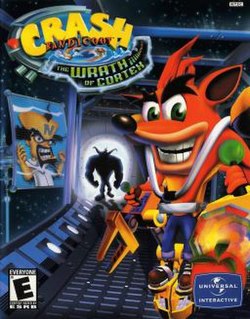










 Another SquareThought Site